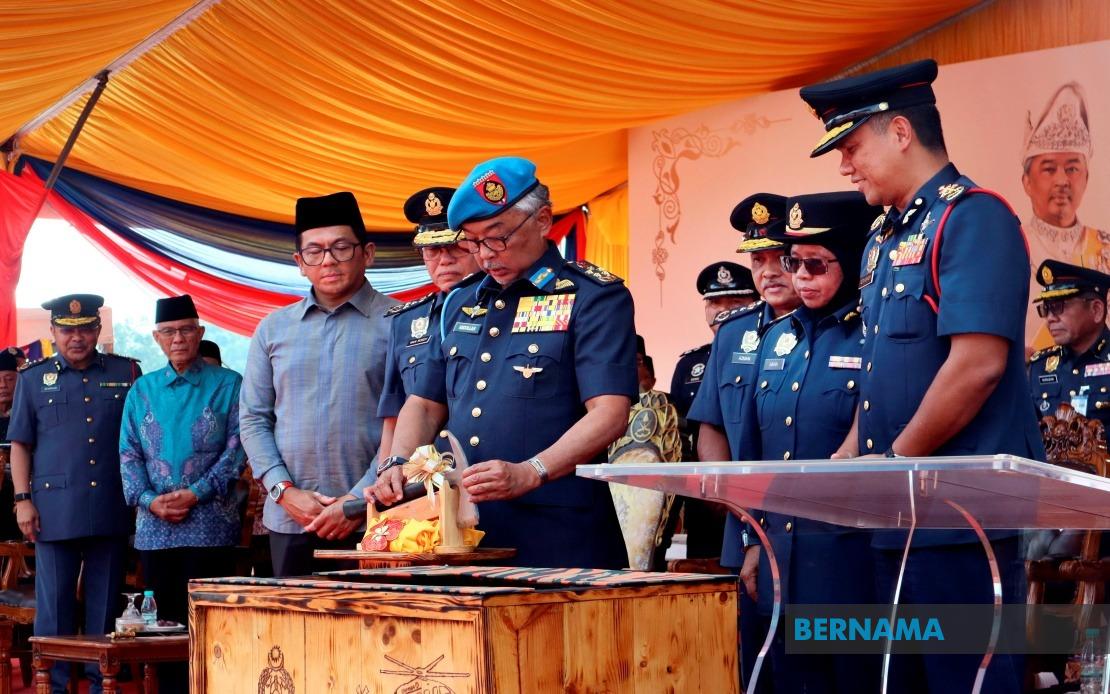
Al-Sultan Abdullah Ri'ayatuddin Al-Mustafa Billah Shah used the opening of the Sungai Lembing Fire and Rescue Station on July 2 to publicly acknowledge government spending on critical infrastructure that protects Pahang residents from natural disasters and emergencies. His endorsement reflects growing royal attention to disaster preparedness in a state that faces recurring monsoon-season flooding and demonstrates the importance placed on coordinated federal-state resource allocation during a period when climate-related hazards are becoming more frequent and severe across Southeast Asia.
The Sultan's appreciation focuses especially on flood mitigation work in Sungai Lembing, a coal-mining township historically plagued by inundation. Located in the upper reaches of the Kuantan river system, Sungai Lembing serves as an early-warning indicator for downstream flooding risk throughout the state capital. Heavy precipitation in this area rapidly translates into rising water levels across Kuantan's commercial and residential zones, making preventive infrastructure investment there strategically valuable beyond the immediate locality. The Sultan's emphasis on this specific location suggests palace advisers and state planners recognise the town's geographical importance as a sentinel for broader watershed management challenges.
In a directive with practical implications for water management across Pahang, Al-Sultan Abdullah ordered deepening of rivers adjacent to populated areas to enhance their capacity to handle intense rainfall without breaching embankments. Such riverbed dredging projects, while expensive and environmentally complex, represent conventional engineering responses to flood risk in low-lying districts. The instruction signals royal preference for structural interventions over mere reactive disaster response, aligning with evolving international best practice in climate adaptation. For Malaysian authorities grappling with monsoon vulnerabilities, such top-level endorsement may accelerate project timelines and budget approvals currently constrained by competing developmental priorities.
Present at the ceremony were Pahang Menteri Besar Datuk Seri Wan Rosdy Wan Ismail alongside Deputy Housing and Local Government Minister Datuk Aiman Athirah Sabu and Deputy Economy Minister Datuk Mohd Shahar Abdullah, who represents the Paya Besar parliamentary seat. The high-ranking attendance reflects infrastructure development's political salience in Pahang, where flood losses periodically disrupt commerce and claim lives. For the state government, the Sultan's public appreciation provides political capital and legitimises budget outlays on emergency preparedness to a population sometimes more visibly conscious of roads and schools than unseen drainage systems.
Beyond infrastructure, the Sultan offered sustained recognition of Malaysia's Fire and Rescue Department personnel, characterising their work as essential to public safety. Al-Sultan Abdullah observed that daily news reports document firefighters responding to structural fires, vehicle accidents, and disaster situations, noting his appreciation for their consistent effort despite occupational hazards. This acknowledgment carries symbolic weight in a country where frontline emergency workers frequently operate with aged equipment and inadequate staffing, factors that periodic royal commendation helps keep before policymakers and the public consciousness.
The Sultan indicated a personal commitment to visiting fire and rescue operational sites and disaster-affected communities whenever circumstances permit, framing such engagement as recognition of service and sacrifice. This pattern of ground-level involvement distinguishes the Pahang monarchy's approach to governance oversight and differentiates it from purely ceremonial roles. For fire service personnel, such visibility signals institutional validation at the highest level and potentially improves morale in a profession where fatigue, PTSD, and burnout remain persistent management challenges across the region.
An additional initiative flagged during the ceremony involves establishing a volunteer fire brigade in Kampung Bantal, Ulu Tembeling, located within the Jerantut district. The Sultan justified this proposal by reference to geographical remoteness, which creates response-time delays during emergencies and leaves isolated communities vulnerable during the critical early minutes of fire or medical crises. Volunteer brigades, common in rural Australia, parts of the United States, and certain European regions, represent a cost-effective model for extending emergency coverage to dispersed populations where full-time professional stations remain economically unfeasible. Their introduction to rural Pahang would mark a modest institutional innovation for Malaysia's emergency response architecture.
The Sungai Lembing Fire and Rescue Station itself represents the tangible output of infrastructure planning discussed abstractly in the Sultan's remarks. Dedicated emergency facilities improve response times, equipment staging, and personnel welfare compared to makeshift arrangements. The station's opening symbolises shifting budgetary priorities toward emergency resilience in what remains a developing nation balancing multiple infrastructure needs against finite revenue. For residents of Sungai Lembing and surrounding areas, the facility promises faster assistance during fires and accidents, potentially reducing property loss and casualties.
Contextually, Pahang's infrastructure investment occurred amid Malaysia's broader post-pandemic fiscal consolidation and competing demands for developmental spending. Federal allocations to state-level projects require negotiation between Kuala Lumpur and state government, with political alignment affecting disbursement. The Sultan's public gratitude for such coordination suggests satisfactory levels of federal funding flow to Pahang, though the absence of specific project values or timelines in his remarks limits assessment of actual resource magnitude. Regional observers will note whether such endorsements correlate with accelerated implementation or remain largely ceremonial gestures.
Flood risk and emergency response capacity carry particular relevance for Southeast Asian nations as climate change intensifies precipitation patterns and extreme weather frequency. Pahang, sharing hydrological characteristics with neighbouring states and similar challenges to those faced in Thailand, Laos, and Cambodia, represents a case study in adapting governance and infrastructure to environmental pressures. Malaysian approaches to disaster mitigation and emergency preparedness inform regional policy thinking, making state-level achievements noteworthy beyond Pahang's boundaries.
The Sultan's intervention in infrastructure governance reflects an ongoing tension in Malaysian monarchical systems between constitutional decorative roles and substantive participation in developmental direction-setting. By publicly instructing river deepening and endorsing emergency service expansion, Al-Sultan Abdullah positioned himself as an active stakeholder in state policy outcomes rather than a purely ceremonial figure. Such engagement generates political complexity, as royal preferences can bypass conventional administrative channels, though they may also accelerate implementation of delayed projects by adding palatial authority to bureaucratic processes.
Moving forward, the effectiveness of these initiatives will depend on technical execution, maintenance funding, and whether volunteer fire brigade establishment in Jerantut attracts sustainable participation from local communities. Infrastructure investment without operational rigour yields hollow benefits. The Sultan's commitment to continued site visits and ongoing engagement suggests palace-level monitoring of implementation, a factor that may enhance accountability compared to federal programmes receiving only perfunctory oversight. For Malaysian readers, such developments underscore how traditional institutions continue shaping contemporary disaster preparedness and development priorities across the peninsula.

