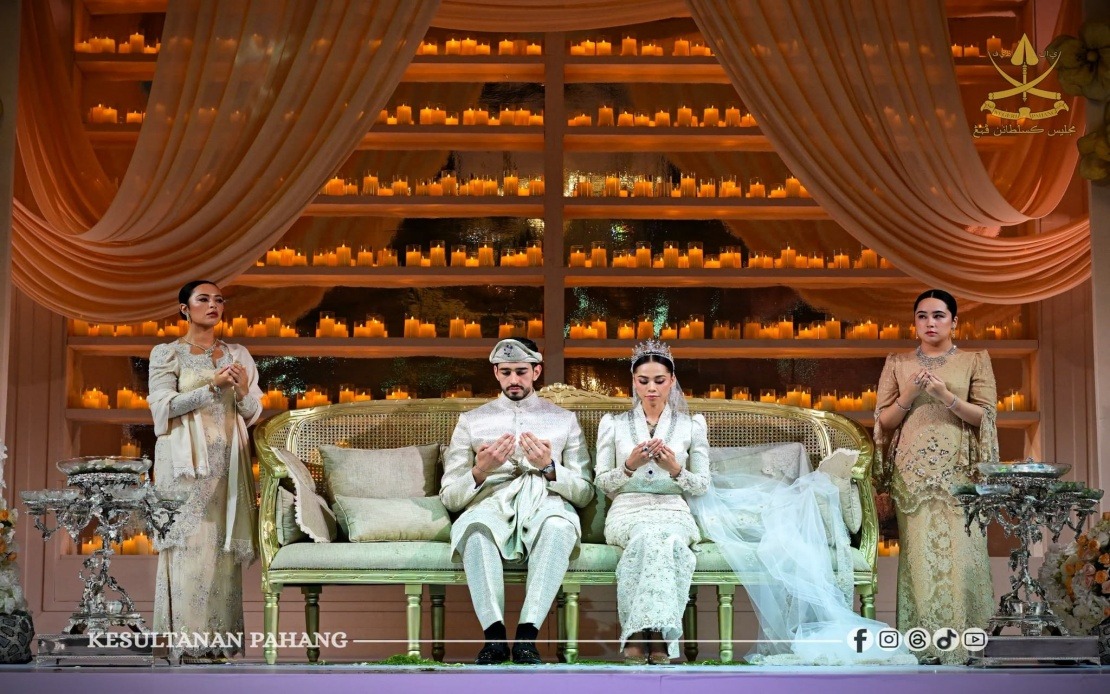
The Sultan of Pahang, Al-Sultan Abdullah Ri'ayatuddin Al-Mustafa Billah Shah, presided over the wedding reception of his daughter Tengku Puteri Raja Tengku Puteri Ilyana Alia and her husband Christopher Lionel Froggatt at a Kuala Lumpur hotel, marking a significant royal occasion that blended traditional Malay-Muslim customs with the modern celebration of a cross-cultural union.
The royal gathering brought together members of the Pahang royal household, with the Sultan accompanied by the state's Regent, Tengku Hassanal Ibrahim Alam Shah, and various siblings and family members whose presence underscored the importance of the event within the broader royal circle. The attendance also reflected the inclusive nature of the celebration, as dignitaries beyond the royal family were invited to witness the proceedings.
Among the notable guests was Pahang Menteri Besar Datuk Seri Wan Rosdy Wan Ismail, whose presence demonstrated the integration of the state's political leadership in royal affairs. More significantly, Shaikh Mohammed Hamad Tahnoon Al Nahyan, representing the President of the United Arab Emirates, attended the reception—a diplomatic presence that suggests the cross-border and international dimensions of this royal wedding. The UAE representative's attendance is noteworthy given Malaysia's long-standing diplomatic and trade relations with the Gulf state, and may reflect broader connections between the couple or their respective families.
The wedding reception followed a structured programme of ceremonial traditions that reflect the deep cultural heritage of the Pahang sultanate. The newlyweds took centre stage on the dais, positioning themselves as the focal point of the celebration while maintaining the formal decorum expected of such royal occasions. This arrangement honoured both the solemnity of the union and the public nature of a royal celebration.
The Istiadat Menyuap Nasi Semangat, a traditional Malay custom signifying the feeding of sustenance and spirit to the couple, was conducted by Tengku Puteri Seri Lela Wangsa Tengku Tan Sri Meriam Sultan Ahmad Shah, whose selection for this ceremonial role carried symbolic weight within the family hierarchy. This ritual represents one of the most meaningful pre-modern traditions still observed in contemporary Malaysian royal weddings, connecting the contemporary celebration to centuries of Malay sultanate customs.
Following this initial ceremony, the Istiadat Bersanding dan Merenjis took place, during which the Sultan himself participated in the ritual sprinking of rose water and perfume upon the newlyweds. This hands-on involvement by the Sultan himself rather than delegation to other family members elevated the occasion's significance and demonstrated his direct blessing of the marriage. The performance of such ceremonies by members of the royal family sequentially reinforced the collective endorsement of the union within the sultanate's most senior ranks.
The Sultan further demonstrated his formal blessing through the Istiadat Meletakkan Panca Bicara, a ceremonial gesture that historically connected to judicial and administrative blessing in traditional sultanate governance. By performing this ritual specifically to honour the newlyweds, Al-Sultan Abdullah invoked traditional symbols of his sovereign authority to bless their marriage. This layering of ceremonial acts—some purely social, others invoking quasi-governmental or spiritual authority—exemplifies how Malaysian royal weddings function as multifaceted cultural events.
The spiritual dimension was reinforced when Pahang Mufti Datuk Dr Asmadi Mohamed Naim recited prayers following the Sultan's ceremonial acts. The inclusion of the state mufti ensured that Islamic religious elements were woven throughout the proceedings, reflecting Malaysia's constitutional position as an Islamic state while accommodating the international and cross-cultural context of the marriage. The prayer served as both a blessing and a reaffirmation of the couple's union within the Islamic framework.
This wedding represents a contemporary example of how Malaysian royal families navigate increasingly multicultural societies while maintaining traditional sultanate customs. The presence of the UAE representative suggests that such royal unions carry implications beyond purely domestic ceremonial significance, potentially enhancing diplomatic relationships and regional connections. For Pahang specifically, such occasions reinforce the Sultan's central role in the state's cultural and social life, even as the sultanate engages with the modern, globalized world.
The comprehensive nature of the celebrations—spanning traditional Malay rituals, Islamic religious observances, and international diplomatic presence—demonstrates the sophisticated cultural positioning required of contemporary Southeast Asian monarchies. The wedding of Tengku Puteri Ilyana Alia thus becomes more than a family event; it functions as a statement of how Pahang's royal institution adapts and maintains relevance within contemporary Malaysia while honouring centuries of sultanate tradition.

