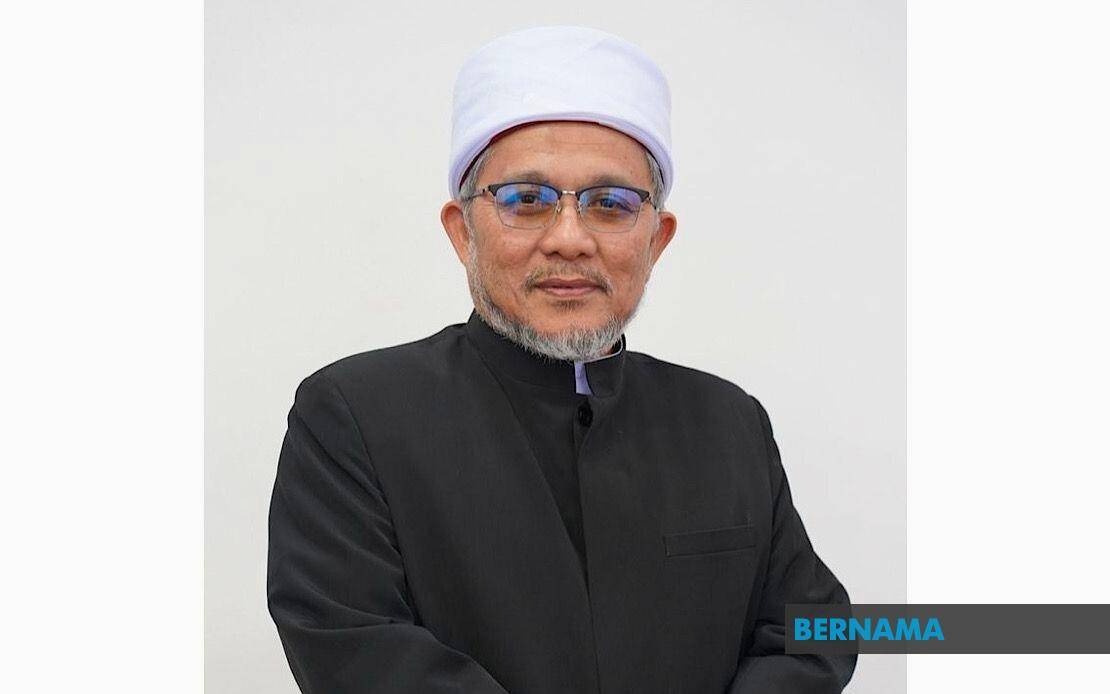
The Pahang State Mufti Department and the Pahang Islamic Religious and Malay Customs Council have formally restated the Sultan of Pahang's commitment to consolidating the role of mosques and suraus as the cornerstone of Islamic worship in the state, signalling a deliberate stance on where congregational prayers should take place in Pahang's expanding urban landscape.
Pahang Mufti Prof Datuk Dr Asmadi Mohamed Naim elaborated that the Sultan of Pahang, Al-Sultan Abdullah Ri'ayatuddin Al-Mustafa Billah Shah, has reviewed proposals circulating across Malaysia to establish Friday prayer facilities in shopping malls, a trend gaining traction in the Federal Territories. Rather than embrace this model, the state has chosen to channel Friday prayers exclusively through mosques and suraus that are formally authorised to conduct such prayers, known locally as SKJ venues.
The Sultan's position carries constitutional weight. Under the Federal Constitution's Ninth Schedule, mosques and suraus fall squarely within state jurisdiction, making them matters of state authority rather than federal concern. By extension, the Pahang Islamic Religious and Malay Customs Council, acting as the Sultan's representative in religious stewardship, retains sole discretion over where congregational Islamic observances occur within state boundaries. This assertion underscores a reassertion of state autonomy in religious administration at a moment when federal-level religious innovation is gaining momentum.
The Mufti emphasised that Pahang's approach is rooted in both theological rigour and practical urban planning. The state has already conducted comprehensive assessments of community needs and determined that the existing network of authorised prayer venues possesses adequate capacity to serve congregants. This planning process has been methodical and inclusive, designed to ensure that no locality lacks appropriate facilities for worship.
Pahang's mosque infrastructure has expanded significantly in recent years to meet this demand. The Sultan Ahmad 1 State Mosque in Kuantan serves as the state's preeminent venue, whilst the Tepian Putra Mosque, the imminent Bandaraya Mosque, and the Al-Shafie Mosque in Kota SAS collectively represent a diversified network capable of accommodating the faithful across different districts. Each facility has been strategically situated to serve defined geographic and demographic areas.
The theological justification for Pahang's stance derives from the Syafi'i school of Islamic jurisprudence, which governs religious practice in Malaysia. Friday prayers, known as Solat Jumaat, are not ceremonies that can be conducted casually or proliferated without constraint. The Syafi'i tradition imposes stringent conditions: prayers must occur during the Zohor time window, require a minimum congregation of 40 people, necessitate two formal sermons, and must take place in a designated and consecrated venue. Critically, overlapping congregations in adjacent areas violate the spirit of congregational unity inherent in Friday prayer observance. These doctrinal requirements make Friday prayers fundamentally incompatible with the impromptu, transactional environment of a shopping mall, where worshippers might drift in and out alongside ordinary commercial activity.
Pahang's stance represents a more conservative approach than the trajectory pursued at the federal level. In recent weeks, Minister in the Prime Minister's Department Datuk Dr Zulkifli Hasan publicly endorsed states' exploration of Friday prayer facilities in shopping malls, citing positive reception from trial locations in the Federal Territories. This federal openness to religious innovation has created a national conversation about adaptability, convenience, and the modernisation of Islamic practice in rapidly urbanising Malaysia.
However, Pahang's reaffirmation signals that not all states view this trend favourably. The state's reasoning reflects a conviction that architectural and institutional continuity in religious spaces reinforces spiritual reverence and community identity. A purpose-built mosque or authorised surau embodies permanence and sanctity; a shopping mall prayer space, by contrast, risks reducing worship to another consumer activity nestled between restaurants and retail outlets.
The timing of this reaffirmation is significant. As Malaysia grapples with balancing religious observance against urbanisation pressures, individual states are charting divergent courses. Pahang's explicit rejection of the shopping mall model, backed by constitutional principle and theological reasoning, indicates that the nation's decentralised religious governance structure permits—and may even encourage—such variation. This heterogeneity could become a defining feature of Malaysian Islamic administration in coming years, with more permissive federal territories coexisting alongside more traditional state approaches.
For Pahang's Muslim population and the broader Southeast Asian religious landscape, this decree affirms that demographic change and commercial convenience will not automatically reshape where and how congregational prayer occurs. The state has chosen institutional stability and theological fidelity over innovation-for-innovation's sake, a choice that appeals to communities that view mosques as anchors of faith rather than service stations for religious obligations.

