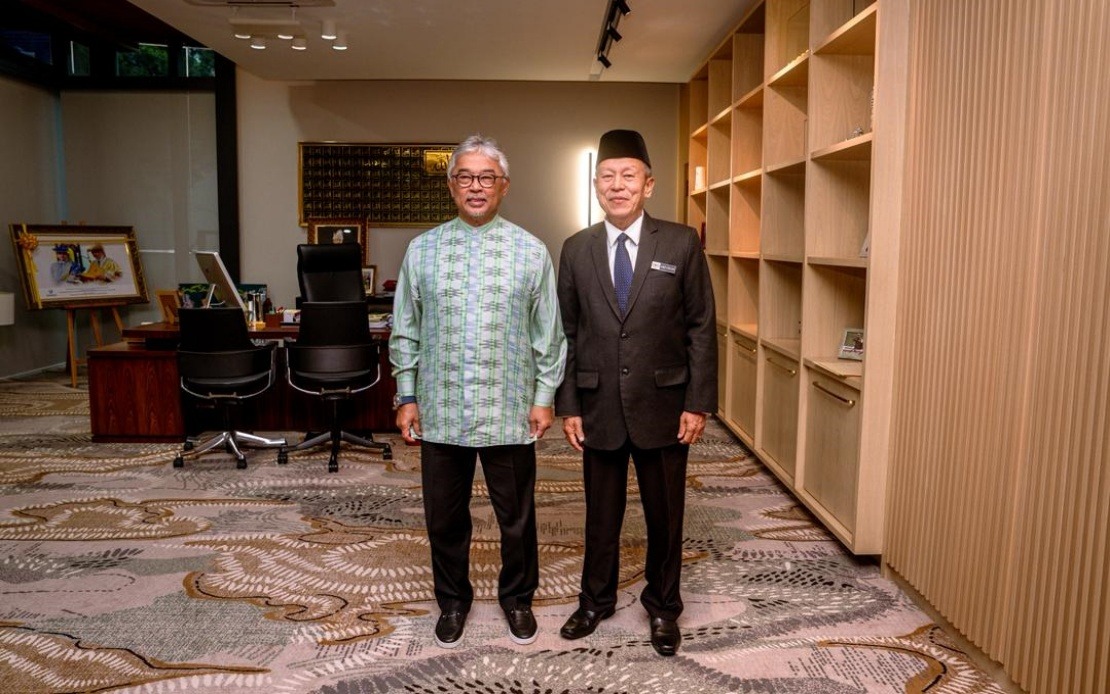
The Sultan of Pahang, Al-Sultan Abdullah Ri'ayatuddin Al-Mustafa Billah Shah, met with Malaysian Anti-Corruption Commission (MACC) chief commissioner Datuk Seri Abd Halim Aman yesterday at Shahzan House in Ampang, marking a significant engagement between the palace and Malaysia's leading anti-graft enforcement agency. The hour-long audience underscored the royal institution's continued interest in the nation's integrity framework and governance standards as the country navigates evolving challenges in public administration and institutional accountability.
The MACC utilised the meeting to present the Sultan with comprehensive updates on its operational achievements and strategic direction. The commission briefed His Royal Highness on the latest developments across its portfolio, including enforcement actions, investigative outcomes, and systemic improvements implemented to enhance its institutional effectiveness. This direct communication channel between palace leadership and the MACC hierarchy reflects established protocol whereby senior royal figures maintain oversight of critical national institutions tasked with safeguarding public resources and administrative probity.
During the engagement, the commission outlined its multi-faceted approach to strengthening integrity across government structures and the private sector. Officials presented details of ongoing initiatives designed to prevent corruption at institutional and individual levels, emphasising preventive measures that complement enforcement activities. The briefing provided the Sultan with insight into how the MACC coordinates with other agencies, conducts investigation campaigns targeting specific sectors, and implements public education programmes aimed at embedding anti-corruption values within Malaysian society.
Governance considerations featured prominently in the discussion, reflecting broader concerns about administrative transparency and accountability in public institutions. The MACC addressed current issues surrounding how government agencies manage resources, process decisions, and maintain public trust through demonstrable integrity standards. These governance discussions align with Malaysia's international commitments under anti-corruption conventions and regional frameworks emphasising good administrative practices across Southeast Asia.
A central theme of the meeting involved the MACC's efforts to rebuild and maintain public confidence in the commission itself. The agency has invested substantially in internal reforms, investigative capacity enhancement, and transparent communication strategies intended to demonstrate its independence and professional competence. By engaging with royal institutions, the MACC seeks to reinforce public perception that Malaysia's anti-corruption structures operate with institutional support and commitment across the nation's power centres.
Datak Seri Abd Halim expressed substantial gratitude to the Sultan for allocating time to receive the briefing and demonstrating direct interest in the MACC's mandate. Such expressions of appreciation carry significance within Malaysia's institutional culture, where acknowledgment of royal engagement signals broader legitimacy for enforcement agencies. The MACC chief's public statement of thanks also conveyed appreciation for the Sultan's demonstrated concern regarding the commission's independence and operational sustainability.
The Sultan's support carries particular weight given Pahang's geographic significance and the sultanate's historical importance within Malaysia's federal structure. As one of nine Malay sultanates, Pahang's ruler commands considerable constitutional influence and represents a crucial stakeholder in matters affecting national governance. Royal engagement with the MACC at this level sends important signals to other state rulers, government agencies, and the public regarding the seriousness with which Malaysia's institutional leadership views anti-corruption imperatives.
For Malaysian audiences tracking governance developments, this meeting illustrates how anti-corruption efforts increasingly command attention across multiple institutional domains. The MACC's ability to secure access to senior palace figures demonstrates that the commission has successfully positioned itself as central to national governance conversations, rather than operating as a peripheral enforcement mechanism. This institutional elevation reflects partly the MACC's expanded investigative mandate and partly growing recognition among Malaysian stakeholders that corruption control directly impacts national competitiveness and institutional legitimacy.
The emphasis on accountability and transparent governance carries implications for Southeast Asian neighbours observing Malaysia's institutional responses to corruption challenges. As ASEAN nations confront similar governance pressures, Malaysia's approach—combining enforcement mechanisms with royal institutional engagement—presents a model combining traditional authority structures with modern anti-graft institutions. This hybrid approach reflects Malaysia's distinctive constitutional framework while remaining cognisant of regional trends toward stronger institutional accountability measures.
Looking forward, such high-level engagements between palace institutions and enforcement agencies likely will continue as Malaysia positions itself within global governance standards while maintaining constitutional frameworks centring royal authority. The MACC's capacity to communicate effectively with sultans and secure their understanding of anti-corruption priorities will remain important for sustaining institutional buy-in across Malaysia's federal system. These interactions, while appearing ceremonial, actually perform critical political functions by embedding anti-corruption priorities within Malaysia's traditional power structures and reinforcing elite consensus regarding governance imperatives.

