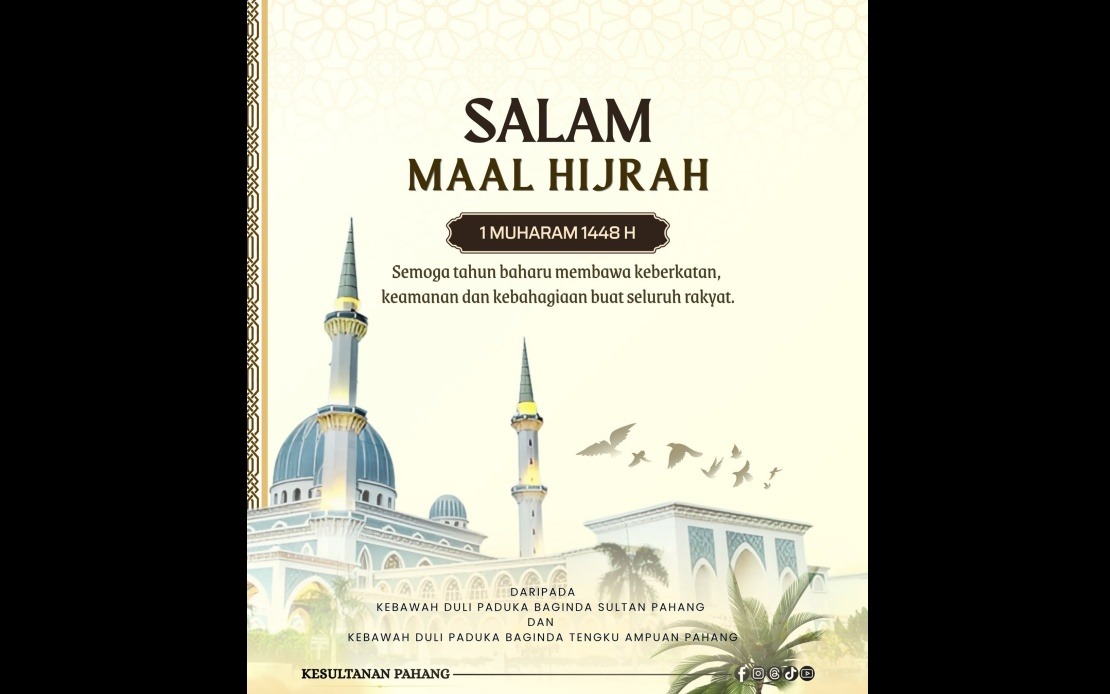
Pahang's highest-ranking royalty have taken the occasion of the Islamic new year to address the state's Muslim population with a message centred on hope and spiritual rejuvenation. Al-Sultan Abdullah Ri'ayatuddin Al-Mustafa Billah Shah and Tunku Azizah Aminah Maimunah Iskandariah conveyed their Maal Hijrah 1448H greetings through the Kesultanan Pahang's official channels in Kuantan, signalling the royal household's commitment to connecting with its subjects during significant religious occasions.
The timing of such greetings carries considerable symbolic weight across Malaysia's sultanate system, where the reigning monarchs serve as both political figures and custodians of Islamic values at the state level. Through their message, the royal couple expressed an earnest wish that the new Islamic calendar year would bring comprehensive blessings, peace and happiness to Pahang's diverse population. This framing reflects a broader understanding among Malaysia's royal institutions that religious observances are occasions not merely for spiritual reflection but for reinforcing the bonds between leadership and the communities they serve.
Maal Hijrah, which marks the migration of Prophet Muhammad from Mecca to Medina, holds profound significance in Islamic tradition as a moment symbolising fresh beginnings and moral transformation. By extending their greetings during this period, the Sultan and Tengku Ampuan acknowledged the deep meaning many Muslims attach to the occasion, positioning the royal household as aligned with the spiritual aspirations of Pahang's Islamic community. The public nature of their message, disseminated via social media platforms, demonstrates how Malaysia's traditional institutions have adapted to contemporary communication methods while maintaining their ceremonial and cultural relevance.
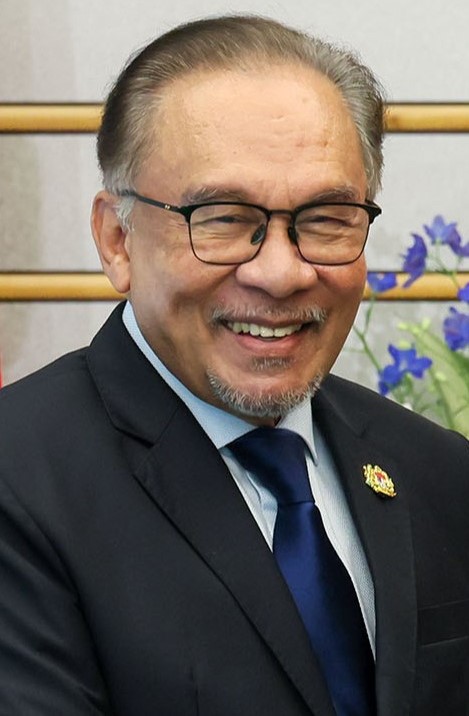
Pahang's Menteri Besar, Datuk Seri Wan Rosdy Wan Ismail, complemented the royal message by offering his own perspective on the new Islamic year's significance. His contribution reframed Maal Hijrah not as a historical commemoration but as a practical opportunity for individual and collective self-examination. Wan Rosdy encouraged Muslims across the state to view the occasion as a turning point, urging them to recalibrate their personal commitments to faith, intensify their charitable endeavours and seek divine favour through increased piety and good conduct. This interpretation aligns the religious observance with developmental and social welfare objectives at the state level.
The Menteri Besar's invocation of the Hijrah narrative as an inspiration for positive change carries particular resonance in a Malaysian context where religious values are frequently linked to nation-building and community progress. By drawing a parallel between Prophet Muhammad's transformative journey and the ongoing development of Pahang as a state, Wan Rosdy articulated a vision in which personal spiritual commitment and civic responsibility are intertwined. His emphasis on strengthening unity, promoting integrity and deepening people's welfare reflects a governance philosophy that seeks legitimacy through alignment with Islamic principles.
The specific call to "embrace the spirit of the Prophet Muhammad's Hijrah by making changes for the better" demonstrates how Malaysia's political leadership leverages religious occasions to encourage both moral introspection and practical action. This approach is particularly relevant in Pahang, a state with a significant Muslim majority where religious messaging carries considerable persuasive power. The invocation of shared Islamic values serves as a bridge between government initiatives and community expectations, creating a framework within which development programmes and policy objectives can be articulated with greater moral authority.
The emphasis on strengthening unity in the Menteri Besar's statement reflects contemporary concerns across Malaysia regarding social cohesion, particularly in multiethnic and multireligious contexts. By positioning Maal Hijrah as an opportunity to reinforce bonds within the Muslim community and, implicitly, to strengthen the broader social fabric, state leadership acknowledges that religious observances can serve unifying functions beyond their purely spiritual dimensions. This strategic framing is common across Southeast Asian Muslim-majority societies, where political leaders frequently mobilise religious occasions to advance national or regional integration objectives.
The invocation of divine blessing and protection in both the royal and Menteri Besar messages reflects a rhetorical tradition deeply embedded in Malaysian public discourse. Concluding statements with prayers for Allah's continued mercy and guidance are customary in official communications from Malaysia's Islamic leadership, reinforcing the integration of religious language into the machinery of state. For Malaysian readers accustomed to this vocabulary, such formulations signal authentic commitment to the occasion and to the communities being addressed, enhancing the persuasive and legitimising force of the broader message.
From a Southeast Asian perspective, Pahang's observance of Maal Hijrah through official state channels illustrates how Islamic calendar events remain institutionally important in Malaysia despite the country's secular constitutional framework. Unlike some regional neighbours where religious observances are relegated primarily to civil society or independent religious authorities, Malaysia's state-level engagement with Islamic occasions reflects the constitutional position of Islam as the Federation's official religion. This integration of religious commemoration into state practice distinguishes Malaysia's governance model within Southeast Asia's diverse political landscape.
The collective messaging from both the royal household and the Menteri Besar creates a layered communication strategy that reinforces shared values while respecting distinct institutional roles. The Sultan and Tengku Ampuan's message emphasises spiritual and emotional dimensions—hope, blessings and happiness—while the chief minister translates these sentiments into a governance agenda centred on renewal, unity and development. This division of labour allows Pahang's leadership to address multiple audiences simultaneously, appealing to citizens' spiritual aspirations while grounding the religious occasion within a framework of concrete policy objectives and developmental aspirations.
For Malaysians observing Maal Hijrah, such official communications carry practical significance beyond their ceremonial value. By acknowledging the occasion through formal channels, state leadership validates religious observance as integral to public life and governance discourse. This approach encourages broader community participation in reflecting on the occasion's meaning, while positioning government institutions as partners in supporting spiritual renewal and community strengthening. In Pahang specifically, where state institutions retain considerable cultural authority, such greetings help sustain the ceremonial and symbolic functions through which royal and executive leadership maintain legitimacy and connection with their constituencies across religious and ethnic boundaries.