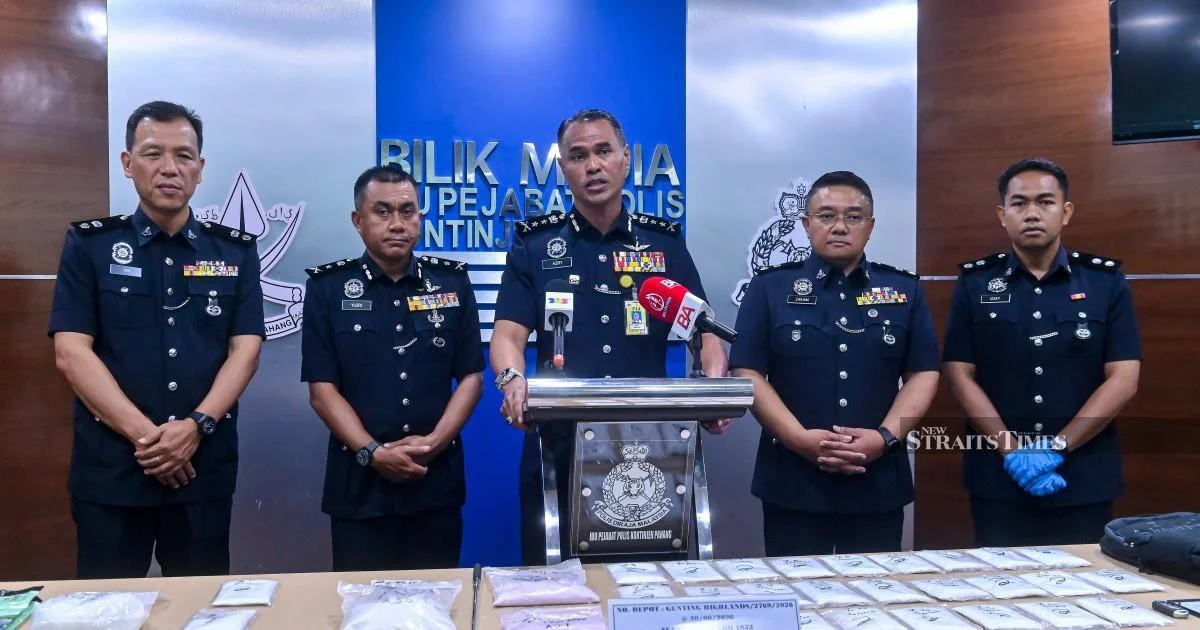
Pahang police have concluded a major three-day anti-drug enforcement operation that penetrated all 11 districts of the state, yielding 333 arrests and the recovery of contraband valued in excess of RM500,000. The coordinated statewide crackdown, which focused on areas identified as centres of narcotics activity, represents one of the more significant recent enforcement actions in the east coast state and underscores ongoing police efforts to dismantle local drug distribution networks.
The operation cast a wide net across Pahang's geography, from the coastal zones to inland areas, reflecting a strategic approach to combating drug trafficking rather than concentrating resources in a single region. By systematically targeting established hotspots in each district, authorities aimed to disrupt supply chains and apprehend individuals involved at various levels of the illicit drug economy. The breadth of the operation suggests that drug-related activity remains a persistent challenge throughout the state, rather than being confined to particular urban centres.
The seizures encompassed the full spectrum of enforcement assets: narcotics substances themselves, liquid cash proceeds believed to originate from drug sales, and motor vehicles used in trafficking operations. This three-pronged approach to asset recovery—targeting drugs, money, and transportation—reflects modern anti-drug strategy that seeks to impede not merely individual transactions but the underlying infrastructure enabling the drug trade. The vehicles recovered are particularly significant, as they represent operating capacity that traffickers rely upon for distribution and concealment.
For Malaysian readers, the Pahang operation reflects a broader national security concern. The east coast states, including Pahang, have historically been transit zones for drugs moving through Southeast Asia, making effective local enforcement crucial. The fact that police mobilized across all 11 districts demonstrates commitment to prevention at the grassroots level, though questions remain about sustainability and whether single large operations can achieve lasting impact on supply dynamics in regions where demand remains robust.
The number of arrests—333 individuals—provides insight into the scale of drug involvement within Pahang's communities. These figures typically encompass users, street-level dealers, and occasionally mid-level distributors, though it is rare for major traffickers to be apprehended in such operations. The composition of those arrested often reveals where enforcement emphasis lies and whether police focus extends beyond petty offenders to those orchestrating supply networks.
The monetary value of seized assets exceeding RM500,000 underscores the financial stakes in Pahang's drug trade. This figure, while substantial in local terms, is actually modest compared to seizures in major urban centres and international transit points, suggesting that the operation targeted mid-tier operations rather than consolidating major cartel infrastructure. Nevertheless, the disruption of even smaller networks creates gaps in supply chains that can temporarily elevate prices and reduce availability.
Successful anti-drug operations require extensive advance intelligence work, liaison between police units, and careful coordination to ensure simultaneous strikes that prevent suspects fleeing to neighbouring jurisdictions. The three-day duration indicates a well-orchestrated campaign, though the compressed timeframe also reflects operational realities—sustaining such high-intensity enforcement for extended periods strains police resources and often yields diminishing returns as suspects flee or networks reorganise.
For the broader Southeast Asian drug situation, what occurs in Pahang matters considerably. The state's strategic location along trafficking corridors means that disrupting local distribution has ripple effects up and down the supply chain. Conversely, gaps created by enforcement operations are often rapidly filled as traffickers recalibrate their networks, making continuous pressure essential rather than periodic sweeps.
The success metrics of such operations extend beyond headline arrests and seizures. Police effectiveness is ultimately measured by durability—whether communities experience sustained reduction in drug-related crime and whether trafficking patterns permanently shift. Early evidence of impact typically appears within weeks, as known hotspots either remain quiet or witness rapid reconstitution of activity.
This Pahang operation coincides with global and national recognition that drug addiction remains primarily a public health challenge requiring prevention, treatment and rehabilitation alongside enforcement. While police actions addressing supply are necessary, they work most effectively when paired with community programmes and rehabilitation facilities that reduce demand. The 333 individuals arrested represent persons who might benefit from treatment options as alternatives to incarceration, should the criminal justice system evolve to embrace such approaches.
Moving forward, the sustainability of enforcement intensity in Pahang will depend on resource allocation and political priority. The east coast region competes with peninsular urban centres for police attention and funding, yet the concentration of trafficking activity warrants continued investment. Whether the gains from Operation Hawk persist will determine whether this enforcement model merits replication and scaling across the broader state system.

