Pakatan Harapan is preparing a hybrid campaign model for the 16th Johor State Election that weaves together traditional community-level activism with modern digital outreach, according to the coalition's communications director. The strategy marks a deliberate effort to penetrate different voter segments through channels where Malaysians increasingly gather information, from neighbourhood gatherings to online communities. With formal campaigning set to launch immediately following nomination proceedings, the coalition aims to ensure its policy positions and electoral promises gain traction across the diverse Johor electorate.
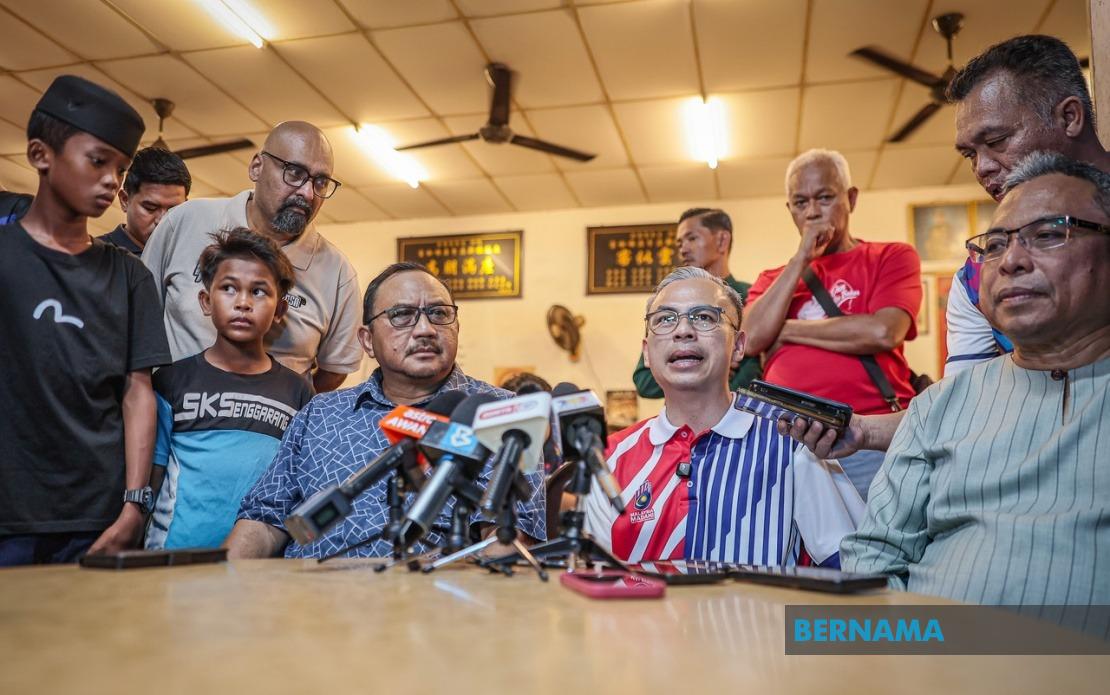
Datuk Fahmi Fadzil, serving dual roles as PH Communications director and Minister of Communications, articulated the rationale behind this integrated approach during remarks made in Batu Pahat. He emphasised that reaching every stratum of society—from urban professionals scrolling through social feeds to rural voters in traditional strongholds—demands flexibility in campaign methodology. The coalition recognises that reliance on any single communication channel risks alienating significant voter blocs, particularly in a state where economic conditions, infrastructure concerns, and development priorities vary considerably between urban centres and peripheral areas.
PKR, the largest component party within Pakatan Harapan contesting this round, will field 20 candidates across Johor constituencies. The party's campaign machinery is primed to activate immediately once the nomination process concludes on the morning following Fahmi's announcement. This rapid deployment reflects both the compressed timeline of state elections and the competitive intensity within Johor's political landscape, where voter sentiment has proven volatile in recent cycles. The urgency underscores PH's determination to establish narrative dominance early and build momentum ahead of polling day.
Fahmi personally flagged his intention to lead campaign activities in Semerah, while PKR deputy president Nurul Izzah Anwar would accompany Senggarang candidate Onn Abu Bakar through nomination proceedings at that constituency's centre. These high-profile appearances signal that senior party figures view the Johor contest as consequential for the coalition's broader political standing. The creation of a dedicated official media group represents an institutional response to the challenge of rapid information dissemination in an election environment where news cycles compress daily and voter attention fragments across platforms.
Truth in campaigning has become a central pillar of Pakatan Harapan's messaging framework for this election. Fahmi stressed that the coalition intends to anchor its communication strategy in factual accuracy, a deliberate positioning that implicitly contrasts with what PH characterises as misleading opposition rhetoric. This emphasis reflects Malaysia's broader struggle with election-period misinformation, where false claims about policies, candidate credentials, and government records can spread virally before fact-checkers intervene. By committing upfront to evidence-based communication, PH attempts to establish credibility while simultaneously positioning itself as the responsible voice in a crowded information ecosystem.
Federal-state cooperation has emerged as a substantive pillar of PH's campaign narrative for Johor. Fahmi highlighted infrastructure projects including the Rapid Transit System Link and the Johor-Singapore Special Economic Zone as tangible evidence of how coordination between Kuala Lumpur's federal apparatus and responsive state administrations generates economic benefits. These initiatives carry material significance for Johor's economic trajectory and employment prospects, particularly as the state positions itself as a crucial connector in the broader Malaysia-Singapore economic relationship. By linking electoral support to concrete development outcomes, PH frames voting as a choice between competing models of governance and development delivery.
The coalition's track record in three states—Selangor, Negeri Sembilan, and Penang—constitutes a comparative advantage that PH intends to leverage throughout the campaign. Each of these states demonstrates different configurations of PH governance and different economic and social profiles. Selangor's dominance as Malaysia's manufacturing and services powerhouse, Penang's emergence as a high-tech regional hub, and Negeri Sembilan's consolidation of development gains all provide documentary evidence, in PH's framing, that the coalition delivers results. Johor voters, particularly those concerned about whether the state can compete economically with Singapore and other regional centres, may find such demonstrations of proven governance capacity persuasive.
Specific candidates emblify PH's strategy of recruiting figures perceived as transformative. Dr Maszlee Malik, contesting Puteri Wangsa, brings intellectual credibility and policy expertise from his tenure in previous administrations. Onn Abu Bakar in Senggarang represents the recruitment of individuals with local rootedness and community standing. This diversification in candidate profiles suggests PH's calculation that Johor voters value different attributes across constituencies—some prioritising technical competence and national profile, others preferring locally embedded leaders with intimate knowledge of neighbourhood concerns.
Pakatan Harapan has committed to developing a state-specific manifesto that addresses Johor's distinctive challenges and aspirations. Rather than simply deploying a national platform adapted minimally for local consumption, the coalition signals its intention to engage substantively with Johor's particular economic position, infrastructure deficits, and demographic composition. This approach contrasts with generic campaigns and acknowledges the sophisticated electorate's expectation that serious contenders address state-level governance with comparable depth to how they address national affairs. The manifesto development process itself becomes a campaign tool, signalling seriousness and respect for Johor voters' intelligence.
Combating misinformation has crystallised into a systematic institutional priority. The Malaysian Communications and Multimedia Commission, alongside the Election Commission, Royal Malaysia Police, and Malaysian Media Council, has convened a dedicated task force explicitly tasked with monitoring and suppressing false information throughout the election period. This coordination across normally siloed institutions reflects recognition that misinformation poses a genuine threat to election integrity and public trust. By establishing these countermeasures visibly in advance, authorities and participating parties aim to deter bad-faith actors while assuring voters that the information environment remains reasonably trustworthy—a foundation prerequisite for elections functioning as genuine democratic exercises.
Packatan Harapan's campaign launch in Johor unfolds against a backdrop of national political uncertainty and shifting regional dynamics. Voter appetite for change, appetite for continuity, and appetite for specific policy outcomes all coexist within the Johor electorate. The coalition's dual emphasis on grassroots authenticity and digital efficiency, on proven governance and forward-looking development, on fact-based communication and candidate credibility, represents an attempt to synthesise these competing priorities. Whether this integrated approach succeeds depends substantially on execution—whether ground teams convert door-knocking into genuine engagement, whether digital content cuts through noise to reach persuadable voters, and whether candidates embody the values their campaigns articulate.

