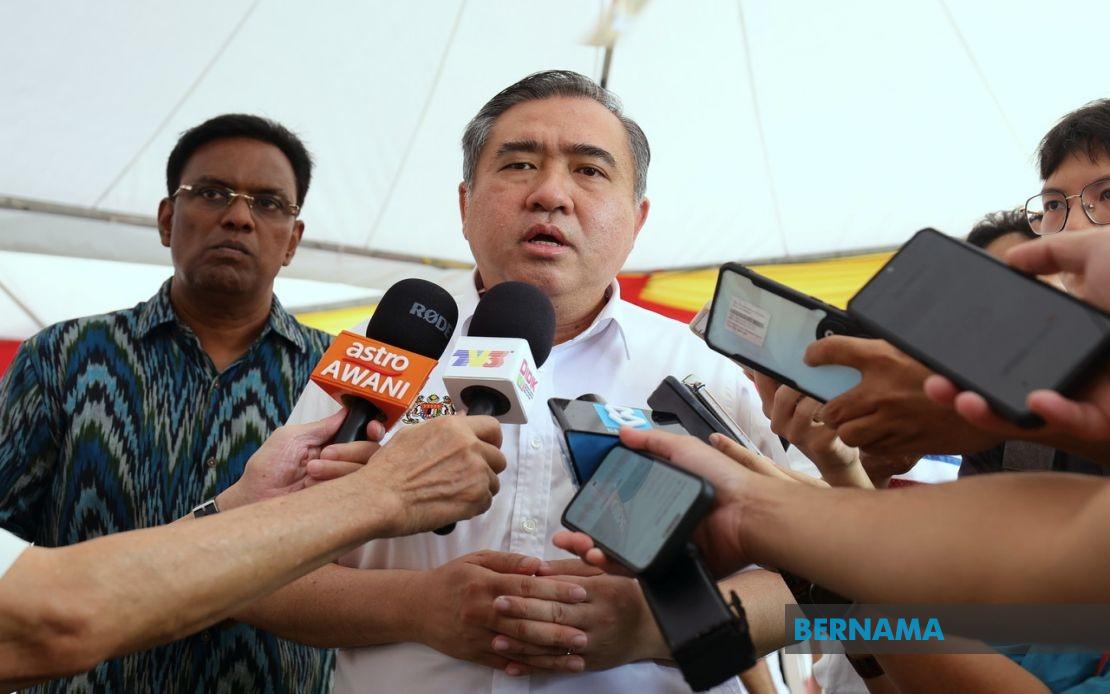
Pakatan Harapan (PH) has declared itself ready to navigate whatever political manoeuvres its opponents might orchestrate ahead of the Negeri Sembilan state election, including the possibility of Barisan Nasional (BN) and Perikatan Nasional (PN) coordinating their campaign efforts. Speaking in Seremban on July 16, DAP secretary-general Anthony Loke outlined his coalition's determination to remain unflustered by opposition strategies and concentrate instead on consolidating its own organisational machinery.
The remarks from Loke, who also serves as Transport Minister and the incumbent Chennah assemblyman, reflect growing speculation that BN and PN might pool resources or coordinate seat allocation in the forthcoming contest. Such coordination would represent a significant tactical shift in Malaysian electoral politics, potentially reshaping voter dynamics across the state. Loke's measured response suggests PH has already conducted contingency planning for this scenario, drawing lessons from recent state-level campaigns where opposition partnerships have proven effective.
Loke pointed to the Johor state election as a precedent for how PH would approach such challenges, noting that his coalition had demonstrated resilience when facing comparable opposition strategies. Rather than viewing BN-PN cooperation as a decisive advantage, PH leadership appears to believe that internal unity among its own component parties offers sufficient strength to secure victory in contested seats. This confidence may reflect assessments of ground sentiment or mathematical calculations about likely vote shares, though such assessments in Malaysian politics frequently prove fluid.
The DAP leader emphasised that PH's current strategic priority centres on reinforcing cohesion among its constituent parties, which include DAP, PKR, Amanah, and several smaller partners. This emphasis on internal unity carries particular weight given the historically fractious nature of PH alliances and earlier defections that weakened the coalition in certain constituencies. By foregrounding party discipline and coordinated campaigning, Loke implicitly acknowledged that opposition coordination poses genuine tactical challenges that PH must offset through superior organisation.
When pressed on claims that Chinese voter support might drift toward opposition parties such as MCA, Loke adopted a philosophical stance, suggesting that electoral outcomes ultimately rest with voters rather than opposition rhetoric or pre-election assertions about public sentiment. This deflection masks genuine uncertainty about voter behaviour in communities where PH's performance has occasionally disappointed, particularly regarding bread-and-butter economic concerns. In Negeri Sembilan, where urban and semi-rural voters coexist, such demographic volatility could prove decisive in closely contested seats.
The performance record of the Negeri Sembilan government since 2018, operating under the leadership of Menteri Besar Datuk Seri Aminuddin Harun, constitutes PH's primary electoral asset, according to Loke. Governance outcomes in state administration—particularly visible improvements in service delivery, infrastructure, and transparent governance—carry considerable weight with voters exhausted by political uncertainty. If PH can credibly demonstrate that its state government has delivered tangible benefits to rural and urban constituencies alike, this narrative provides ballast against opposition allegations of ineffectiveness or corruption.
The remarks came during an official event promoting MADANI Adopted Village and MADANI Adopted School initiatives overseen by the Transport Ministry. Loke took the opportunity to dismiss suggestions that such rural assistance programmes represented opportunistic election-season gestures rather than genuine commitments to infrastructure development. He contended that these initiatives had operated continuously across all ministries since 2025, serving as part of systematic rural development rather than tactical electoral manoeuvres. Whether such assertions persuade sceptical voters remains an open question, as Malaysians have witnessed countless development initiatives rebranded or accelerated during pre-election periods.
Separately, Loke addressed the political turbulence in Melaka, where DAP's decision to withdraw from state administration over the appointment of nominated assembly members had created constitutional complications. Characterising the withdrawal as a final decision that Melaka DAP stood behind, Loke suggested that the state government had accommodated this change through legislative assembly seating adjustments. This development underscores tensions within PH regarding questions of representation, accountability, and the boundaries between coalition discipline and constituent party autonomy—tensions that could resonate negatively in Negeri Sembilan if opposition parties effectively weaponise them.
The Negeri Sembilan election arrives at a moment when PH's national position has consolidated somewhat following years of political instability, yet regional vulnerabilities persist. Coalition governments in several states remain fragile, dependent on cooperation from partners with divergent interests and prone to defection when political incentives shift. How convincingly PH can mobilise voters around development achievements and forward-looking policy platforms, whilst managing internal coalition dynamics and countering opposition coordination, will significantly influence whether the coalition maintains or expands its influence in this strategically important state.
For Malaysian political observers and Southeast Asian analysts tracking coalition dynamics in democratic systems, the Negeri Sembilan contest offers a microcosm of broader regional trends: the fragmentation of traditional party structures, the emergence of fluid multi-coalition competition, and the volatility introduced when voters possess multiple credible political options. PH's capacity to navigate these currents whilst maintaining internal coherence will have implications extending well beyond state boundaries, potentially signalling whether the coalition possesses sufficient structural stability to anchor long-term national governance.

