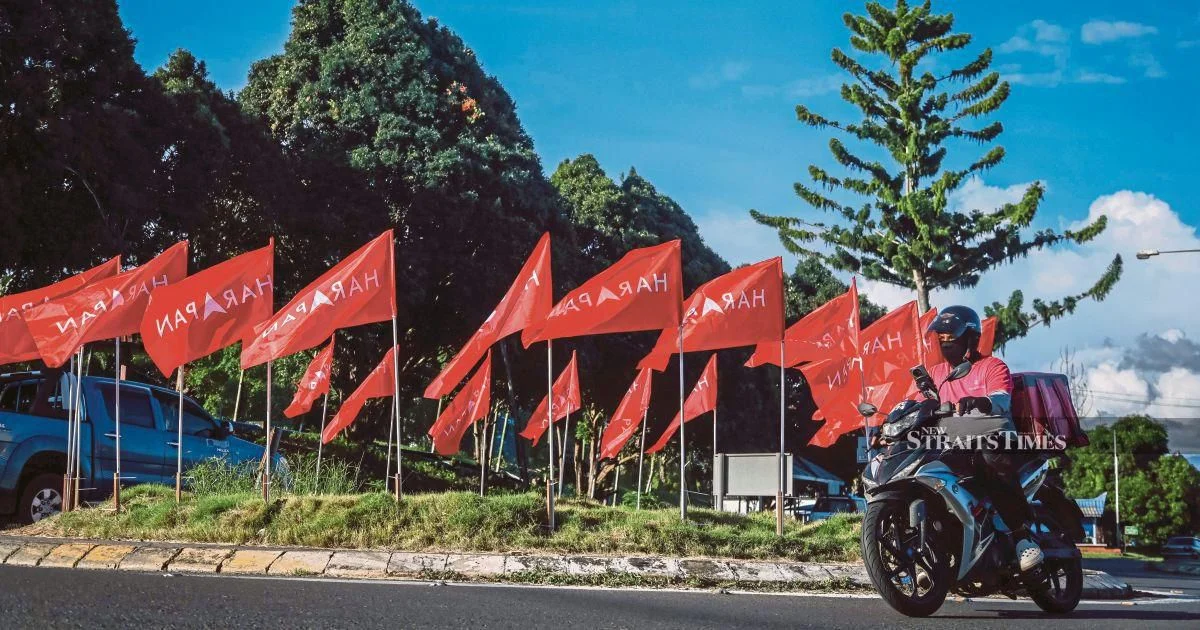
Pakatan Harapan has made clear it will not succumb to external pressure to prematurely announce its menteri besar candidate ahead of the 16th Johor state election, signalling the coalition's confidence in its organisational processes and determination to choose its leadership on its own timeline. The coalition's position reflects a more calculated approach to succession planning in one of Malaysia's politically significant states, where leadership decisions traditionally carry substantial weight in determining electoral outcomes and coalition stability.
The decision to resist hasty announcements contrasts sharply with the political dynamics that typically surround menteri besar selections in competitive states. Johor, as a peninsular heavyweight with considerable economic importance and a substantial electorate, remains a bellwether for broader national political trends. The coalition's reluctance to be pushed into a premature declaration suggests confidence that its internal deliberations will yield a credible candidate capable of commanding both grassroots support and cross-community appeal.
Political analysts note that premature announcements of leadership candidates frequently backfire, creating opportunities for opponents to mobilise campaigns against individuals before they have established their electoral positioning. By maintaining discretion, Pakatan Harapan preserves the flexibility to respond to ground-level political developments and ensure its chosen candidate enters the public arena with maximum momentum and carefully orchestrated narrative control.
The coalition's approach also reflects lessons learned from previous state elections where early declarations of leadership preferences sometimes became liabilities rather than assets. A well-timed announcement, coupled with an effective introduction campaign, can fundamentally reshape voter perceptions and establish a candidate's authority before rival narratives take root. Pakatan Harapan's strategy prioritises quality of candidate selection and presentation over speed of announcement.
Johor's electoral landscape remains complex and competitive, with multiple factions within the state's political ecosystem maintaining distinct interests and power bases. The menteri besar selection process inevitably involves balancing regional interests, factional considerations within party structures, and the need to appeal to both traditional political constituencies and emerging voter segments. Such calculations cannot be rushed without risking internal discord or the selection of unsuitable candidates.
Rivals attempting to pressure the coalition into early declarations are themselves engaged in a strategic calculation. By forcing Pakatan Harapan to commit prematurely, opposition parties hope to lock in a candidate against whom sustained campaigns can be mounted. The coalition's refusal to capitulate to this tactic demonstrates political maturity and understanding that electoral success depends on comprehensive preparation rather than symbolic gestures.
The timing of menteri besar announcements carries particular significance in Malaysian state elections, where leadership candidates frequently become the focal point of voter decision-making. A candidate introduced at the optimal moment, with full organisational backing, media momentum, and carefully constructed public positioning, stands considerably better chances of electoral success than one forced into the spotlight prematurely and inadequately supported by coalition infrastructure.
Pakatan Harapan's position also reflects the coalition's commitment to internal democratic processes and collective decision-making. The menteri besar selection represents not merely a personnel matter but a statement about how the coalition values consensus, consultation with component parties, and deliberation among party structures at state and federal levels. Rushing such processes risks delegitimising the selected candidate among sections of the coalition itself.
The coalition's composure in resisting external pressure demonstrates a fundamental confidence in its electoral prospects in Johor. Should Pakatan Harapan harbour serious doubts about its capacity to win the state election, it would face considerably greater pressure to act decisively on menteri besar selection. The current measured approach implicitly signals the coalition's assessment that Johor remains competitive and winnable with the right candidate and campaign strategy.
For Malaysian voters and political observers, the coalition's stance underscores the importance of patience in evaluating leadership transitions. The eventual announcement, whenever it arrives, will likely carry greater weight and impact because it represents a considered choice rather than a reactive decision taken under external duress. Such deliberation typically correlates with better-prepared campaigns and more effective governance transitions.
The unfolding situation in Johor illuminates broader patterns in Malaysian state politics where coalition stability, internal processes, and leadership succession remain intricate matters requiring careful management. Pakatan Harapan's refusal to be pressured reflects an understanding that electoral success ultimately depends on organisational coherence, candidate quality, and strategic timing rather than on satisfying the tactical calculations of political opponents.

