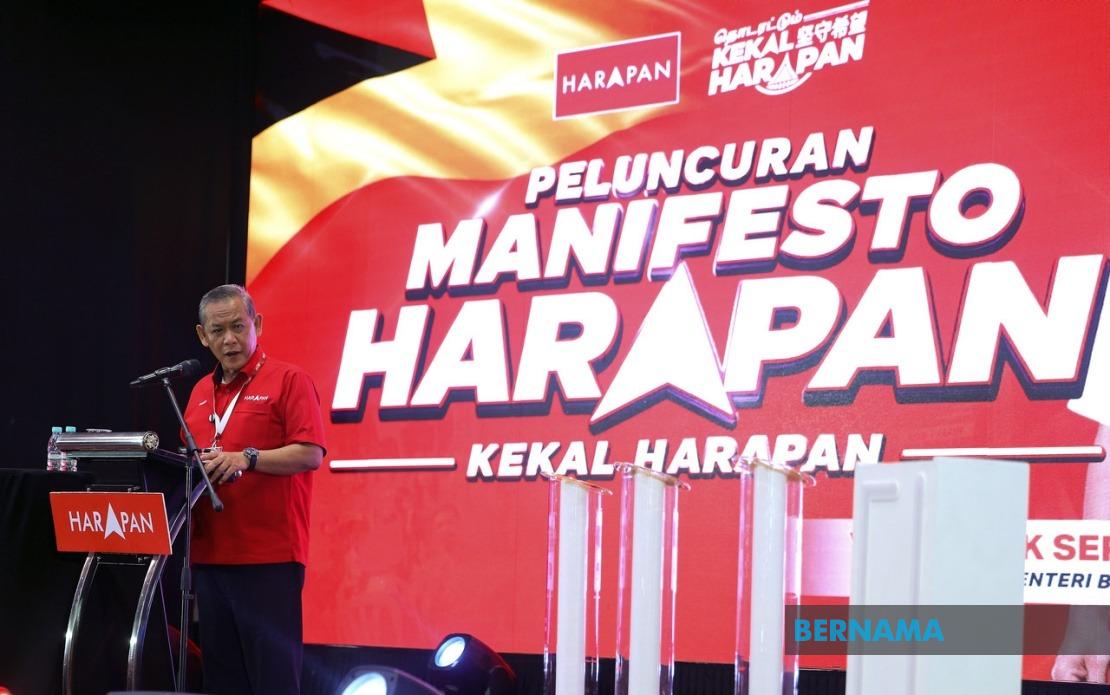
Pakatan Harapan formally presented its election manifesto in Seremban on July 20, setting out an ambitious ten-point agenda designed to guide the coalition's campaign for the 16th Negeri Sembilan state election. Titled 'Negeri Sembilan Kekal Harapan' (Negeri Sembilan Stays With Harapan), the document was unveiled by Negeri Sembilan PH chairman and incumbent Menteri Besar Datuk Seri Aminuddin Harun, signalling the coalition's commitment to cementing its hold on the state after previous electoral victories.
The manifesto's opening pillar focuses on delivering transparent and inclusive administration, a cornerstone promise that reflects persistent voter concerns about government accountability and public participation in policymaking across Malaysia. This commitment extends beyond rhetoric into concrete mechanisms for citizen engagement and anti-corruption measures, recognising that voter trust remains fragile following scandals that have affected public institutions throughout the country in recent years.
A second major plank addresses economic opportunity, with PH pledging to generate 30,000 high-income employment positions within the state. This jobs creation target carries particular weight in Negeri Sembilan, where younger professionals have migrated to the Klang Valley and Kuala Lumpur for career advancement, potentially draining the state of talent and tax revenue. The coalition appears to recognise that retaining and attracting skilled workers requires competitive salaries and career pathways unavailable in many peripheral regions.
Housing emerges as another central promise, with the manifesto committing to construct 20,000 affordable dwellings while simultaneously resolving longstanding land disputes that have complicated property development and ownership across the state. These twin commitments directly address two of the most emotionally charged issues in Malaysian state politics—homelessness anxiety among working families and the frustration of those caught in protracted title disputes. The scale of the housing pledge suggests PH recognises affordability as a defining challenge for ordinary Negeri Sembilan residents struggling with rising property costs.
Educational access forms the fourth substantive commitment, with PH vowing to ensure quality schooling opportunities available to all state residents regardless of socioeconomic background. This promise taps into deep parental anxieties about children's futures and reflects broader recognition that educational disparity creates persistent inequality. For a state sandwiched between the developed federal territories and Selangor, educational competitiveness directly influences whether families remain in Negeri Sembilan or relocate for superior schooling alternatives.
The manifesto also pledges to strengthen the People's Wellbeing Scheme (SSR), an existing social safety net that provides targeted assistance to vulnerable populations. By emphasising expansion of this programme, PH signals its intention to deepen social protection while potentially widening the beneficiary pool—a politically shrewd move that combines welfare expansion with controlled fiscal responsibility by building on established administrative frameworks rather than creating entirely new systems.
Tourism and cultural heritage development constitute another commitment, reflecting Negeri Sembilan's underexploited tourism potential and rich historical significance. The state possesses considerable attractions including Seremban's colonial architecture, Kuala Pilah's cultural heritage sites, and natural landscapes, yet remains overshadowed by better-marketed neighbouring regions. PH's manifesto suggests recognition that tourism development generates employment, attracts investment, and provides economic diversification beyond traditional sectors.
Agricultural modernisation and food security figure prominently, addressing concerns that Malaysia's farm sector has stagnated relative to regional competitors and that heavy dependence on imports creates economic vulnerability. For Negeri Sembilan, which maintains significant rural areas and smallholder farming communities, investing in agricultural technology and productivity improvement could enhance rural incomes while reducing food import bills—outcomes with both economic and national security dimensions.
The manifesto further commits to implementing the Felda Development Plan, a reference to the Federal Land Development Authority's broader modernisation agenda. This commitment suggests PH recognises Felda's importance to rural livelihoods and land management in Negeri Sembilan, where settled schemes affect thousands of families. Support for Felda development typically signals attention to smallholder farmer concerns and land settlement issues that dominate rural political considerations.
Healthcare service improvements and modern infrastructure constitute additional planks, reflecting nationwide anxieties about medical accessibility and service gaps that disproportionately affect peripheral states. Quality healthcare delivery remains a decisive issue in Malaysian state elections, with voters increasingly frustrated by extended waiting times and inadequate facilities in non-metropolitan regions. Similarly, infrastructure modernisation affects everything from commute times to broadband access, influencing whether educated younger workers choose to base themselves in Negeri Sembilan.
The final commitment to promoting interfaith harmony indicates PH's attempt to position itself as a coalition transcending religious and communal divides—a messaging strategy particularly relevant in Negeri Sembilan, where Malay-Muslim majorities coexist with substantial Chinese and Indian minority populations. This commitment reflects political lessons learned nationally, signalling that successful state governance requires proactive management of communal relations rather than passive tolerance.
Taken collectively, PH's manifesto attempts to balance growth-oriented economics with social welfare expansion, national development priorities with state-specific concerns, and immediate deliverables with longer-term infrastructure transformation. The breadth of commitments suggests confidence in the coalition's electoral prospects while potentially indicating vulnerability on certain fronts, requiring comprehensive policy positioning to counter opposition messaging.

