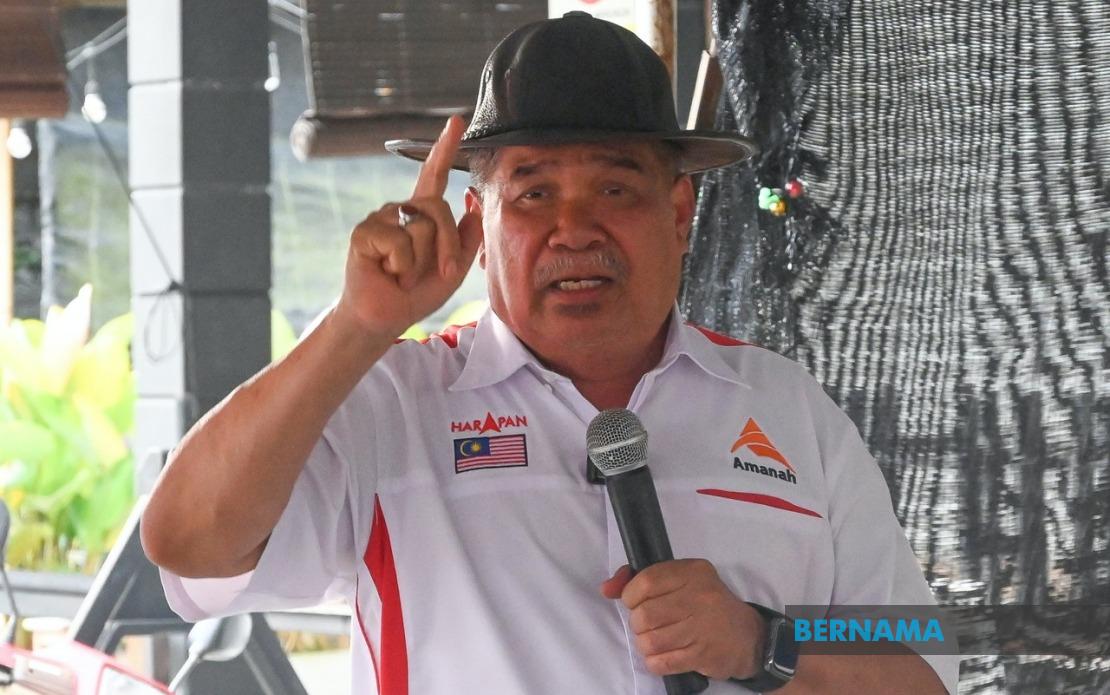
Pakatan Harapan remains committed to placing the interests of ordinary Malaysians and national welfare above the narrow concerns of political parties and individual leaders, according to Amanah President Datuk Seri Mohamad Sabu. The coalition's resolve has been tested by the recent deepening of cooperation between Barisan Nasional and Perikatan Nasional, yet the Amanah leader insisted that PH should confront this political realignment with measured composure rather than panic, continuing to serve voters through tangible delivery rather than reactive posturing.
Mohamad Sabu, who holds the portfolio of Minister of Agriculture and Food Security, articulated his position in a detailed Facebook statement, emphasising that Prime Minister Datuk Seri Anwar Ibrahim remains steadfast in his commitment to safeguarding the interests of Malays and upholding Islam's position within Malaysia's constitutional framework. Critically, Mohamad stressed that this protection operates through concrete governance and policy implementation that yields substantive benefits for religion, ethnicity, and national development, rather than through appeals to anxiety or existential threat. This distinction reflects a strategic pivot within PH's political narrative, departing from the emotionalism that has characterised much recent Malaysian political discourse.
The coalition's foundational commitments remain unchanged, Mohamad indicated. Pakatan Harapan will persist in defending Islam as the Federation's official religion, maintaining the institution of the Malay Rulers, preserving the Malay language, and protecting Bumiputera rights as inscribed in the Federal Constitution. Simultaneously, the government aims to construct a stable and progressive nation capable of commanding international respect and contributing meaningfully to global affairs. This balancing act reflects the ongoing tension within Malaysian governance between constitutionally enshrined communal protections and forward-looking development imperatives that demand inclusivity and merit-based advancement.
A central element of Mohamad's message involved a deliberate rejection of what he characterised as sentiment-driven political games rooted in division. The Amanah president warned that the coalition would neither participate in nor be ensnared by strategems that exploit communal anxieties or manufacture artificial grievances. This positioning suggests that PH recognises how opposition parties, particularly those within the BN-PN alignment, have leveraged fear and perceived threat narratives to mobilise support, particularly among Malay-Muslim voters. By explicitly disavowing such tactics, PH seeks to establish a higher ground of rational governance and genuine policy focus.
Mohamad's most pointed critique targeted prevailing narratives suggesting that Malays face perpetual jeopardy requiring constant vigilance and defensive posturing. He contended that such messaging ultimately weakens rather than strengthens the Malay community, fostering dependency mentalities and undermining the self-assurance necessary for meaningful advancement. Instead, he advocated for narratives centred on building confidence, cultivating knowledge, developing integrity, fostering self-reliance, and nurturing the courage to compete equitably with other groups. This reframing represents a philosophical divergence from the defensive posture that has long characterised Malay-Muslim politics in Malaysia, suggesting an alternative developmental pathway rooted in capability rather than grievance.
The minister elaborated on his vision of an aspirational Malay community characterised by intellectual development, strong moral foundations, economic resilience, and technological mastery. In this conception, Malays constitute a dynamic cohort capable of engaging confidently with global competition and innovation rather than a vulnerable population requiring perpetual protection from external threat. Such framing implicitly critiques rival political narratives that have emphasised existential vulnerability and the necessity of preferential communal safeguards, positioning instead an economically sophisticated and technologically literate Malay population as the authentic national interest.
Mohamad's contention that the contemporary Malay community has matured beyond susceptibility to endless cycles of sentiment-based political messaging reflects a calculated wager about voter sophistication and appetite for alternative political frameworks. This assertion carries particular significance given the electoral volatility demonstrated during recent general elections, wherein Malay-Muslim voters have shifted substantially between competing coalitions. Should this reading prove accurate, it suggests that traditional appeals to communal protection and religious defence may hold diminishing resonance, particularly among younger voters and urban constituencies exposed to diverse information sources and competing ideological frameworks.
The context of these remarks extends beyond mere coalition positioning to encompass substantive governance challenges confronting the Anwar Ibrahim administration. Inflation pressures, employment uncertainties, agricultural productivity concerns, and climate-related agricultural disruptions affect all communities regardless of ethnicity or religion. By emphasising concrete policy delivery and economic advancement, Mohamad implicitly repositions PH's appeal from identity-based solidarities toward performance-based legitimacy. This strategic reorientation acknowledges that sustained electoral support requires demonstrated competence in managing ordinary citizens' material welfare rather than rhetorical victories in cultural and religious discourse.
The minister's insistence that the Malay community increasingly rejects artificial threat narratives and values authenticity and truthfulness represents a subtle critique of political opponents whilst simultaneously elevating public discourse expectations. Whether this characterisation reflects actual voter preferences or aspirational messaging remains subject to interpretation. Nonetheless, the statement signals PH's determination to contest political space through appeals to rational self-interest, developmental aspiration, and institutional strengthening rather than through the cultivation of communal anxiety that has defined portions of Malaysian political competition in recent decades.
PH's strategic positioning amid the BN-PN alignment carries implications extending across Southeast Asian political dynamics generally. Coalition governments throughout the region have grappled with maintaining coherence whilst incorporating diverse constituent interests. PH's attempt to transcend sentiment-based politics and establish governance legitimacy through policy delivery offers lessons, both instructive and cautionary, for other regional political formations navigating comparable challenges. Should the coalition succeed in implementing this framework, it could reshape expectations regarding political competition and voter behaviour across the region.
Moving forward, the distinction between PH's articulated approach and the actual governance record it produces will prove decisive in determining electoral fortunes and coalition durability. Voters distinguish with increasing sophistication between rhetorical commitments and institutional performance. Mohamad's emphasis on building Malay confidence through education, economic development, and technological advancement requires sustained investment and demonstrable progress across multiple policy domains. The credibility of this alternative narrative will ultimately depend upon whether concrete results materialise in forms affecting ordinary citizens' daily lives and economic prospects.

