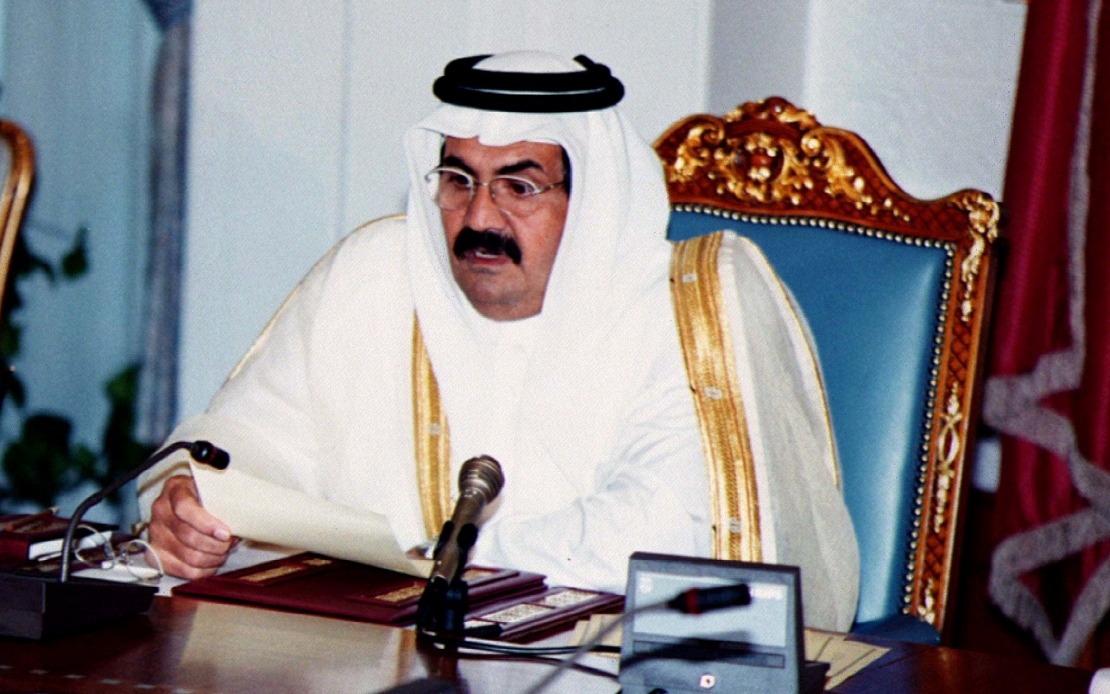
Pakistan's Prime Minister Shehbaz Sharif and Maldives President Mohamed Muizzu made separate journeys to Qatar on Monday to express their condolences to Qatari Emir Sheikh Tamim Bin Hamad Al Thani and members of the royal household following the death of the former emir, Sheikh Hamad Bin Khalifa Al Thani. The visits underscore the diplomatic significance of Sheikh Hamad's influence across the Islamic world and the broader recognition of his role in shaping modern Qatar.
Shehbaz Sharif's delegation reflected the seriousness with which Pakistan's government viewed the occasion. Accompanying the prime minister were his brother Nawaz Sharif, a former premier himself, alongside Deputy Prime Minister and Foreign Minister Senator Ishaq Dar and Information Minister Attaullah Tarar. The composition of the entourage highlighted the cross-party respect afforded to the late emir's memory, with both current and former leadership represented among those paying respects.
Sheikh Hamad, who guided Qatar through a period of extraordinary transformation, passed away at the age of 74 on Sunday. His reign from 1995 until his abdication in 2013 fundamentally reshaped the nation's geopolitical standing and economic fortunes. During his 18 years in power, he oversaw Qatar's emergence from a modest Gulf state into a global financial powerhouse, a process that caught the attention and admiration of world leaders across multiple continents and political systems.
The magnitude of Sheikh Hamad's legacy became evident in the wave of tributes that followed his death. Leaders and officials from various nations issued statements praising his stewardship of Qatar during a critical period in the nation's history. These messages consistently highlighted his vision for modernisation while maintaining cultural and religious values—a balance that many observers considered central to his political success and regional influence.
Maldives President Mohamed Muizzu, in his condolence message, emphasised that Sheikh Hamad's contributions to building Qatar into a modern nation would resonate across generations. The Maldivian leader particularly noted the former emir's impact not merely on Qatar itself but on the broader Arab and Islamic world, suggesting his influence extended well beyond territorial boundaries. This observation reflected the significant role Qatar, under Sheikh Hamad's stewardship, had assumed in regional and international affairs.
Bangladesh Prime Minister Sheikh Hasina Wazed, another prominent regional voice, similarly outlined the dimensions of Sheikh Hamad's accomplishments in her condolence message to the current emir. She emphasised his work in advancing regional peace, fostering economic development across multiple sectors, expanding educational opportunities, and strengthening international cooperation frameworks. These pillars of his legacy represented a comprehensive vision of nation-building that extended beyond conventional measures of economic growth.
The scale of mourning reflected Sheikh Hamad's outsized influence in Gulf and international politics. Pakistan and India both declared Monday as a day of national mourning, a gesture typically reserved for figures of substantial historical importance or diplomatic significance to those nations. This demonstrates how Sheikh Hamad's decisions and leadership had touched the lives and interests of people far beyond Qatar's borders, particularly in South Asia where Pakistan and India maintain significant strategic and economic ties with Gulf nations.
The visits by Pakistan and Maldivian delegations occurred against a backdrop of complex geopolitical dynamics in the Middle East and Indian Ocean region. Both nations have developed important relationships with Qatar, which under Sheikh Hamad's guidance became a central player in regional diplomacy and investment. The formal condolence visits represented not merely ceremonial acknowledgment but also an opportunity to affirm the continuity of these relationships with the current emir and the new administration.
Sheikh Hamad's decision to abdicate in 2013 in favour of his son represented a deliberate transition of power that was relatively uncommon in the region at that time. His willingness to step aside while still relatively young demonstrated a level of institutional thinking about succession that impressed observers of Gulf politics. This approach stood in contrast to other monarchies in the region and contributed to perceptions of Qatar as a more forward-thinking governance model.
The tributes to Sheikh Hamad's tenure highlighted the apparent paradox of his leadership: overseeing rapid modernisation and globalisation while preserving a distinctly Islamic identity and cultural framework. This balance proved instrumental in Qatar's ability to host major international events, attract global investment, and serve as a diplomatic intermediary in regional conflicts, all while maintaining legitimacy with its traditional population and broader Muslim world.
For Malaysia and Southeast Asian observers, Sheikh Hamad's passing carries particular significance given the region's economic interdependence with the Gulf. Qatar's transformation into a major investment source for Southeast Asian nations, its role in global energy markets, and its diplomatic initiatives in Asia were substantially shaped by policies and relationships established during his tenure. The visits by regional leaders signal that his successors are expected to maintain these strategic partnerships.
The immediate and substantial international response to Sheikh Hamad's death also reflects how individual leaders can shape national trajectories and international standing. His legacy encompasses not only economic metrics and infrastructure projects but also Qatar's positioning as a respected voice in global affairs. As the current emir consolidates leadership and charts Qatar's future course, the international community's recognition of his predecessor's achievements provides an important context for understanding both the country's current position and its potential directions.

