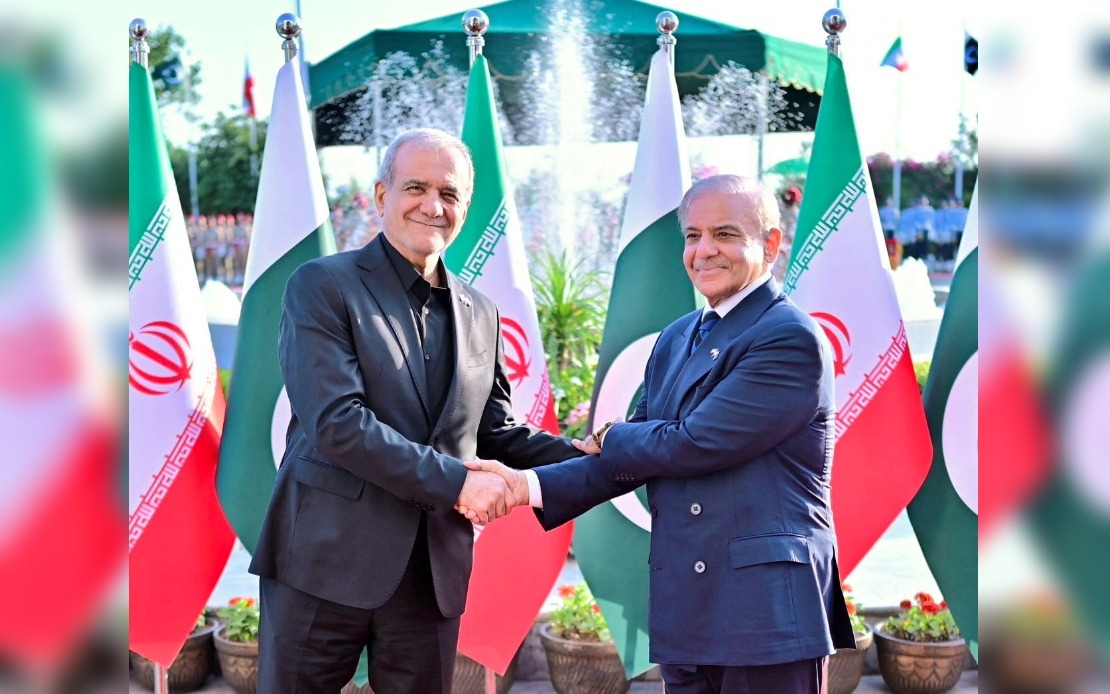
Pakistan's government has thrown its weight behind Iran's possession of ballistic missiles, with Prime Minister Shehbaz Sharif asserting that Tehran deserves equal security rights as other nations. During high-level talks with visiting Iranian President Masoud Pezeshkian in Islamabad, Sharif rejected what he described as discriminatory international standards that permit some countries to maintain advanced weaponry while denying the same capability to Iran.
The Pakistani premier stressed that missile capabilities formed no part of the memorandum of understanding finalised between Iran and the United States on June 17, a breakthrough agreement in which Islamabad played a central mediation role. Sharif emphasised that the topic had never featured on negotiating agendas and that Iran itself had shown no interest in discussing the matter as part of the diplomatic framework. This clarification appears designed to insulate Pakistan from criticism that it has compromised on Iranian security concerns while facilitating the US-Iran understanding.
Iran views its ballistic missile arsenal as fundamental to national defence, particularly following Israeli and American military strikes on February 28. The Islamic Republic has maintained that these weapons provide essential deterrence against hostile forces in a volatile Middle Eastern environment. Pezeshkian underscored this position at the joint news conference, declaring that Iran's defensive capabilities remain non-negotiable regardless of international pressure or diplomatic negotiations. His rhetoric reflected deep convictions about sovereignty and the right to self-defence that remain central to Iranian strategic doctrine.
Pakistan's mediation efforts have been extensive and consequential. Beyond the June agreement, Islamabad facilitated a temporary ceasefire between Washington and Tehran in April, demonstrating sustained diplomatic engagement on a thorny dossier. Sharif credited his Deputy Prime Minister Ishaq Dar and Chief of Army Staff Field Marshal Syed Asim Munir as instrumental partners in these negotiations. His expressions of gratitude toward Iranian leadership for trusting Pakistan's mediation capacity suggest that Islamabad views these diplomatic victories as significant foreign policy achievements that enhance its regional standing.
The timing of this public backing reflects broader regional dynamics. International efforts to negotiate with Iran have repeatedly encountered obstacles from what Sharif termed "spoilers all over the world" intent on derailing peace arrangements. Israel has emerged as perhaps the most significant impediment to stability in West Asia, according to Pakistani characterisations, with its military operations in Lebanon and occupied Palestine generating ongoing civilian casualties and humanitarian crises. This framing aligns Pakistan's position with Iran's perspective on regional security threats and international equity.
Remarkably, United States President Donald Trump has recently conceded that Iran deserves ballistic missile capabilities, at least on grounds of fairness. Speaking to journalists in Paris on June 17, Trump acknowledged the logical inconsistency of allowing other nations to possess such weapons while denying them to Iran. This American position, whether durable or merely rhetorical, provides diplomatic cover for countries like Pakistan that support Iranian missile rights. Trump's comments suggest that even Washington recognises the weakness of arguments rooted in double standards.
Pezeshkian's visit to Islamabad carried ceremonial significance beyond the policy discussions. Pakistan accorded the Iranian president an elaborate reception including escort by six Pakistan Air Force fighter jets, a formal 21-gun salute, and personal greetings from Pakistan's Prime Minister and President Asif Ali Zardari. These protocols underscore the importance Islamabad places on its relationship with Tehran and the messaging value of this diplomatic engagement to both domestic and international audiences.
For Malaysian and Southeast Asian observers, Pakistan's stance illuminates broader patterns in how regional powers navigate great power competition. Islamabad has positioned itself as a credible mediator between Washington and Tehran, a role that requires maintaining relationships with both while advancing regional stability. Pakistan's public defence of Iranian missile capabilities, coupled with its successful brokering of US-Iran agreements, demonstrates how middle powers can exercise diplomatic influence by offering services that major powers value, particularly in contexts where direct bilateral negotiations face obstruction.
The Malaysian perspective on these developments proves instructive. As a Southeast Asian nation maintaining connections across multiple international alignments, Malaysia appreciates the delicate balance required when managing relationships with powers holding divergent interests. Pakistan's approach—supporting Iranian security rights while maintaining communication channels with the United States—reflects pragmatism that Southeast Asian governments understand intimately. The principle that nations should not face arbitrary discrimination in security matters, while remaining controversial, resonates with smaller countries that have long felt vulnerable to great power impositions.
The broader significance of this episode extends to international law and norms around state sovereignty. Pakistan's assertion that ballistic missiles should not be singled out as prohibited unless explicitly negotiated challenges the legitimacy of informal international hierarchies where powerful nations impose restrictions on others. This argument potentially carries implications for how regional security arrangements might evolve, particularly if similar principles applied to other categories of military capability.
Moving forward, Pakistan's mediation role faces continued tests as regional tensions persist. The success of the June agreement remains conditional upon whether spoilers can be managed and whether the United States maintains its apparent acceptance of Iranian missile capabilities through future administrations. Pakistan's willingness to publicly champion Iranian security rights suggests Islamabad has calculated that the benefits of acting as a credible broker—and maintaining strong ties with Iran—outweigh risks of American displeasure, at least under the current Trump administration.
The visit also demonstrated that Pakistan-Iran relations transcend transactional diplomatic engagement. The warmth displayed in official protocols and Sharif's assurances of fraternal commitment suggest deeper strategic partnership underpinning the mediation efforts. For the region, this alignment between two major Islamic nations carries implications for how coalitions might form around security issues, territorial disputes, and economic cooperation in coming years. Whether this partnership can deliver sustained regional peace remains uncertain, but Pakistan's recent initiatives suggest serious commitment to trying.

