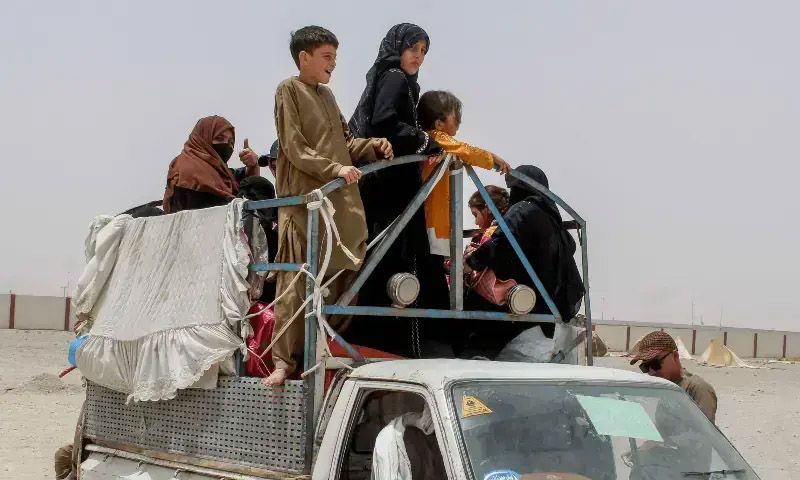
Pakistan's government has accelerated its enforcement of immigration regulations, removing 2.59 million Afghan nationals from the country over the past two years. This substantial deportation campaign reflects a hardening stance on undocumented migration, with federal and provincial authorities working in tandem to identify, process, and return Afghan residents who lack proper legal status.
Punjab province has emerged as the focal point of this immigration crackdown. The provincial home department's dedicated foreign national security cell has personally overseen the detention and deportation of 138,342 Afghan nationals. Currently, approximately 53 individuals remain housed across 36 holding centres scattered throughout the province, awaiting completion of documentation and final transit to Afghanistan.
The operational scope of this enforcement effort extends beyond simple border control. At processing centres, detained Afghans receive accommodation and administrative assistance as authorities compile necessary documentation before arranging their departure through the Torkham border crossing, Pakistan's primary land gateway with Afghanistan. This structured approach suggests the government has invested in logistical infrastructure to manage what amounts to one of South Asia's largest recent deportation operations.
Official justification for the campaign rests on straightforward legal principles. According to a home department spokesman, Pakistan's immigration framework explicitly prohibits residency without valid visa documentation. Non-citizens who cannot demonstrate proper authorization face mandatory deportation. This position reflects standard international migration practice, though its enforcement intensity highlights the government's determination to enforce compliance with formal procedures.
The scale of the operation underscores the extent of undocumented Afghan settlement across Pakistan. Afghanistan's decades of conflict, economic collapse, and humanitarian crises have driven successive waves of migration towards Pakistan, historically the world's largest host of Afghan refugees. Yet the distinction between registered refugees and undocumented migrants has grown increasingly significant in Pakistan's policy framework, with authorities now prioritizing removal of those lacking formal status.
For Malaysian readers, this deportation campaign offers important perspective on how neighbouring countries manage migration pressures. Pakistan's approach—combining systematic identification, centralized processing, and coordinated enforcement—represents one model for managing irregular migration flows. The efficiency and scale of operations suggest sophisticated administrative capacity, though humanitarian concerns regarding rapid deportations have drawn international scrutiny.
The timing and intensity of Pakistan's crackdown reflects multiple pressures. Economic constraints, security concerns, and domestic political considerations all influence immigration policy. Pakistan itself faces significant internal displacement and poverty, creating domestic constituencies that view large foreign populations as competing for limited resources. Afghan deportations thus serve both administrative and political purposes within Pakistan's complex governing environment.
Public participation forms a crucial component of the enforcement strategy. By encouraging citizens to report undocumented Afghans via emergency call 15, authorities have essentially crowdsourced immigration enforcement. The promise of confidentiality aims to encourage reporting while limiting backlash against informants, though such systems inevitably raise questions about due process and potential misidentification.
For Afghanistan, receiving 2.59 million deportees presents severe challenges. The country already hosts millions of internally displaced persons and faces humanitarian emergencies across multiple provinces. Returning deportees often lack employment prospects, housing, or family support networks, effectively compounding Afghanistan's existing humanitarian crisis. International organizations have expressed concern regarding the pace of returns relative to Afghanistan's absorption capacity.
The implications extend across Southeast Asia's migration landscape. Pakistan's model demonstrates how middle-income countries hosting substantial migrant populations can implement large-scale deportation operations. As regional migration pressures intensify due to climate change, conflict, and economic disparities, other nations will observe Pakistan's experience. Malaysia, which hosts significant migrant communities, may find elements of Pakistan's approach instructive for policy discussions.
The Torkham border serves as critical infrastructure in this operation. As the primary crossing point for Afghan-Pakistan trade and population movement, it now processes unprecedented deportation volumes. Border management becomes increasingly complex when designed to facilitate both legitimate commerce and mass population transfers simultaneously.
Looking forward, the trajectory of Pakistan's Afghan deportation policy remains uncertain. Political pressure for continued enforcement may intensify, or humanitarian concerns could prompt policy modulation. The 2.59 million figure represents current cumulative deportations, but whether this represents the full extent of undocumented Afghan residents remains unclear. Some estimates suggest millions more lack proper documentation, implying the enforcement campaign could expand substantially.

