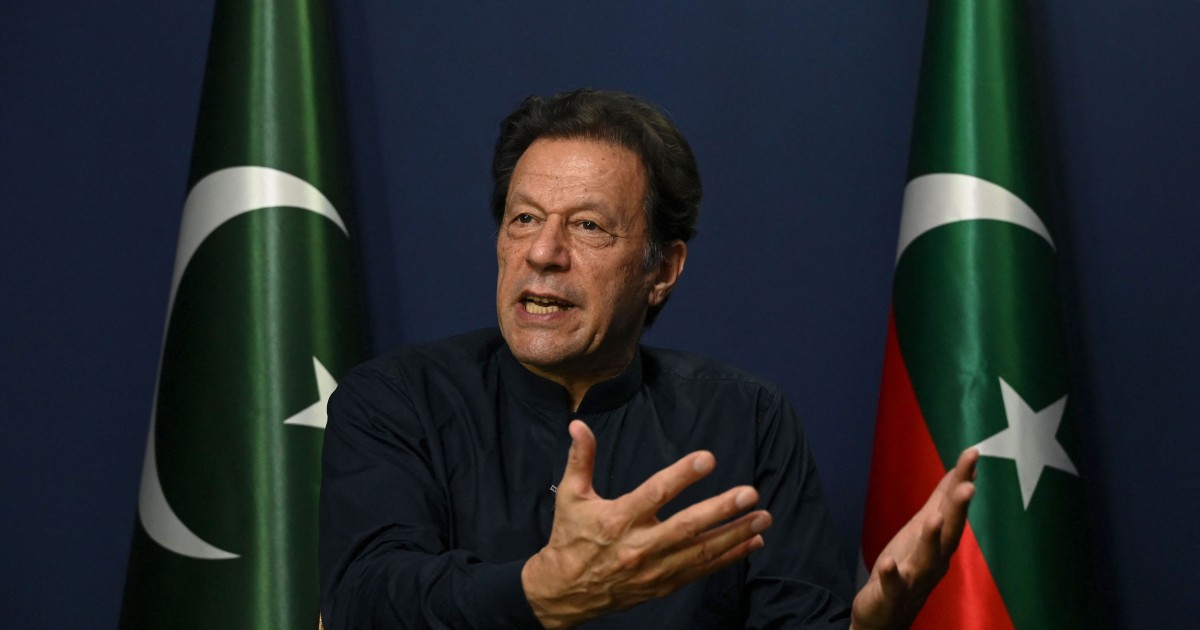
The Supreme Court of Pakistan delivered a significant ruling on Tuesday, directing that former Prime Minister Imran Khan be relocated from detention to a hospital facility rather than continue serving his sentence within the prison system. The decision came after sustained advocacy by Khan's Pakistan Tehreek-e-Insaf (PTI) party, which had persistently pressed the court to address deteriorating health conditions affecting the high-profile political figure during his incarceration.
The judicial intervention represents a notable moment in Pakistan's turbulent political landscape, where former heads of government have faced legal challenges following their departures from office. Khan's case has attracted considerable attention both domestically and internationally, with his supporters characterising the legal proceedings against him as politically motivated. The court's decision to permit hospitalisation signals the judiciary's acknowledgement of substantive health concerns that warrant medical intervention beyond what prison facilities can provide.
Khan's family members and party representatives had repeatedly communicated worries regarding his physical condition whilst in jail, arguing that the prison environment was inadequate for addressing his medical requirements. These representations to the court appear to have carried sufficient weight to persuade the bench that hospital care was necessary and appropriate. The shift from custodial detention to hospital admission represents an important distinction in Pakistan's legal and penal framework, offering the former premier access to more comprehensive medical facilities and professional healthcare oversight.
The Pakistan Tehreek-e-Insaf party immediately characterised the court order as a vindication of their long-standing position on Khan's predicament. Party officials presented the ruling as confirmation that their concerns had merit and that Khan's health had indeed deteriorated to a level requiring institutional medical care. This framing reflects the political significance of the development beyond its immediate implications for Khan's wellbeing, representing something of a symbolic victory for the opposition movement against the government.
The timing of the Supreme Court's intervention occurs within a broader context of political instability and institutional tensions in Pakistan. The nation has experienced repeated cycles of civilian government disruption, military intervention, and judicial activism that have shaped its democratic trajectory. Khan's detention and the various legal cases against him have become emblematic of these deeper institutional conflicts, with different factions viewing the proceedings through the lens of competing political interests rather than purely judicial considerations.
Khan's trajectory from cricket celebrity to political leader and ultimately to detention exemplifies the volatile nature of Pakistani politics. His rise to prominence through the PTI represented a challenge to established political elites, and his subsequent fall from office in 2022 triggered investigations and legal charges across multiple jurisdictions. Supporters maintain that these prosecutions lack substantive foundation and are designed to eliminate a significant political rival, whilst critics contend that Khan must answer legitimate questions about his conduct in office and subsequent activities.
The hospital transfer decision carries implications extending beyond Khan's individual situation. It signals that Pakistan's courts retain capacity for independent judgment on matters of detention and healthcare, even when cases involve figures at the centre of political controversy. The ruling demonstrates that judicial institutions can exercise oversight over executive detention practices, a principle fundamental to rule of law even in contexts where political polarisation runs deep.
For Malaysia and other Southeast Asian nations observing Pakistan's political developments, the case illustrates broader questions about the intersection of law, politics, and institutional independence. Pakistan's experience provides a cautionary example of how judicial systems can become entangled in partisan conflicts, potentially undermining public confidence in the fairness of legal proceedings. The court's decision on Khan's hospitalisation, whilst potentially positive from a humanitarian perspective, also reflects the complex terrain through which courts must navigate in highly politicised environments.
The practical implementation of the hospital order remains subject to operational considerations. Prison authorities must coordinate with medical institutions to effect the transfer, and the terms of Khan's continued detention whilst receiving hospital care require clarification. Whether he will receive the same security restrictions within a hospital environment, and whether this arrangement might lead to further legal developments regarding his overall case, remain open questions that will unfold in coming weeks.
Khan's detention has prompted considerable discussion within Pakistan's civil society regarding detention standards, healthcare access for prisoners, and the political dimensions of prosecution. Human rights organisations have documented concerns about conditions within Pakistan's prison system more broadly, and Khan's case has elevated the profile of these longstanding issues. The Supreme Court's decision to mandate hospital care at least temporarily removes one individual from those institutional settings, though systemic reforms affecting the broader prison population remain elusive.
The international community has watched Khan's legal situation with interest, with Western governments and media outlets frequently raising questions about judicial independence and due process in Pakistan. The hospital transfer decision may be interpreted internationally as a positive signal regarding Pakistan's commitment to protecting detainees' rights, though sceptics note that one judicial order cannot fully resolve concerns about the overall trajectory of Khan's prosecution and the broader political context within which it occurs.
Government officials in Islamabad have maintained that all proceedings against Khan follow proper legal procedures and that the former premier must face accountability for alleged wrongdoing. The government's perspective emphasises that Khan's detention results from legitimate judicial processes rather than political persecution. However, the stark political polarisation surrounding the case ensures that interpretations of such developments remain sharply divided along factional lines.
Looking forward, the hospital transfer marks an interim development in Khan's extended legal entanglement rather than a resolution of the underlying cases against him. Medical treatment and improved health conditions do not address the substantive charges he faces, and his legal situation will continue to evolve through the courts. Nevertheless, the Supreme Court's order confirms that health concerns can still motivate judicial intervention, even in the most politically fraught circumstances.

