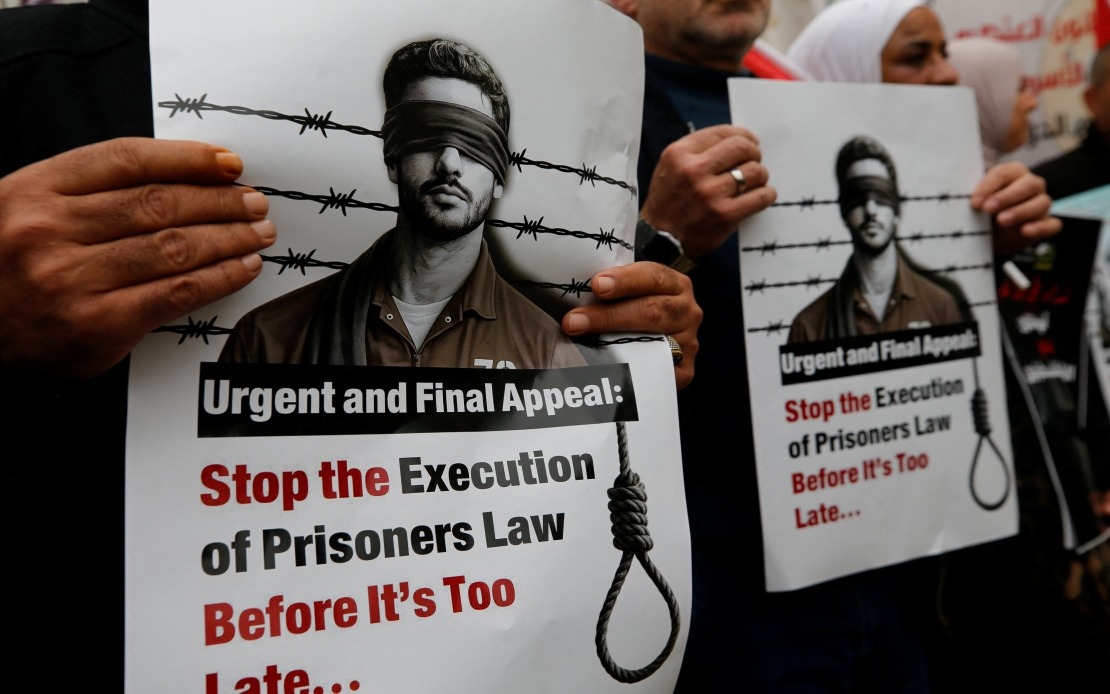
The Palestinian government has released a comprehensive situation report alleging sustained and systematic human rights abuses against Palestinian detainees held in Israeli facilities. According to the Situation Report #92 issued by the Palestine Prime Minister's Office, the documented violations include torture, deliberate denial of medical treatment, and conditions deemed grossly inhumane. The allegations carry significant implications for the broader Middle Eastern conflict and international humanitarian law discussions, particularly as the situation continues to draw scrutiny from human rights organisations and regional governments including Malaysia.
The report specifies that more than 3,376 Palestinian administrative detainees remain incarcerated without formal charges or trial proceedings. Among this population are approximately 360 Palestinian children, raising particular concerns regarding juvenile detention practices. The detention of individuals without legal process represents a fundamental departure from internationally recognised standards of due process and legal protection, matters that resonate deeply within the Malaysian context where rule of law and judicial fairness remain core principles.
Detainees have allegedly endured a range of severe physical abuse including beatings, prolonged stress positions, electrocution, sleep deprivation, and enforced starvation. The Palestinian authorities document additional allegations of sexual violence and psychological torture. These claims, if substantiated, would constitute serious violations of the United Nations Convention Against Torture and other international humanitarian instruments that Malaysia is party to, making the allegations relevant to ongoing discussions at the United Nations and regional forums.
The report draws attention to conditions within detention facilities themselves, alleging insufficient food and water provisions, deliberate disease transmission, and systematic obstruction of healthcare access. These environmental factors compound the direct physical mistreatment allegations, creating what Palestinian authorities describe as an intentional degradation of human dignity. The convergence of multiple forms of abuse suggests a pattern rather than isolated incidents, a distinction that carries legal weight in international humanitarian law assessments.
Particularly concerning are allegations regarding three pregnant Palestinian women currently in detention who face starvation, humiliation, intense interrogation, forced strip searches, and deprivation of adequate prenatal healthcare. The targeting of pregnant women represents an especially vulnerable population group, and such treatment would violate fundamental protections afforded to expectant mothers under international humanitarian conventions. The health outcomes for both mother and child in such circumstances raise profound humanitarian concerns that transcend political boundaries.
The broader detention landscape encompasses approximately 9,500 Palestinian detainees across the West Bank and occupied Jerusalem according to the report. This figures underscores the scale of the detention issue within Palestinian territories. Released detainees, the report indicates, carry severe lasting physical and psychological trauma, with some individuals dying shortly after release from complications stemming from abuse experienced during confinement. This post-release mortality represents a particularly stark dimension of the allegations.
The report contextualises these detention allegations within the wider humanitarian crisis affecting Palestinian territories. Since early October 2023, at least 73,054 Palestinians have been killed in Gaza, with 21,638 of those being children, while 173,480 others sustained injuries. In the West Bank and occupied Jerusalem, 1,175 Palestinians have been killed including 246 children, with 12,919 wounded as of the report's date. These statistics, while distinct from the detention issue, illustrate the comprehensive security situation within which detention policies operate.
Additional casualty figures reveal 11,200 Palestinians reported missing, 1,700 health workers killed, and 262 journalists and media personnel killed. The targeting of healthcare and media professionals has compounding effects on information access and humanitarian response capability. During the specific reporting period from June 22 to 28, the Palestinian government documented 362 military assaults by Israeli forces, 47 shooting incidents excluding airstrikes, and 114 settler-related terror attacks across the West Bank and occupied Jerusalem.
Beyond immediate security concerns, the Palestinian Cabinet has advanced concurrent governance reforms aimed at institutional strengthening and financial modernisation. President Mahmoud Abbas approved amendments to the Value Added Tax law, establishing enhanced revenue collection mechanisms and institutional development frameworks within the Finance Ministry. These reforms attempt to align Palestinian financial administration with international standards whilst combating tax evasion and smuggling that undermines public service delivery. For Malaysian observers, such reform efforts reflect governance challenges common across developing administrations balancing state capacity with resource constraints.
The Palestinian government endorsed a comprehensive telecommunications and information technology policy spanning 2026 to 2028, prioritising digital transformation and modernised government services. Concurrently, healthcare modernisation initiatives include replacing paper-based health insurance documentation with smart card systems, improving data security whilst facilitating future digital health service expansion. These parallel developments demonstrate Palestinian institutional efforts to advance administrative capability and public service delivery infrastructure despite the security environment.
These governance initiatives warrant consideration alongside the detention allegations. While administrative and institutional reforms represent constructive moves toward state capacity building, questions remain regarding how security considerations intersect with these modernisation efforts. For Malaysia and other regional stakeholders, the interplay between security operations and governance reform presents complex policy considerations requiring balanced assessment of both immediate humanitarian concerns and longer-term institutional development requirements.
The Palestinian situation report will likely feature in upcoming discussions at international forums including the United Nations Human Rights Council and regional organisations. Malaysian policymakers, given the nation's active participation in human rights advocacy and Islamic solidarity frameworks, will encounter these allegations within multiple diplomatic contexts. The documentation of detention practices and their alleged severity places additional pressure on international mechanisms to investigate and respond to the claims, whilst simultaneously highlighting persistent challenges in achieving accountability and transparency across contested territories.

