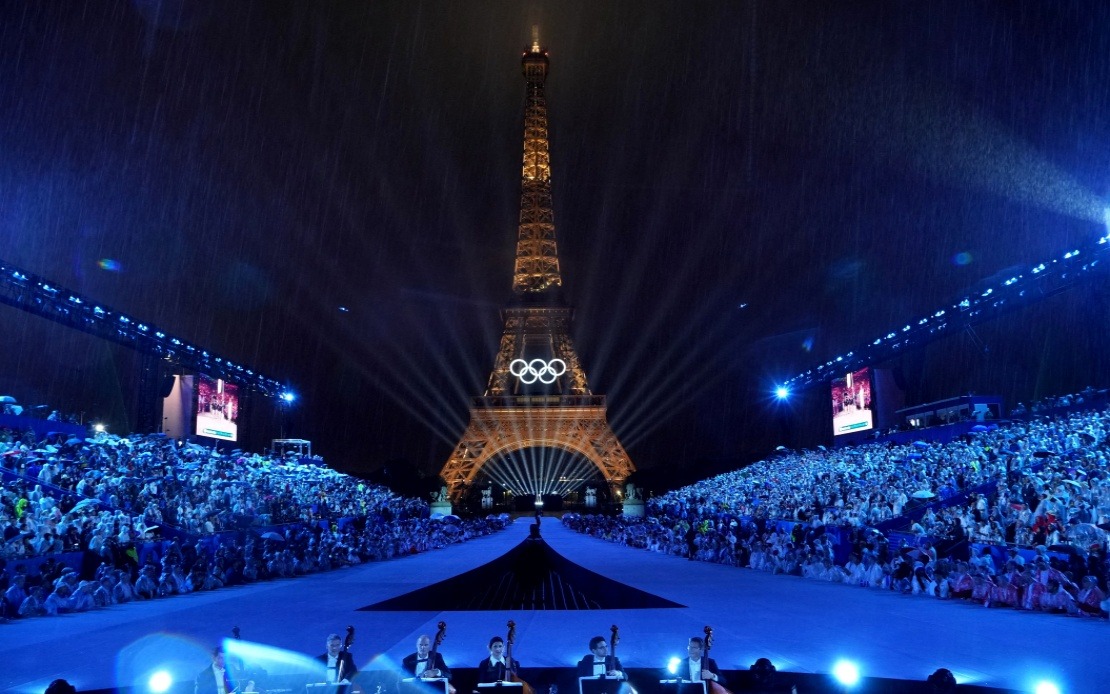
Paris's most visited monument has taken the unusual step of closing its doors well ahead of schedule as France braces for a punishing heatwave that is sweeping across the country. The Eiffel Tower shut down at 4.00 pm local time on Tuesday, with last entry restricted to 12.15 pm, according to an official statement from Sete, the company that operates the landmark. The decision reflects growing concern about the dangerous conditions posed by the extended period of extreme heat expected to persist through at least Thursday.
Visitors holding reservations for afternoon time slots will be automatically refunded, easing the disruption for tourists who have travelled to experience one of the world's most iconic attractions. Those with stair access booked from 11.30 am onwards and lift users with appointments from noon will be eligible for compensation. The operating company emphasized that the closure decision places the wellbeing of both staff members and guests at the highest priority, acknowledging that the physical demands of climbing the tower or waiting in enclosed spaces during peak heat create genuine health risks.
The Eiffel Tower's decision to shutter early signals the severity of conditions gripping the French capital and surrounding regions. The Louvre Museum, another major cultural institution that draws millions annually, has mirrored this approach by announcing it will close at 4.00 pm instead of the customary 6.00 pm closing time from June 24 through June 27. This coordinated response from major institutions underscores how extensively the heatwave is disrupting normal operations across Paris's tourist and commercial sectors.
Meteo-France, the national meteorological authority, confirmed that temperatures in Paris reached 36 degrees Celsius by 4 pm on Tuesday, with predictions that Wednesday would be even more uncomfortable, potentially reaching 38 degrees Celsius. These figures represent dangerously high levels for a European capital not built with widespread air conditioning systems. The prolonged nature of the heat event distinguishes it from typical summer warmth, as the weather service indicated the extreme conditions would remain in place for several additional days.
The scale of the crisis extends far beyond the capital. Across mainland France, 54 departments have been placed under red alert—the most serious classification on the heatwave warning system—while a further 35 departments face orange alert status. This geographic spread demonstrates that the phenomenon is not localized to Paris but represents a nationwide emergency affecting tens of millions of residents and visitors. The red alert designation signals conditions that pose genuine threats to public health, particularly for vulnerable populations including the elderly, very young children, and those with chronic health conditions.
The heatwave arrives amid broader European climate patterns that have seen increasingly intense and frequent extreme temperature events in recent years. For Malaysia and Southeast Asian observers, France's response demonstrates how even wealthy nations with advanced infrastructure face mounting pressures from climatic extremes. The early closure of major tourist attractions, automatic compensation systems, and coordinated emergency alerts reflect institutional protocols developed to manage what is becoming a recurring challenge rather than an exceptional occurrence.
The economic implications of such disruptions merit consideration, particularly for Paris's tourism-dependent sectors. Visitors making specific journeys to the Eiffel Tower or Louvre face disappointment and financial loss, though the refund policies mitigate some hardship. Hotels, restaurants, and transportation services also experience knock-on effects when major attractions reduce operating hours. The broader message conveyed by these closures is that climate adaptation now requires fundamental adjustments to how urban centers operate during peak summer months.
For Southeast Asian readers, the French experience offers instructive parallels despite differences in climate baseline. While tropical nations experience heat as a chronic condition rather than a cyclical event, the lesson regarding infrastructure vulnerability remains relevant. Air conditioning systems, water supply networks, and emergency response protocols designed for previous climate norms may require substantial upgrading as weather extremes intensify. Paris's institutional response—prioritizing human safety over revenue generation—provides a model for how public institutions should approach climate-related operational decisions.
The coordination between different government authorities and cultural institutions in France also illustrates the necessity of integrated responses to climate emergencies. Rather than isolated action by individual attractions, the simultaneous early closures suggest a broader understanding that heatwaves require synchronized public health management. This approach contrasts with scenarios where competition or administrative fragmentation might lead some institutions to remain open despite dangerous conditions, potentially placing visitors and workers at avoidable risk.
Meteo-France's alert system, graded from yellow through orange to red, provides a framework that enables authorities to escalate responses proportionally to danger levels. The predominance of red alerts across 54 departments indicates that current conditions exceed the threshold where normal summer operations remain safely feasible. This technical warning system transforms atmospheric data into actionable guidance that institutions and the public can follow, demonstrating the value of standardized meteorological communication frameworks.
Looking ahead, the events unfolding in Paris underscore that climate adaptation is no longer a distant policy concern but an immediate operational necessity. Major institutions worldwide are increasingly compelled to incorporate climate contingency planning into their business models. For Southeast Asian cities already managing tropical heat alongside rapid urbanization, the French experience of scaling back operations during extreme events may become a reference point for future emergency management protocols, even as baseline temperatures in the region remain perpetually higher than those currently disrupting Europe.

