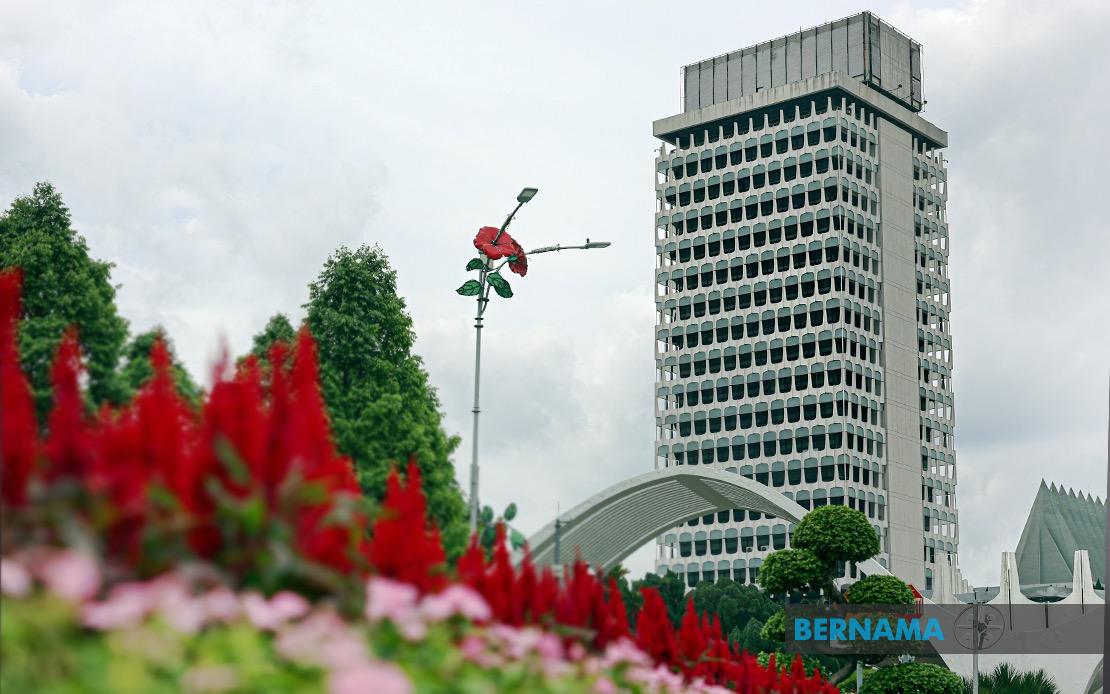
Malaysia's Dewan Rakyat will reconvene on Monday, June 24, for its second parliamentary meeting of the fifth session under the 15th Parliament, with an ambitious legislative agenda that will test the government's ability to navigate contentious constitutional and transport reforms. The sitting, extending through July 16, represents a critical moment for several bills that failed to gain traction during earlier parliamentary proceedings and now face a second legislative push.
At the forefront of parliamentary business stands the re-tabled Constitution (Amendment) Bill 2026, designed to impose a constitutional ceiling of 10 years on prime ministerial tenure. This measure represents a structural innovation in Malaysian governance architecture, fundamentally reshaping executive power dynamics by establishing temporal limits on the nation's highest executive office. The bill's reintroduction follows its previous rejection, when it fell short of the supermajority requirement needed to amend the Federal Constitution. This second attempt signals governmental determination to advance institutional reforms that have long been debated in Malaysian political circles, though questions persist about whether parliamentary arithmetic has shifted sufficiently to enable passage this time around.
Alongside the tenure-limit proposal, legislators will revisit the Constitution (Amendment) Bill (No. 2) 2026, which pursues the institutional separation of the Attorney General and Public Prosecutor functions. Currently vested in a single office, this dual role has generated longstanding concerns about potential conflicts of interest and the independence of prosecutorial decision-making from executive influence. The previous parliamentary session directed this bill to the Parliamentary Special Select Committee for intensive examination, allowing lawmakers and stakeholders additional opportunity to refine the proposal's technical aspects and address implementation concerns before it returns for full chamber consideration.
Transport Minister Anthony Loke has prioritized the Road Transport Act 1987 (Amendment) Bill, scheduled for tabling on the first day of sitting and debate the following day, positioning it prominently in parliamentary proceedings. The proposed amendments address 11 distinct regulatory areas across 42 clauses, targeting what the ministry characterizes as an escalating public safety crisis rooted in illegal street racing and organized syndicate activities. These organized racing groups, colloquially known as "tonto" syndicates, have become increasingly brazen in their operations, conducting high-speed pursuits on public highways in defiance of existing traffic laws and endangering innocent road users.
The legislative approach encompasses substantially strengthened enforcement mechanisms designed to disrupt these illicit activities through enhanced penalties and surveillance capabilities. Rather than merely increasing monetary fines, the amendments introduce more robust procedural tools for law enforcement agencies to pursue persistent offenders and dismantle the organizational networks enabling systematic illegal racing. The initiatives reflect governmental recognition that traditional enforcement approaches have proven insufficient against the sophisticated operational structures that these syndicates have developed across Malaysian urban and suburban landscapes. For Malaysian motorists and families navigating increasingly congested roads, these reforms address a tangible security concern that transcends conventional political divisions.
The Cybercrime Bill 2026 will similarly command parliamentary attention during this sitting, reflecting Malaysia's ongoing efforts to establish coherent digital governance frameworks in an environment where cyber-enabled offences have proliferated across banking, commerce, and individual security domains. As Southeast Asia's digital economy continues rapid expansion, cybersecurity legislation assumes heightened urgency for safeguarding both institutional infrastructure and citizen data. The bill's parliamentary consideration occurs within a regional context where neighbouring jurisdictions have advanced their own cyber-legislative agendas, creating competitive pressure on Malaysia to establish comparable protections and enforcement capabilities.
Parliamentary discussions will extend beyond formal legislative business to encompass broader policy dimensions affecting Malaysian economic performance and household resilience. The ongoing geopolitical conflict in West Asia has disrupted global energy supply chains, introducing volatility into international petroleum markets and creating cascading consequences for Malaysian energy costs and industrial competitiveness. The nation's substantial petroleum export interests mean that regional instability directly impacts government revenue streams and export earnings, while simultaneously increasing domestic energy costs that influence inflation trajectories and cost-of-living pressures affecting ordinary Malaysians.
Dewan Rakyat Speaker Tan Sri Johari Abdul has issued calibrated guidance emphasizing that parliamentary proceedings must maintain institutional dignity and substantive focus despite intense contemporary political dynamics. His remarks underscore a persistent tension within Malaysian parliamentary culture between partisan contestation and collective responsibility for legislative governance. The speaker's emphasis on fact-based debate, data-driven policy discussion, and solutions-oriented discourse reflects concern that parliamentary proceedings risk devolving into performative political theatre rather than genuine problem-solving engagement with national challenges. This institutional reminder carries particular significance given the concurrent Johor state election, which simultaneously competes for parliamentary members' political attention and media focus.
The speaker specifically cautioned MPs against prioritizing external political commitments over parliamentary attendance obligations, recognizing that simultaneous state electoral campaigns create powerful incentives for legislators to redirect energy and resources toward state-level political mobilization. This institutional tension between national legislative duties and subnational political engagement represents a recurring challenge within Malaysia's federal parliamentary system, where the political calendar frequently presents overlapping demands on elected representatives. Johari's intervention attempts to assert the Dewan Rakyat's primacy as the repository of national legislative authority while acknowledging the legitimate political activities that MPs must conduct within their respective constituencies and state parties.
The speaker's appeals for parliamentary maturity and substantive engagement implicitly acknowledge that Malaysia's legislative institution faces credibility challenges requiring restorative effort from both government and opposition benches. His invocation of public expectations regarding parliamentary debate on cost-of-living pressures, educational access, healthcare quality, and employment opportunities reflects genuine concerns affecting Malaysian households and communities. By connecting parliamentary procedure to tangible policy outcomes that influence citizen welfare, Johari attempts to reorient parliamentary culture toward demonstrable public benefit rather than abstract institutional procedures or partisan advantage-seeking.
Beyond the Dewan Rakyat proceedings, the Dewan Negara will convene separately from July 20 through August 4, conducting its own 10-day sitting that will presumably encompass consideration of bills originating from or amended within the lower house. This bicameral parliamentary structure ensures that significant legislation undergoes additional scrutiny and refinement within the upper chamber, though the Dewan Negara's constitutional powers remain substantially constrained relative to the directly-elected Dewan Rakyat. The sequential timing of the two chambers' sittings allows the upper house to incorporate amendments or considerations arising from lower house debate before undertaking its own deliberations.
The cumulative legislative agenda across both parliamentary sittings reflects Malaysia's simultaneous navigation of institutional reform, public safety enhancement, digital governance modernization, and macroeconomic vulnerability management. Success across these diverse policy domains requires parliamentary coalitions spanning government and opposition benches, demanding the kind of constructive engagement that the Speaker has explicitly requested. The constitutional amendments particularly demand supermajority support, necessitating cross-party consensus that transcends routine partisan contestation. Whether Malaysia's fractured contemporary political landscape permits such consensus-building remains perhaps the central question facing the approaching parliamentary sitting.

