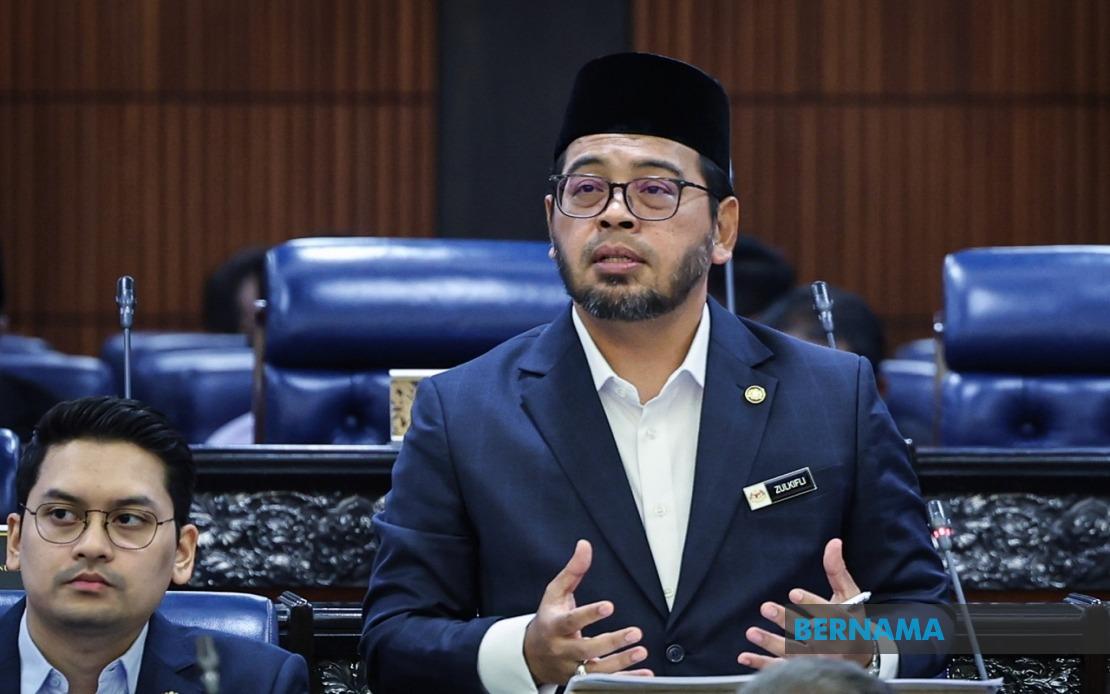
Parliament spent more than ten hours in intensive debate on Tuesday examining the failures and future direction of Lembaga Tabung Haji, with lawmakers across the chamber demanding fundamental reforms to prevent a recurrence of the governance lapses that led to catastrophic financial losses. The special sitting of the Dewan Rakyat represented a rare moment of legislative focus on institutional accountability, with members emphasizing that the overhaul of Malaysia's principal hajj savings institution requires not merely cosmetic changes but systematic restructuring rooted in law, procedure and independent oversight mechanisms that transcend individual leadership.
The financial damage sustained by Tabung Haji emerged as the central concern animating the debate. Minister of Finance II Datuk Seri Amir Hamzah Azizan detailed nearly RM13 billion in aggregate losses stemming from fourteen investments judged to be problematic, with seven of these holdings recording total write-downs. Of this sum, the federal government shouldered RM10.2 billion through a 2018 rescue operation executed by Urusharta Jamaah Sdn Bhd, while Tabung Haji itself absorbed RM2.6 billion in impairment charges between 2018 and 2025 on investments that remained within its portfolio. The scale of these figures underscored why lawmakers from government and opposition benches voiced alarm at what they characterized as reckless stewardship of funds belonging to more than ten million ordinary Malaysians saving for one of Islam's five pillars.
A particularly egregious case involved Al-Rawda Real Estates Development & Project Management Co Ltd, to which Tabung Haji remitted 1.4 billion Saudi riyals—approximately RM1.5 billion—via intermediaries purportedly to secure rental arrangements for four hotels in the holy cities of Madinah and Makkah for pilgrims. When the contractual partner failed to discharge its rental obligations, Tabung Haji was forced to recognize a full RM1 billion impairment charge in 2024, crystallizing losses that had accumulated over years of unfulfilled promises. This transaction exemplified the investment management deficiencies that the Royal Commission of Inquiry has now exhaustively documented, prompting MPs to demand that every such transaction be subject to forensic examination and that those responsible be held criminally and financially accountable.
The government's position, articulated by Dr Zulkifli Hasan, Minister in the Prime Minister's Department (Religious Affairs), emphasized that recovery initiatives undertaken since 2018 had substantially reinforced Tabung Haji's financial footing, restored governance protocols and elevated investment selection standards. These reforms, according to the minister, enabled the institution to maintain the hajj pilgrimage fee at RM33,300 across three consecutive seasons from 2024 through 2026, demonstrating that effective stewardship could protect the interests of pilgrims even as the institution grappled with the legacy of prior mismanagement. Zulkifli's rhetorical emphasis on systems over individuals reflected an implicit acknowledgement that Tabung Haji's difficulties had stemmed partly from excessive concentration of authority in persons rather than diffusion of power through institutional checks and balances.
Parliamentary pressure focused intensely on legislative reform, particularly the urgent need to amend the Tabung Haji Act 1995 (Act 535), which lawmakers characterized as inadequate to contemporary governance standards and insufficiently protective of depositor interests. MPs insisted that legislative revision must establish clearer restrictions on investment authority, mandate enhanced transparency in financial decision-making, and erect barriers against political interference in the institution's operations. The debate underscored a growing recognition among Malaysian lawmakers that statutory frameworks governing financial institutions require periodic modernization to anticipate and forestall the kinds of abuses that resulted in Tabung Haji's travails, particularly regarding the delegation of investment authority to external parties and the maintenance of adequate internal audit capacity.
Government investigators have already initiated proceedings against individuals implicated in the misconduct detailed in the commission's findings, with several persons detained on charges encompassing bribery, abuse of official authority and breaches of governance protocols. The government welcomed a proposal to establish a specialized multi-agency task force dedicated to investigating investments currently at risk of generating additional losses, signalling an intention to move beyond reactive damage control toward proactive institutional reform. This investigative machinery represents acknowledgement that Tabung Haji's difficulties cannot be remedied through organizational restructuring alone but require sustained enforcement action against those who breached their fiduciary duties to depositors.
Finance Minister Amir Hamzah stressed in his parliamentary remarks that governmental action encompassed investigation, enforcement operations, asset recovery initiatives and the strengthening of legal and governance frameworks to ensure that depositor protections remained paramount. This comprehensive approach reflected an understanding that institutions depend ultimately not on the probity of individual office-holders but on the resilience of systems designed to constrain discretionary authority and ensure transparent accountability. The minister's framing suggested recognition that Tabung Haji's reconstruction must proceed on the premise that individuals inevitably change, but institutional systems and governance principles must endure to safeguard the perpetual flow of pilgrims' savings.
The decision by the government to withhold public release of the Royal Commission report until Tabung Haji had begun implementing the commission's twenty-five recommendations—of which seventy-five percent had been fulfilled by late July—reflected a calculated judgment that publicity could destabilize confidence before remedial steps had achieved demonstrable effect. This sequencing strategy, while defensible on institutional grounds, nonetheless drew parliamentary scrutiny regarding transparency and the public's right to information about matters affecting their savings. The subsequent parliamentary debate thus functioned partly as a mechanism for public disclosure and accountability, allowing lawmakers to interrogate the government directly regarding the contours of Tabung Haji's mismanagement and the adequacy of reforms now underway.
The notable absence of several opposition MPs from the full debate—a decision that drew sharp censure from government lawmakers and accusations of abdicated responsibility to the millions of depositors—highlighted partisan tensions surrounding parliamentary scrutiny of institutional failures. Government members contended that opposition disengagement represented a failure to exercise the checking function essential to democratic governance, particularly regarding an institution serving the religious and financial interests of the Muslim majority. The dispute over participation itself became emblematic of broader questions regarding whether institutional reform can proceed with genuine cross-party consensus or whether Malaysia's polarized political environment permits only zero-sum contestation even on matters of substantial public interest.
Moving forward, the reconstruction of Tabung Haji depends substantially on whether Parliament's demands for systemic overhaul translate into legislative action and rigorous executive implementation. The institution's restoration of financial stability and depositor confidence will require not merely the completion of investigations and prosecutions but the establishment of governance architecture sufficiently robust to prevent future recreations of the conditions that enabled losses totaling thirteen billion ringgit. For Malaysia's broader financial system, the Tabung Haji episode carries cautionary implications regarding the risks posed when institutions managing substantial public assets lack adequate oversight, when investment authority becomes concentrated in insufficient hands, and when statutory frameworks prove insufficiently adaptive to contemporary operational realities.

