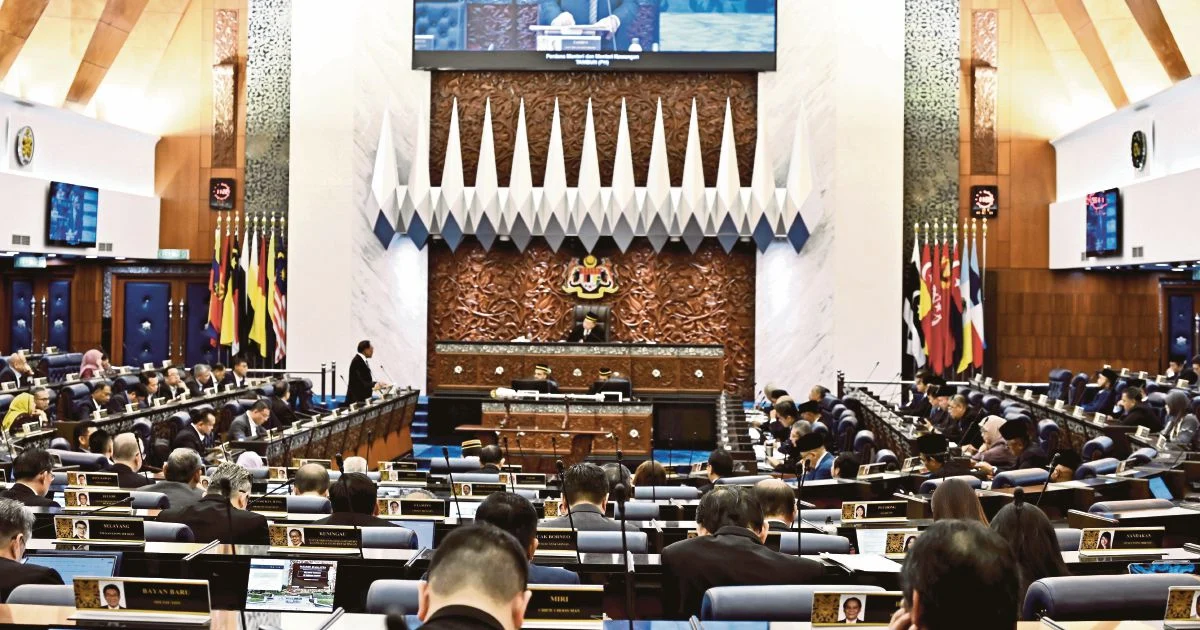
Parliament's opening sitting today deteriorated rapidly into heated confrontations between government and opposition benches, with the contentious matter of opposition leader recognition serving as the flashpoint for a broader dispute about coalition dynamics. The clash erupted less than 60 minutes into proceedings, signalling the fractious political climate that continues to define Malaysia's parliamentary landscape following the country's complex coalition arrangements. The swift descent into acrimony suggests that beneath the surface of the current government arrangement, significant strains persist that threaten stability and collegiality in the lower house.
The dispute centred on Takiyuddin Hassan, a senior PAS figure whose role in parliamentary proceedings and in relation to opposition leadership became the subject of fierce debate. His position within the broader political framework has evidently become a flashpoint for deeper grievances between components of the ruling coalition, particularly between PAS and Bersatu, two parties that have had strained relations despite their governmental partnership. This parliamentary theatre reflects the reality that Malaysia's current political configuration remains unstable, with underlying tensions constantly threatening to destabilise the precarious balance maintained between ostensible allies.
The accusation of "PAS bullying Bersatu" that framed the confrontation points to a fundamental power imbalance that has developed within the government coalition. PAS, as the larger party in terms of parliamentary representation, appears to be asserting dominance within decision-making structures, creating resentment among Bersatu members who feel marginalised despite their role in the governing arrangement. Such internal coalition friction is not merely a matter of procedural debate but reflects genuine policy disagreements and competition for influence over government direction and resource allocation.
Government MPs responded sharply to the opposition's position, suggesting they view the criticism as an inappropriate interference in coalition management. Their defensive posture indicates sensitivity about the perception that internal discord exists within their ranks, potentially weakening the government's position in the legislature. The intensity of their rebuttal suggests that what might appear to outsiders as bureaucratic procedure is actually deeply felt as a matter of political consequence for individual parties and their members seeking to advance their particular interests and maintain relevance within the coalition framework.
For Malaysian political observers, this early parliamentary confrontation demonstrates that the country's ruling coalition remains vulnerable to centrifugal forces that could fragment it further. The government achieved its current majority through complex power-sharing arrangements and negotiated consensus, not through overwhelming electoral victory. This reality means that intra-coalition tensions constantly threaten the government's legislative agenda, as coalition partners may withdraw cooperation if they feel inadequately represented or respected within decision-making structures.
The timing of this clash is particularly significant as it suggests that MPs have returned to parliament with unresolved frustrations from the preceding recess period. Rather than entering the new sitting with renewed focus on legislative priorities, parliamentarians immediately reverted to adversarial positioning. This pattern reflects the zero-sum perception that many politicians hold regarding their parliamentary roles—viewing every procedural matter and position as part of an ongoing competition for power and prestige rather than as technical arrangements subordinate to broader governance objectives.
For Bersatu members in particular, the allegation of bullying by the larger coalition partner must be considered serious. Being perceived as weak or marginalised within a coalition creates domestic political problems for the party, potentially damaging its standing among members and supporters who question whether coalition participation serves their party's interests. Such perception issues can accumulate into genuine party defections or abstentionism in parliamentary voting, which could imperil government legislative initiatives. The public airing of these grievances in parliament, rather than their resolution in private coalition meetings, indicates that normal consensus-building mechanisms are not functioning adequately.
The opposition's involvement in highlighting these coalition tensions reveals their strategic awareness that government instability can work to their advantage. By drawing attention to internal government friction, opposition lawmakers attempt to delegitimise the government and suggest that it lacks the unity necessary for effective governance. This tactic may resonate with Malaysian voters who increasingly question whether their government reflects their interests or merely represents an arrangement of convenience among political elites seeking to retain power.
Parliament's role as a venue for both coalition management and inter-coalition contestation creates inherent tensions that Malaysian political culture has not yet matured sufficiently to manage with restraint. The chamber serves simultaneously as a legislative forum, a coalition maintenance arena, and a political battlefield where symbolic victories matter as much as substantive legislative outcomes. Until Malaysian political actors prioritise parliamentary functionality and legislative efficiency over short-term partisan advantage, such scenes of parliamentary dysfunction will likely continue to characterise ordinary parliamentary sittings.
The incident also raises questions about whether parliamentary leadership, including the Speaker's office, possesses adequate tools or political capital to enforce decorum and prevent proceedings from descending into personal recriminations. Effective parliamentary management requires that procedural authority be respected by all parties, but in Malaysia's current context, the Speaker often appears unable to prevent MPs from treating parliamentary proceedings as an extension of broader political competition. Until this challenge is addressed, parliament risks becoming merely a theatre for airing grievances rather than a functional institution for deliberative lawmaking.

