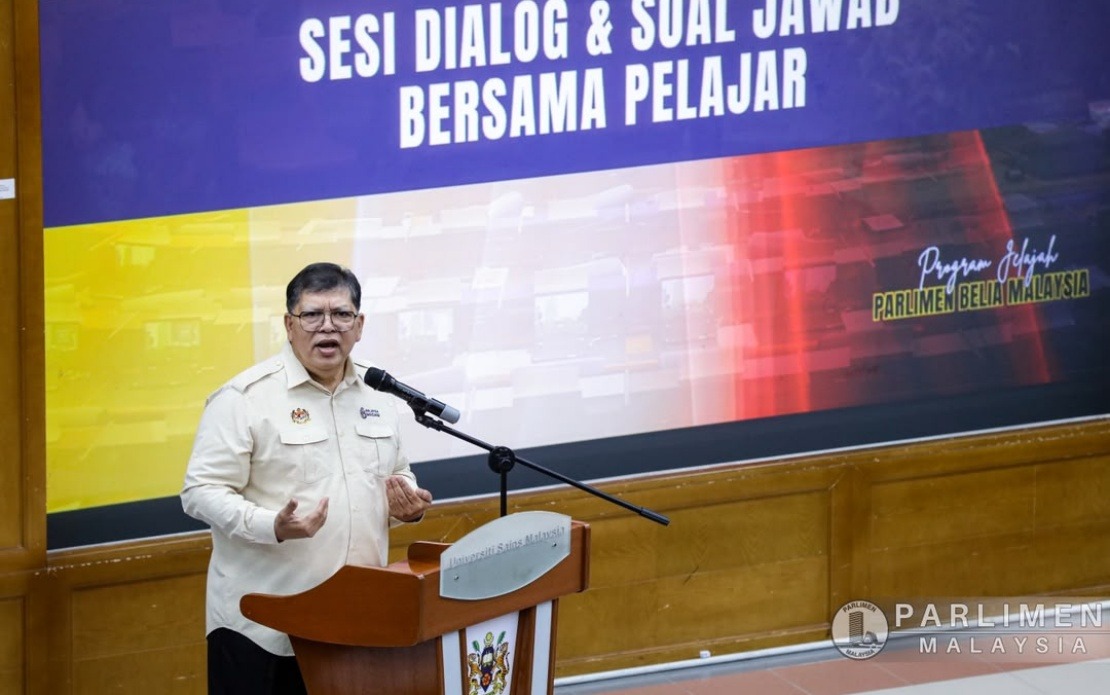
The Dewan Rakyat carries a responsibility extending far beyond legislative deliberation, according to Speaker Tan Sri Johari Abdul, who has called on Members of Parliament to maintain the highest standards of conduct as a new cohort of young democrats prepares to enter the nation's parliamentary system. With the Malaysian Youth Parliament set to convene on September 11, Johari emphasised that Parliament must function as a trusted institution and, crucially, as an exemplary "school" of democracy for generations to come. The remarks underscore growing concern among parliamentary leaders about the quality of democratic discourse and its influence on how young Malaysians perceive and engage with civic institutions.
Johari's message addresses a fundamental tension in modern politics: the visibility of parliamentary proceedings through digital platforms means that Members of Parliament are no longer performing solely for their colleagues but for a national audience that includes the country's youngest voters and future leaders. Social media and live broadcasting have democratised access to Dewan Rakyat sessions, exposing every utterance and gesture to public scrutiny. This transparency, while beneficial for accountability, places MPs under unprecedented pressure to model behaviour befitting the nation's highest legislative body. The Speaker's appeal therefore targets not abstract institutional values but the concrete personal conduct of 222 individual representatives.
The Malaysian Youth Parliament programme itself represents an ambitious institutional investment in civic education. Operating on a structure that mirrors the actual Parliament, it encompasses 222 seats corresponding to parliamentary constituencies across the nation, creating a 1:1 representation model. Rather than functioning as a training ground for existing political parties, the Youth Parliament operates through specially formed youth organisations registered with Parliament Malaysia, maintaining strict non-partisan boundaries. This design deliberately shields young participants from partisan contamination while exposing them to the mechanics and culture of parliamentary democracy. To date, more than 10 such youth organisations have established themselves within the PBMy framework, indicating robust interest from youth-led groups.
The scale of the current recruitment drive is considerable. Parliament Malaysia is actively engaging with young people nationwide, aiming to register 300,000 citizens aged 18 to 30 in the lead-up to elections scheduled for August. This target represents an attempt to broaden the pool of participants and create genuine representativeness within the Youth Parliament structure. The timeline for this process is tight but deliberate: nomination day falls on July 8, with official candidates announced on July 11. The campaign period spans 27 days from July 12 to August 7, allowing sufficient time for youth organisations to mobilise support. Voting will occur online through the dedicated e-PBMy system, with a 24-hour window from 10 am on August 8 to 10 am on August 9.
This transition to full Parliament Malaysia management represents a significant institutional shift. The Malaysian Youth Parliament originated in 2015 under the Ministry of Youth and Sports, operating for eight years within that portfolio. In October 2023, the government transferred full responsibility to Parliament Malaysia, effectively elevating the programme's status and integrating it more directly into the parliamentary establishment. This move signals confidence in the Youth Parliament as a permanent feature of Malaysia's democratic infrastructure rather than a temporary or secondary initiative. By bringing the programme under parliamentary purview, the government has also ensured closer oversight and greater integration with actual parliamentary processes and values.
The operational structure of the Youth Parliament reflects serious design thinking about how young people should experience democratic practice. Members will serve two-year terms, with sittings scheduled three times annually, each lasting two days. This frequency is substantial enough to provide meaningful engagement but controlled enough to accommodate the educational and employment commitments of young participants. The September 11 opening ceremony will formally inaugurate the new term, establishing a clear demarcation between the youth organisation phase and the active parliamentary phase. This ceremonial moment carries symbolic weight, signalling to participants that their work is being treated with institutional gravity.
Johari's emphasis on "dignified, orderly and integrity-driven" proceedings touches on perennial concerns about parliamentary culture. Malaysian parliamentary discourse, like that in many democracies, has occasionally been criticised for descending into acrimony, personal attacks, and rhetorical excess. Young observers of such behaviour risk developing cynicism about democratic institutions, potentially damaging long-term civic engagement. By explicitly calling for "mature, fact-based debates centred on the people's interests," Johari articulates a vision of parliamentary culture that privileges substantive engagement over political theatre. For youth participants, exposure to such proceedings would model how democratic disagreement can occur within frameworks of mutual respect and shared commitment to public good.
The Speaker's remarks also implicitly acknowledge the pedagogical power of parliamentary observation. Young people participating in Youth Parliament will be watching how their elders conduct business in the actual Dewan Rakyat. If those proceedings demonstrate respect for opposing viewpoints, commitment to evidence-based argument, and courtesy despite political difference, Youth Parliament members will internalise those norms. Conversely, if parliamentary proceedings devolve into name-calling and dismissiveness, youth will absorb the message that such behaviour is acceptable in democratic forums. The stakes of parliamentary decorum thus extend well beyond immediate legislative outcomes to shape how an entire generation understands democratic practice.
For Malaysian civil society and policymakers, the Youth Parliament expansion represents an investment in long-term democratic health. Countries with robust youth engagement in civic institutions tend to develop more informed and committed adult citizens. The programme creates pathways for young people to develop leadership skills, understand parliamentary procedure, and form networks with peers from across the country. For participants aged 18 to 30, many of whom will be voting in subsequent general elections, this experience can deepen their investment in democratic processes. Additionally, the non-partisan nature of the Youth Parliament allows it to serve a unifying function, bringing together young people across political and ideological lines in a common institutional space.
The registration process, accessible through the official portal at https://pbmy.parlimen.gov.my/my/, represents an important accessibility measure. Digital registration lowers barriers to entry and allows Parliament Malaysia to collect data on youth participation patterns across different demographic and geographic groups. The 300,000 target, while ambitious, reflects recognition that Youth Parliament legitimacy depends on genuine inclusivity. If participation remains concentrated among already-engaged youth or particular demographic groups, the programme risks becoming a echo chamber rather than a representative space.
Regional observers will note that Malaysia's Youth Parliament model offers a potential template for other Southeast Asian democracies grappling with youth disengagement from civic institutions. The structured, institution-embedded approach differs from informal youth councils or consultative forums. By creating a parallel parliamentary chamber with real procedure and genuine debate, Malaysia signals that youth participation is not tokenistic but integral to how Parliament functions. This positioning may enhance the perceived legitimacy of the programme in young people's eyes.
The broader context for Johari's remarks includes global anxiety about democratic decline and disengagement, particularly among younger citizens. In many democracies, trust in institutions has eroded and youth voter turnout has declined. Malaysia's deliberate investment in Youth Parliament and the Speaker's explicit call for parliamentary excellence suggest recognition that democratic health requires intentional cultivation. Young people must see democracy working, practitioners honouring its principles, and institutions responsive to genuine deliberation. Without such visible commitment, abstract exhortations to civic engagement ring hollow.
As Parliament Malaysia enters this new phase of expanded youth engagement, the institution faces both opportunity and obligation. The opportunity lies in shaping a generation of informed, engaged citizens who understand parliamentary process from firsthand experience. The obligation, as Johari articulated, is to ensure that what young people witness in the Dewan Rakyat exemplifies the best rather than the worst of democratic practice. The September 11 sitting will mark not merely an administrative date but a moment when Malaysia's parliamentary institution implicitly accepts responsibility for modelling the democracy it claims to represent.

