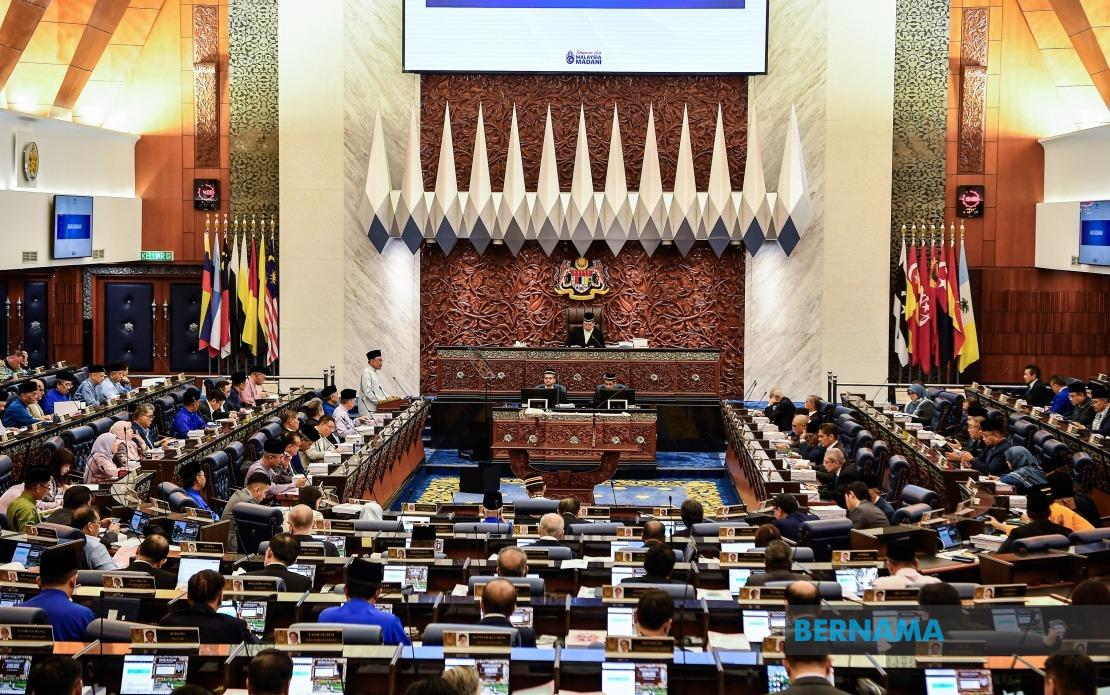
Parliament has given its blessing to the Cybercrimes Bill 2026, a comprehensive 61-clause legislative framework designed to combat an increasingly sophisticated array of digital offences. The measure received overwhelming support through a voice vote following spirited debate involving 48 lawmakers from both government and opposition benches, signalling rare consensus on the need for updated cybercrime protections in an era of rapidly advancing technology.
At the heart of the new law lies a direct response to the proliferation of deepfakes and non-consensual intimate imagery, twin phenomena that have caused particular alarm across Southeast Asia. These digitally manipulated images—created through artificial intelligence and computer manipulation—have caused documented psychological harm to victims whilst simultaneously becoming tools for extortion, harassment, and reputation destruction. The Bill's explicit criminalisation of both the creation and distribution of such material represents Malaysia's formal acknowledgement that existing legal frameworks have become inadequate for addressing technology-enabled abuse.
Deputy Prime Minister Datuk Seri Dr Ahmad Zahid Hamidi moved to address longstanding concerns about state overreach by emphasising that the legislation operates within carefully defined constitutional boundaries. Rather than concentrating investigative power in government hands, the Bill incorporates multiple procedural safeguards intended to prevent arbitrary enforcement. Officials clarified that the legislation neither grants blanket authority to security agencies nor supersedes established legal instruments such as the Official Secrets Act 1972, a critical distinction for civil liberties advocates who have monitored the development of cybercrime legislation globally with considerable scepticism.
The mechanisms for accessing computer systems and extracting digital data represent perhaps the most contentious aspect of any modern cybercrime law, touching upon fundamental privacy concerns. Under the Bill's provisions, investigators seeking to preserve computer data must first satisfy stringent evidentiary thresholds. An officer cannot simply issue preservation notices on suspicion alone; rather, they must demonstrate reasonable grounds that the data is genuinely required for an active investigation and that there exists imminent risk of deletion, alteration, or destruction. This requirement for contemporaneous justification creates an audit trail and prevents the fishing expeditions that critics have warned against in other jurisdictions.
Disclose of computer data operates under similarly restrictive conditions designed to protect innocent users. Any transmission of data from digital systems to government entities must occur through formal written notice to the data controller or proprietor, establishing transparency and allowing for legal challenge. The framework contemplates that investigations themselves must be lawful in origin, preventing the use of this powerful tool to circumvent other legal protections or to pursue politically motivated investigations masked as cybercrime inquiries.
The broad parliamentary support for this legislation reflects recognition across the political spectrum that Malaysia faces genuine threats from cybercriminals operating across borders with minimal accountability. Digital extortion targeting victims through manipulated intimate images has become sufficiently widespread that silence or inaction began to appear reckless. Yet the extended debate involving nearly five dozen parliamentarians suggests that legislators took seriously their obligation to balance security imperatives against individual freedoms, a tension that remains unresolved in many democracies.
Regional observers will likely view Malaysia's approach as a test case for how Commonwealth nations can modernise cybercrime statutes without creating surveillance infrastructure available for abuse. The Bill's explicit invocation of checks and balances, rather than relying on vague promises of restraint, suggests that Malaysian policymakers have absorbed lessons from other countries where cybercrime laws became vehicles for suppressing legitimate speech and political opposition. The emphasis on procedural requirements and written justification may appear cumbersome to investigators, but such friction serves the democratic function of slowing governmental power.
The technology underpinning deepfakes and synthetic intimate imagery continues to advance rapidly, potentially outpacing legislative responses. Artificial intelligence systems trained on publicly available images can now create photorealistic depictions of real people engaged in fabricated scenarios within hours. The psychological and social damage extends beyond immediate victims to broader erosion of trust in digital media itself. Malaysia's decision to establish criminal penalties recognises that technological literacy and platform policies alone cannot adequately protect citizens from such abuse.
Implementation will test the commitment to these safeguards. Enforcement agencies must now develop training protocols, investigation standards, and prosecutorial guidelines consonant with the Bill's intent. Courts will bear responsibility for interpreting the legislation's boundaries in specific cases, determining whether particular investigative requests comply with the prescribed procedures. Civil society organisations monitoring law enforcement will need capacity to scrutinise whether powers granted under the new legislation are deployed proportionately and without discrimination.
The passage of the Cybercrimes Bill 2026 positions Malaysia among the early adopters of legislation explicitly addressing deepfakes and non-consensual intimate imagery, concerns that remain largely unaddressed in many nations. Yet the legislative achievement represents only the first phase of a longer process involving regulatory guidance, law enforcement training, and judicial interpretation. The genuine test of this legislation will emerge in the months and years ahead as investigators apply its provisions to actual cases and as courts examine whether the prescribed safeguards function effectively in practice.

