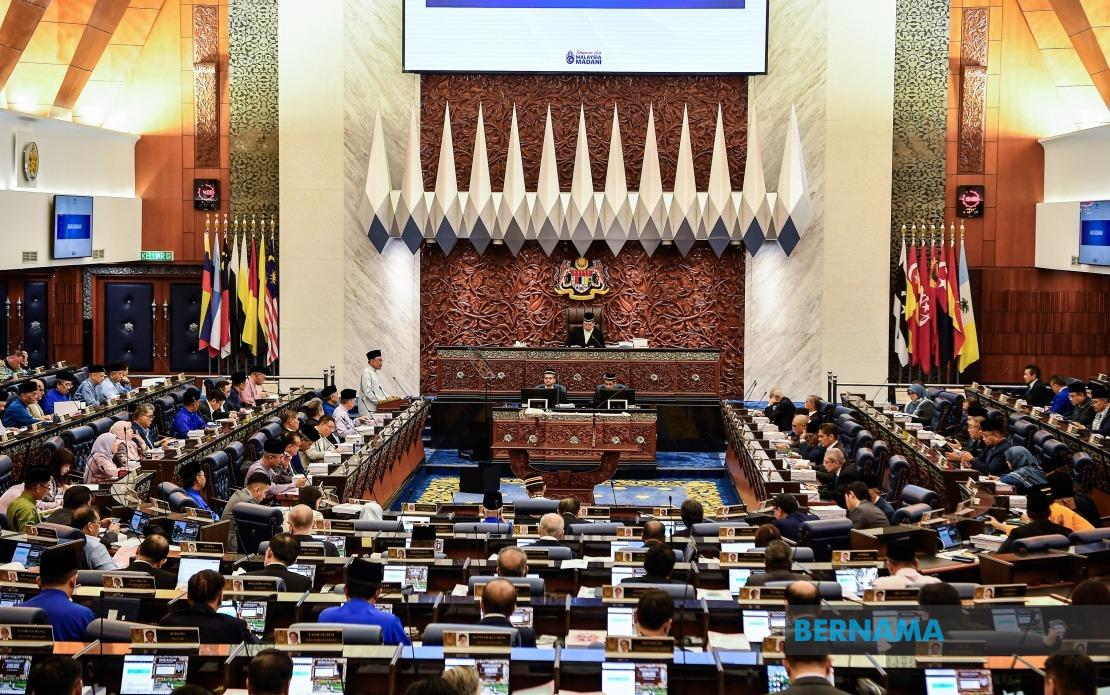
Malaysia's parliament has endorsed the Malaysian Communications and Multimedia Commission (Amendment) Bill 2026, marking a significant legislative step to modernise the regulatory framework governing the nation's communications and multimedia sector. The measure passed through a voice vote on July 15 following substantive debate involving 14 legislators representing both government and opposition benches, signalling broad parliamentary engagement with the proposed changes to the commission's governance structure and financial authority.
The amendment addresses longstanding questions about how the MCMC operates and relates to ministerial oversight. Deputy Communications Minister Teo Nie Ching clarified that the appointment mechanism for the MCMC chairman and board members has remained substantially unchanged since 1998, operating under established statutory body standards encompassing qualifications, personal integrity, professional experience and leadership capability. However, the new legislative language introduces a restriction preventing the chairman from holding concurrent membership in any legislative body, a safeguard explicitly designed to mitigate potential political conflicts of interest that could undermine the regulator's credibility or decision-making independence.
One of the bill's most consequential provisions raises the MCMC's autonomous financial threshold for contract approvals from RM5 million to RM50 million, a tenfold increase reflecting inflation and economic change accumulated over two and a half decades. Teo explained that this adjustment aligns with Finance Ministry procurement guidelines for federally funded statutory bodies, which allow considerably higher thresholds under certain conditions. The decision to cap the increase at RM50 million, rather than pursuing higher limits permissible under national regulations, represents a measured approach balancing operational efficiency against sustained ministerial oversight.
The escalation in procurement authority carries practical implications for the MCMC's ability to execute its regulatory mission without repeated formal approvals. Rising input costs stemming from technological advancement, inflation, and labour market pressures have eroded the real purchasing power of the existing RM5 million ceiling. The 1998 baseline had never been formally revisited despite decades of economic transformation and sectoral evolution, creating operational friction as infrastructure projects, spectrum development and regulatory technologies required funding arrangements. The amendment removes an administrative constraint that had become increasingly disconnected from contemporary project scales and technology investments necessary for effective spectrum management and network oversight.
Opposition and backbench perspectives during the debate highlighted concerns extending beyond the headline provisions. Dr Halimah Ali from Perikatan Nasional, representing Kapar, advocated for strengthening the MCMC's institutional insulation from political pressure through enhanced transparency in the commissioner appointment process. She proposed that Malaysia adopt a model analogous to the Human Rights Commission of Malaysia (SUHAKAM), wherein selection panels evaluate candidates primarily on demonstrated expertise, professional background and reputational standing rather than ministerial preference alone. This suggestion reflects broader regional and international norms for independent regulatory bodies, particularly in sectors where political neutrality directly affects competitive market conditions and consumer protection.
Related governance concerns raised by Datuk Mas Ermieyati Samsudin, representing Perikatan Nasional's Masjid Tanah constituency, focused on internal accountability mechanisms and fund management transparency. She specifically highlighted the need for stronger checks on the commission's deployment of the Universal Service Provision Fund, which supports connectivity initiatives for underserved populations. Her proposal that utilisation reports be tabled periodically in parliament creates an additional accountability layer, ensuring that fund allocations receive legislative scrutiny rather than operating solely under administrative discretion. Enhanced audit powers and formalised recording of ministerial directives would similarly increase institutional transparency and create documentary evidence of policy decisions affecting MCMC's regulatory choices.
The governance architecture underlying the MCMC reflects broader international trends toward professional, apolitical regulatory institutions capable of managing increasingly complex technical and commercial challenges. Dr Richard Rapu from GPS representing Betong observed that the amendments not only restructure institutional procedures but position the MCMC to address digital economy challenges with greater professional rigour and operational independence. As Malaysia pursues digital economy objectives including 5G deployment, broadband universalisation and emerging spectrum technologies, the regulatory body's capacity to make technically sound decisions insulated from short-term political fluctuation becomes strategically important for attracting infrastructure investment and maintaining competitive telecommunications markets.
The timing of this legislation reflects the regulatory environment's evolution since the Communications and Multimedia Act 1998. Two decades of technological disruption—from mobile internet proliferation to emerging technologies like cloud computing, cybersecurity threats and Internet of Things devices—have expanded the MCMC's mandate beyond traditional telecommunications into increasingly complex domains. The original statutory provisions, while establishing sound foundational principles, contained operational constraints reflecting the technology landscape and governance standards of 1998. Updating these provisions acknowledges that effective regulation requires flexibility to acquire specialist expertise, commission modern technological assessments and respond to rapidly emerging sectoral challenges.
The legislative consensus reflected in the amendment's passage suggests recognition across political divides that regulatory effectiveness serves broader national interests. While opposition members advocated for enhanced transparency and independence mechanisms, they did not fundamentally oppose the modernisation project. This convergence indicates that Malaysian political stakeholders appreciate that communications and multimedia regulation—touching broadband accessibility, digital literacy, media pluralism and consumer protection—affects diverse constituencies transcending partisan advantage. A regulator perceived as politically captured or inadequately resourced loses effectiveness precisely when digital transformation deepens its importance.
Forward implementation will determine whether these amendments achieve their intended outcomes. The prohibition on legislators serving as chairman addresses one conflict-of-interest pathway but leaves other questions unresolved. The parliamentary debate revealed appetite for additional transparency measures, appointment mechanism reforms and fund oversight provisions that the bill as drafted does not fully encompass. Whether the government pursues supplementary administrative reforms implementing suggestions around SUHAKAM-style selection panels or periodic parliamentary reporting remains unclear. The amendments represent an important legislative foundation, but sustained regulatory independence will require continued vigilance against political pressure and commitment to the professional standards these provisions establish.

