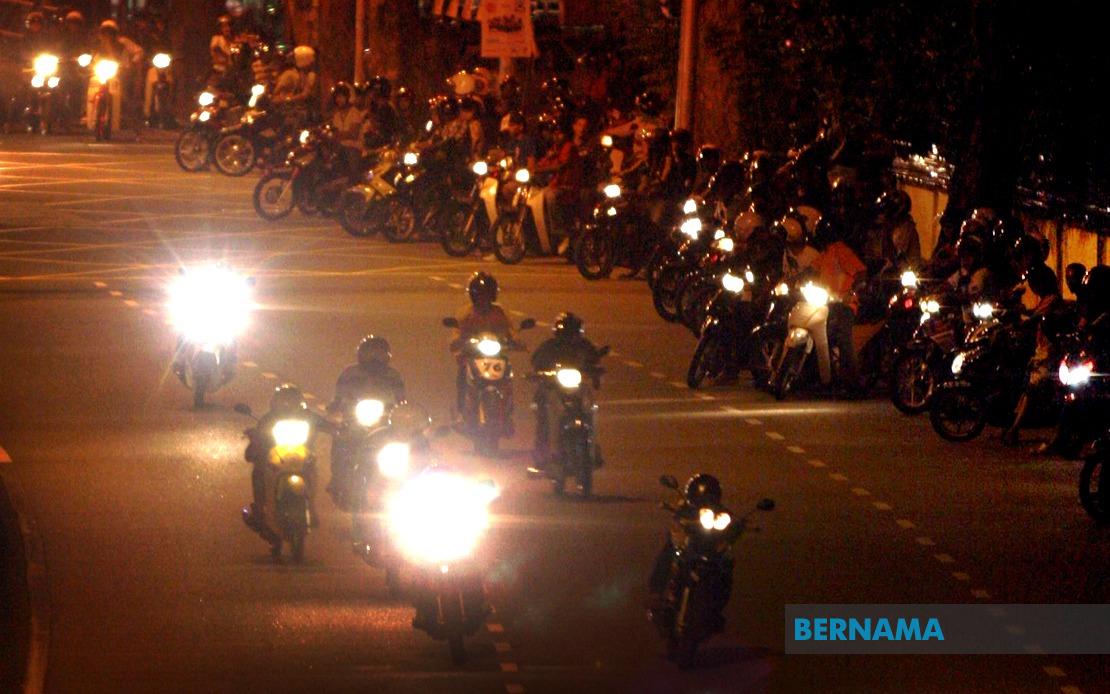
Concerns about dangerous illegal street racing have prompted Malaysian MPs to recommend a sweeping crackdown that combines severe penalties with rehabilitation efforts, signalling lawmakers' determination to address a problem that has claimed lives and caused injury across the country. During parliamentary debate on the Road Transport (Amendment) Act 2026, legislators from both government and opposition benches advanced multiple strategies designed to disrupt the illegal racing culture, ranging from licence suspension to factory accountability measures that would target the workshops enabling these activities.
The most forceful proposal came from Datuk Willie Mongin, GPS-Puncak Borneo, who called for permanent revocation of driving licences as a mandatory consequence of illegal street racing convictions. Mongin argued that existing fines and custodial sentences were insufficient deterrents, proposing minimum penalties of RM300,000 or five years imprisonment coupled with lifetime driving bans. His position reflected growing frustration among legislators that current enforcement approaches have failed to suppress the practice, which continues to pose serious public safety risks across Malaysian highways and urban areas.
Beyond punishment, several MPs advocated for preventative and rehabilitative frameworks designed to transform offenders' behaviour rather than simply removing them from roads. Khairil Nizam Khirudin, PN-Jerantut, proposed establishing a comprehensive rehabilitation programme integrating disciplinary training with community service obligations. This approach recognises that illegal racing often attracts young people seeking thrills or social belonging, suggesting that education and supervised reintegration might prove more effective than incarceration alone in breaking cycles of dangerous driving behaviour. The combination of accountability mechanisms with constructive activities aims to address root causes rather than merely punishing symptoms.
A particularly innovative suggestion involved holding parents legally accountable for their children's participation in illegal racing, a measure intended to reinforce family responsibility and create household-level oversight of adolescent activities. This proposal reflects recognition that parental engagement and supervision represent powerful tools for preventing youth involvement in high-risk street activities. By extending legal consequences to family units, the proposal seeks to mobilise informal social controls alongside formal legal sanctions, creating multiple layers of deterrence and accountability.
Legislators also targeted the supply chain supporting illegal racing infrastructure, with Khairil Nizam urging strict action against motorcycle modification workshops that customise vehicles for street racing purposes. He recommended that the Ministry of Transport collaborate with the Ministry of Domestic Trade and Cost of Living to invoke existing regulatory provisions, specifically Section 66 of the Road Transport Act 1987, to establish new enforcement mechanisms against these businesses. This targeting of workshops addresses a critical vulnerability in the illegal racing ecosystem—without access to high-performance modifications, vehicles cannot be easily converted for racing purposes, potentially constraining the activity's growth and sophistication.
The parliamentary discussion expanded beyond motorcycles following the tragic June 1 incident in Simpang Renggam, Johor, where luxury vehicles engaged in illegal racing claimed multiple lives. Wan Razali Wan Nor, PN-Kuantan, pointed to this tragedy as evidence that street racing extends well beyond the motorcycle subculture, encompassing high-powered cars capable of inflicting even more catastrophic damage. He urged that legal provisions under Section 42A be broadened to encompass all vehicle types involved in illegal racing activities, ensuring that car-based street racing receives equivalent legal attention and penalties as its motorcycle counterparts. This expansion acknowledges that the problem's scope and severity have evolved beyond traditional perceptions.
Shaharizukirnain Abd Kadir, PN-Setiu, proposed that excessively modified motorcycles be subject to destruction or disposal rather than impoundment, eliminating the possibility of reclamation and redeployment for further illegal activities. This measure recognises that persistent offenders may seek to recover impounded vehicles or that seized bikes could find their way back to racing circuits through informal channels. By permanently removing heavily customised machines from circulation, authorities would eliminate tools that facilitate the racing culture while sending a symbolic message about the seriousness of enforcement.
Parliamentary attention also turned toward related road safety concerns, particularly driving under the influence of alcohol and drugs. Multiple MPs stressed that existing legal frameworks addressing impaired driving required strengthening, and that victims deserved proper compensation mechanisms. Zahari Kechik, Jeli MP, and Datuk Seri Dr Ismail Abd Muttalib, PN-Maran, both advocated for compensation schemes covering hospital costs and victim welfare, arguing that offenders should bear full financial responsibility for harms they inflict. This approach shifts focus from purely punitive consequences toward victim support and offender accountability for actual damages caused, potentially improving outcomes for accident survivors while increasing the personal cost of dangerous driving decisions.
The breadth of proposals indicates that parliamentarians recognise illegal racing as a multifaceted problem requiring coordinated responses across enforcement, rehabilitation, supply-chain disruption, and victim support domains. Rather than relying exclusively on penalties, the legislative debate reflected consensus that cultural change demands interventions at multiple levels—family responsibility, offender rehabilitation, workshop regulation, and victim compensation. The participation of 24 government and opposition MPs in the debate underscores that road safety transcends partisan divisions, with lawmakers united in demanding more aggressive action despite disagreements on specific mechanisms.
For Malaysian motorists and communities affected by illegal racing, these parliamentary proposals signal a potential shift toward more comprehensive enforcement and offender management. However, proposals' effectiveness will ultimately depend on implementation capacity, resource allocation, and sustained political commitment after the legislative session concludes. The involvement of multiple government agencies—Transport, Domestic Trade, and law enforcement—suggests recognition that tackling the problem requires inter-agency coordination beyond what individual ministries can achieve independently. As the parliamentary session continues, the coming days will reveal whether these proposals achieve sufficient consensus for incorporation into the amended legislation, and whether the government intends to fund the institutional changes such an approach would require.

