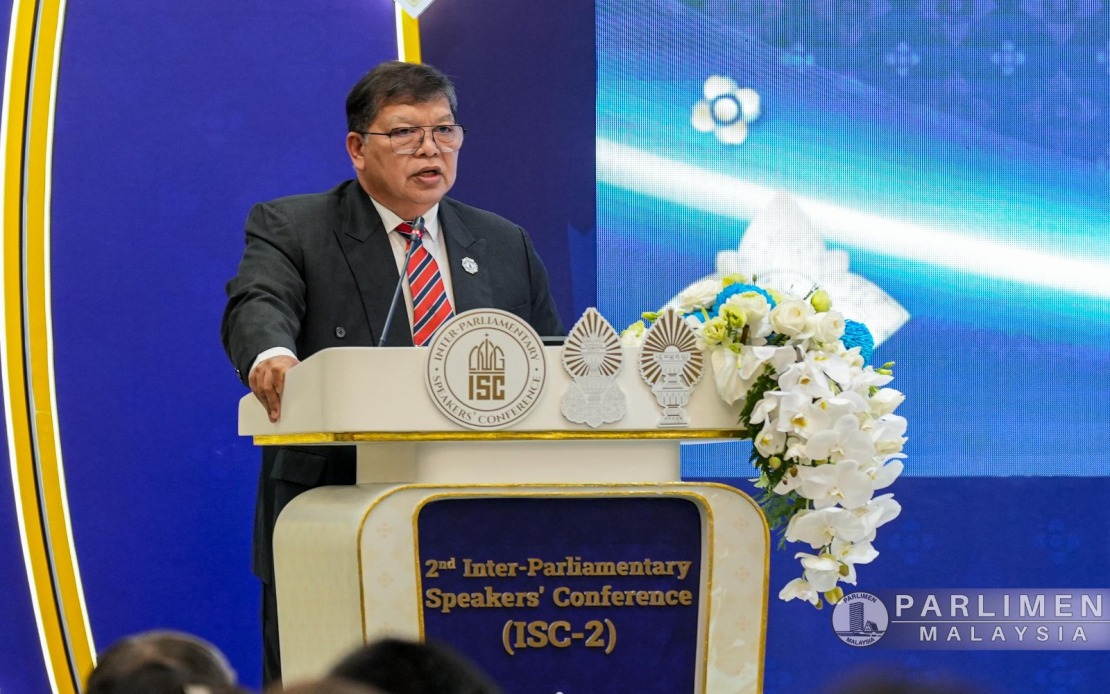
Malaysia's Parliament Speaker Tan Sri Dr Johari Abdul has sounded an urgent alarm about the accelerating climate crisis, emphasizing that inaction on global warming is inflicting widespread hardship on vulnerable populations and degrading the planet's capacity to sustain life. Speaking at an international parliamentary conference in Phnom Penh, Johari framed climate change not merely as an environmental concern but as a multifaceted threat cutting across economic stability, public health systems, and the security of food and energy supplies that billions depend upon daily.
During remarks at the Second Inter-Parliamentary Speakers' Conference held from August 26 to 28, Johari expressed frustration at the political and educational gaps hampering climate response efforts. He lamented that many lawmakers and policymakers lack adequate understanding of climate science and its interconnections with development priorities. This knowledge deficit, he suggested, perpetuates counterproductive decisions such as deforestation and continued reliance on fossil fuel energy generation when viable alternatives exist. His critique extended to educational systems across the region, which he argues have failed to integrate climate literacy into school curricula at the scale necessary to build informed citizenries capable of demanding and supporting systemic change.
The Speaker specifically advocated for three pillars of response: embedding climate science in early and secondary education to create awareness among younger generations; dramatically scaling research and development investments to accelerate renewable energy technologies; and redirecting capital toward solutions such as solar power, wind generation, and ocean-based energy systems. His remarks reflect growing recognition among Southeast Asian policymakers that technological innovation, supported by adequate funding and skilled workforces, offers pathways to decouple economic growth from carbon emissions. The timing of his intervention carries weight, arriving just days after catastrophic flooding in Nepal claimed hundreds of lives and displaced thousands more, providing a stark illustration of the human toll that climate-driven disasters exact across the region.
The Nepal disaster, triggered by a glacial collapse in the Himalayas that swelled river systems along the Nepal-China border, had killed at least 469 people by late August with 2,381 reported missing, including 644 foreign nationals. The tragedy claimed Malaysian victims as well, bringing the climate emergency home to regional audiences. Such events underscore the vulnerability of mountain and riverine communities throughout Asia, where climate impacts manifest as intensifying floods, landslides, storms, and typhoons that destroy agricultural livelihoods and critical infrastructure with increasing frequency and severity.
Across Southeast Asia and South Asia, communities face relentless exposure to climate hazards. The Philippines endures approximately twenty tropical cyclones annually, while mountainous Laos and Nepal experience cascading disasters from heavy precipitation and glacial destabilization. Rural populations, lacking resources for adaptation and recovery, bear disproportionate costs. Johari highlighted this inequity when discussing the widening gap between wealthy nations with capacity to invest in climate resilience and poorer countries forced to absorb mounting losses. He underscored that addressing climate change demands not merely technical solutions but sustained political will and leadership commitment to prioritize planetary survival alongside development aspirations.
Johari drew attention to China's strategic pivot toward green technology as a model worthy of examination. China's sustained investments in electric vehicle production, renewable energy infrastructure, and urban greening initiatives demonstrate that governments can pursue economic advancement while transitioning away from fossil fuel dependence. Such examples, Johari implied, offer proof of concept that alternative development pathways exist for nations willing to commit resources and policy coherence toward environmental protection and low-carbon prosperity.
Scientific assessments continue validating the urgency underlying Johari's calls for action. Researchers across disciplines confirm that anthropogenic climate change is driving upward trends in global temperatures, rising sea levels threatening coastal populations, and altered precipitation patterns destabilizing agricultural systems and freshwater supplies. These physical changes ripple through human societies, compounding existing inequalities and creating humanitarian emergencies that extend beyond national borders, requiring coordinated international responses.
Cambodia's Prime Minister Hun Manet reiterated similar concerns shortly before the parliamentary conference, warning riverine communities along the Mekong River to prepare for elevated water levels and flooding risks. While acknowledging that governments cannot entirely prevent natural disasters, Hun Manet emphasized the necessity of building institutional and infrastructural resilience—systems capable of anticipating hazards, coordinating responses, and facilitating rapid recovery. This framing acknowledges climate adaptation as a governance challenge requiring investment in early warning systems, emergency response coordination, and community-based preparedness.
Johari's intervention at the international parliamentary forum positions Malaysia within broader regional discourse on climate governance, suggesting that Southeast Asian legislatures recognize the inadequacy of current responses and the imperative to mobilize resources, knowledge, and political commitment toward transformation. The convergence of warnings from parliamentary leaders, prime ministers, and scientific bodies indicates growing consensus that incremental adjustments to existing systems will not suffice. Instead, comprehensive reorientation of education, energy, technology, and investment patterns appears necessary to enable societies across the region to mitigate emissions, adapt to unavoidable climate changes, and protect vulnerable populations from escalating disasters. For Malaysian policymakers, Johari's message carries particular relevance given the nation's exposure to typhoons, flooding, and rising sea levels, combined with its position as a middle-income economy capable of pioneering green technology solutions that smaller neighbors might later adopt.

