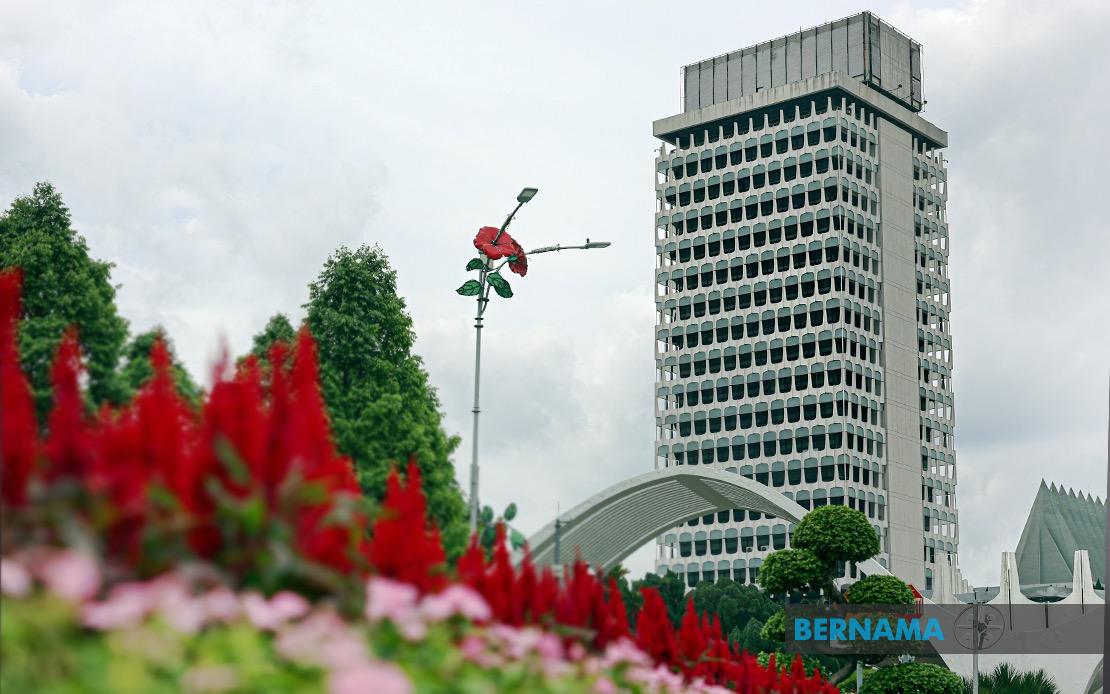
Parliament resumes sitting today with lawmakers prepared to scrutinise critical aspects of the government's financial recovery efforts and energy transition strategy, signalling continued legislative focus on high-stakes economic and environmental priorities that shape Malaysia's development trajectory.
The parliamentary agenda reflects persistent public interest in the 1MDB resolution, with Chong Chieng Jen from Stampin set to interrogate the Finance Minister on the full scope of outstanding debt obligations and cumulative repayments made thus far. This line of questioning extends beyond simple balance-sheet enquiry into the recovery of misappropriated funds and seized assets, underscoring the complexity surrounding the aftermath of one of Malaysia's most significant financial scandals. The former state development fund's collapse continues reverberating through both domestic governance and international relations, making transparent accounting of recovery progress a matter of sustained parliamentary and public concern.
The renewable energy dimension of today's debate addresses an increasingly urgent policy frontier as Malaysia navigates its energy transition framework. Datuk Seri Dr Ronald Kiandee will explore how cross-sector collaboration mechanisms support the nation's renewable capacity targets, a question that assumes particular weight given Malaysia's dependence on fossil fuels and its commitments under regional climate agreements. Beyond aspirational targets, the minister will face specific demands for data on actual investment commitments realised, concrete projects advancing through implementation stages, and candid assessment of obstacles impeding faster decarbonisation. This granular approach reflects parliament's evolving expectation that energy policy demands rigorous project-level accountability rather than reliance on headline commitments.
Social welfare concerns occupy substantial parliamentary bandwidth today, particularly regarding homelessness among elderly and disabled populations in urban centres. Fong Kui Lun's questions to the Women, Family and Community Development Minister seek precise enumeration of recorded cases this year, a basic transparency measure that often reveals significant data gaps in government social monitoring systems. The parliamentary line of inquiry extends further to demand long-term strategic planning around shelter capacity expansion, care facility development, and broader intervention architecture, suggesting dissatisfaction with piecemeal or reactive approaches to vulnerability.
The parliamentary agenda's breadth—spanning fiscal accountability, energy transition economics, and social protection—reflects how contemporary Malaysian governance increasingly demands integrated approaches across traditionally separate ministerial portfolios. These three policy domains intersect significantly: successful 1MDB asset recovery strengthens government fiscal capacity to fund renewable energy initiatives and social programmes; the energy transition generates employment opportunities relevant to vulnerable populations; and social stability depends partly on equitable distribution of transition benefits.
Parliament's select committee structure also comes under review today, with the Parliamentary Special Select Committee on Women, Children and Community Development providing a briefing on improvements to Integrated One Stop Crisis Centre (OSCC) services nationally. This mechanism represents an institutional attempt to streamline multi-agency coordination in crisis response, addressing a persistent challenge in Malaysian public administration where fragmented service delivery often fails vulnerable populations seeking emergency support. The committee's evaluation of OSCC improvements offers opportunity to assess whether structural consolidation actually translates to improved accessibility and responsiveness for those experiencing crisis situations.
Agricultural policy likewise features prominently in today's parliamentary calendar, with the Control of Padi and Rice (Amendment) Bill 2026 advancing to second reading. This legislative moment carries significance for rural constituencies and food security strategy, particularly given global supply chain vulnerabilities and climate variability affecting harvest predictability. The amendment bill's progression suggests parliament is actively refining regulatory frameworks governing Malaysia's staple grain production and distribution, a perennial concern for a nation seeking self-sufficiency in critical food categories.
The broader parliamentary session—spanning sixteen days through July 16—situates today's agenda within extended legislative engagement rather than isolated sitting. This extended schedule permits deeper examination of complex policy questions and allows time for government responses beyond cursory parliamentary replies. For Malaysian stakeholders tracking government performance across finance, energy, social protection, and agriculture, this extended session provides multiple intervention points for parliamentary oversight and public scrutiny through parliamentary records.
The parliamentary calendar itself merits attention: deliberations occurring mid-year in this particular parliamentary session suggest alignment with fiscal and budgetary cycles where government explains previous expenditures and justifies upcoming allocations. Questions about 1MDB debt repayment and renewable energy investment naturally connect to fiscal planning and resource allocation discussions likely occupying parliamentary attention during this period.
For Southeast Asian observers and international stakeholders monitoring Malaysia's governance quality and economic management, parliamentary scrutiny of 1MDB accountability and renewable energy progress carries implications extending beyond domestic politics. Regional peer governments, development partners, and international investors interpret parliamentary oversight intensity as signal of governance commitment; conversely, evasive ministerial responses or weak parliamentary follow-up register as governance weakness potentially affecting Malaysia's international standing and attracting scepticism toward policy commitments.
The diversity of today's parliamentary agenda ultimately illustrates how modern legislatures must address simultaneously multiple domains requiring expert knowledge, intersectoral coordination, and long-term strategic thinking. Parliament's capacity to hold government accountable across such breadth while maintaining legislative productivity remains a persistent institutional challenge, particularly when questions demand not merely technical answers but strategic vision and measurable performance benchmarks.

