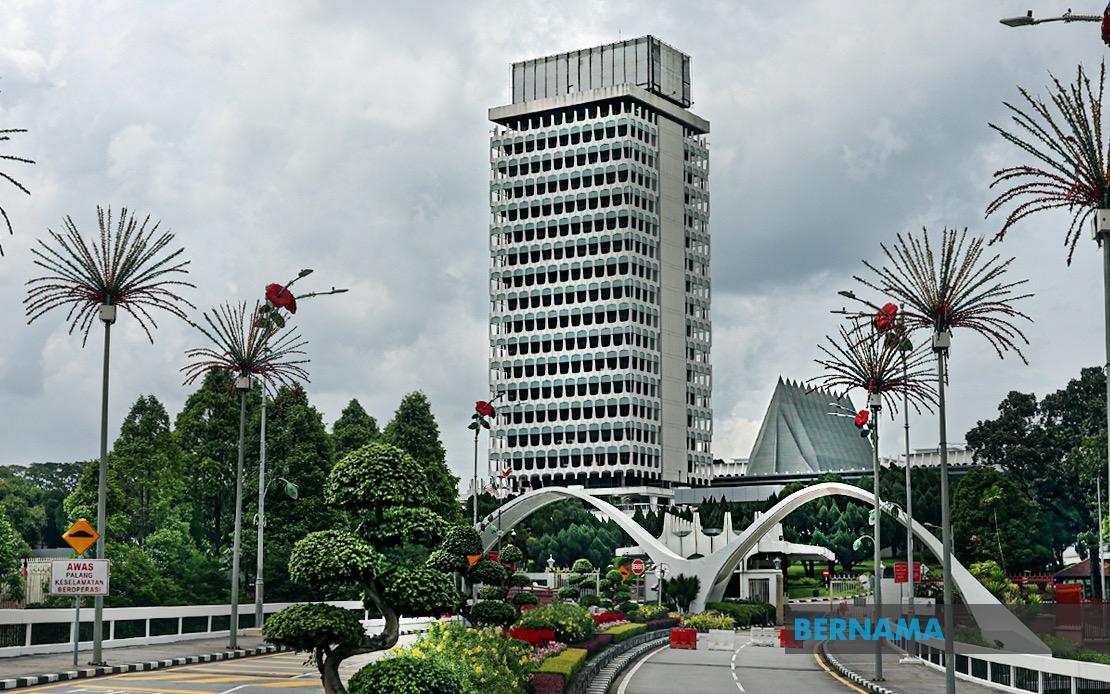
Parliament reconvened this week to address a series of pressing national concerns, with legislators preparing to examine proposals ranging from institutional reform to economic measurement frameworks that increasingly dominate public discourse. The Dewan Rakyat's focus on these interconnected issues reflects growing pressure on the government to demonstrate concrete solutions to structural challenges affecting Malaysian households and governance institutions alike.
Among the most significant agenda items is the proposal to amend the Human Rights Commission of Malaysia (SUHAKAM) Act 1999, which currently restricts the commission's revenue streams almost entirely to government budgetary allocations. Teresa Kok Suh Sim, the Seputeh member, has lodged a question asking whether the Prime Minister intends to broaden SUHAKAM's financial independence by permitting the commission to establish revenue-generating activities through training programmes and professional courses. This proposal addresses a fundamental vulnerability in Malaysia's human rights architecture—the financial dependence of an independent commission on the very government it is mandated to scrutinise. Allowing SUHAKAM to diversify its income through legitimate commercial activities could theoretically enhance its operational autonomy and reduce susceptibility to budgetary pressure during periods of fiscal constraint or political tension.
The amendment debate signals an acknowledgment within Parliament that institutional independence extends beyond formal legal status to encompass financial viability. International experience demonstrates that human rights commissions functioning across multiple jurisdictions perform more effectively when their funding models reflect a degree of separation from executive discretion. However, the proposal also raises questions about potential conflicts of interest should a commission rely on fees from entities it may subsequently investigate, requiring careful regulatory safeguards.
Equally prominent in Parliament's agenda is an investigation into the apparent disconnect between Malaysia's official inflation statistics and the lived experience of ordinary families managing household budgets. Mohd Syahir Che Sulaiman, the Bachok member representing Perikatan Nasional, has submitted questions to the Economy Minister seeking clarification on how the government measures and responds to this divergence. The inquiry addresses a phenomenon increasingly visible across Southeast Asia, where conventional inflation indices appear detached from price movements in essential categories including food, utilities, and transportation that consume the largest share of middle and lower-income household expenditure.
This gap reflects a methodological challenge in economic measurement. Consumer price indices frequently employ weighting systems based on historical spending patterns that may no longer accurately represent how contemporary households allocate resources. When food inflation accelerates faster than general inflation, or when energy costs spike sharply, households dependent on fixed incomes experience purchasing power erosion far exceeding the published inflation figure. Che Sulaiman's questioning suggests Parliament intends to push the government toward adopting more sophisticated measurement tools and clearer communication about economic realities affecting voters. His inquiry also addresses a politically sensitive matter—whether economic growth translating into improved nominal GDP per capita actually delivers tangible improvements in household living standards for ordinary Malaysians.
A third parliamentary focus examines flood management infrastructure and land-use governance in Kuala Lumpur. V. Ganabatirau's question about the status of reviews concerning flood retention ponds and land transfers reflects ongoing concerns about urban resilience and land administration. Flood retention ponds serve essential ecological and drainage functions in densely urbanised areas, yet they frequently face pressure from development interests seeking to repurpose these lands. Parliament's attention to this issue indicates recognition that climate-related risks and urbanisation pressures require coordinated policy responses.
Further demonstrating Parliament's engagement with long-term national development, Datuk Dr Ku Abd Rahman Ku Ismail has posed questions regarding the balance between STEM and non-STEM enrolments in Malaysia's higher education system. His inquiry seeks specific student ratios and engineering workforce targets aligned with high-technology industrial demands. This parliamentary interest reflects international competition for technical talent and Malaysia's aspiration to transition toward knowledge-intensive industries. Understanding current STEM participation rates and establishing explicit workforce targets enables policymakers to calibrate educational funding and curriculum development accordingly. The question also probes whether Malaysia's higher education sector adequately aligns with emerging economic priorities, particularly given the government's emphasis on positioning the nation as a regional technology hub.
Parliamentary proceedings also feature the tabling of the Cybercrime Bill 2026 for its second reading, marking another significant legislative development. Cybercrime legislation remains contested terrain across democracies, balancing security imperatives against civil liberties protections. The bill's introduction coincides with escalating digital threats affecting Malaysian businesses and citizens, yet also occurs within broader regional discussions about appropriate regulatory boundaries for online speech and digital privacy. Parliament's consideration of this legislation will likely generate debate about definitional clarity, investigative safeguards, and proportionality of penalties.
The sixteen-day parliamentary session, concluding July 16, demonstrates the Dewan Rakyat's continuing engagement with substantive policy questions affecting Malaysia's institutional development, economic performance, and preparedness for emerging challenges. These proceedings reflect Parliament's fundamental responsibility to scrutinise government performance across multiple policy domains and compel executive accountability through structured questioning and legislative deliberation, processes essential for maintaining democratic governance standards in a rapidly evolving policy environment.

