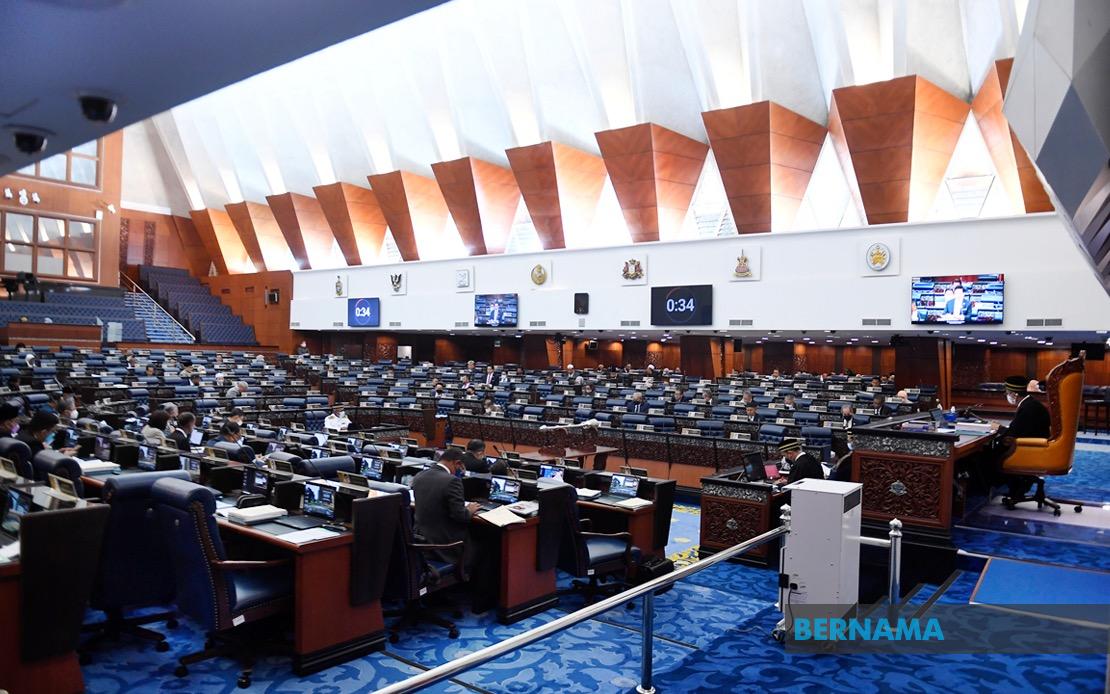
The Dewan Rakyat convened on June 30 to confront persistent tensions between state governments and the Federal Government over resource distribution, a friction point that has simmered across Malaysia's federal structure for years. At the heart of today's parliamentary session lies a fundamental question about equitable governance: whether states receive fair compensation relative to the tax revenue they generate for federal coffers. This issue extends beyond mere accounting disputes, touching on perceptions of fiscal justice that fuel political grievances in less-developed states and those under opposition control.
Doris Sophia Brodi, the GPS member representing Sri Aman, has submitted a parliamentary question directing the Prime Minister to address longstanding complaints that state allocations fall short of what fairness and fiscal principles would dictate. Her query specifically demands clarity on how the MADANI Government intends to recalibrate its allocation methodology, signalling that the current framework remains contentious despite being in place for several years. This line of questioning reflects growing frustration, particularly among states that perceive themselves as net contributors to federal revenues yet receive disproportionately smaller development allocations compared to their economic output.
Parallel to this fiscal debate, the parliamentary session addresses a critical electoral governance issue that has generated considerable controversy. Shahidan Kassim, the Perikatan Nasional representative from Arau, seeks clarification on whether the ban preventing government announcements of allocations or projects after nomination day closure remains operative. This prohibition, designed to level the playing field between incumbent and opposition candidates, has become a focal point of electoral fairness discussions. The query gains particular relevance with Johor, Melaka, and Negeri Sembilan state elections on the horizon, territories where any perceived breach of electoral conduct rules could spark accusations of governmental advantage-taking.
The mechanism for enforcing this prohibition remains nebulous in practical terms, which explains why Shahidan's question specifically demands details on enforcement machinery ahead of the upcoming state elections. Previous election cycles have witnessed allegations of breach, with governing coalitions accused of strategically announcing projects or releasing allocations during sensitive campaign periods. Clarifying enforcement protocols now sets expectations and potentially deters violations before the critical campaign season unfolds.
Beyond these two flagship issues, the parliamentary agenda reveals preoccupations with contemporary technological and social challenges facing Malaysia. Ismail Sabri Yaakob's question to the Communications Minister addresses the escalating threat of artificial intelligence-generated deception, particularly deepfake videos proliferating across social media platforms. This concern mirrors anxieties across Southeast Asia, where digital manipulation has already influenced public opinion and created security vulnerabilities. The question pointedly asks what mechanisms exist for verification and labelling of manipulated content, indicating that Malaysia recognises existing safeguards as insufficient.
The legislative capacity for addressing emerging digital threats extends to broader infrastructure considerations. Chong Zhemin's inquiry about electricity supply readiness for data centres and artificial intelligence operations reflects Malaysia's strategic positioning as a potential regional technology hub. The nation's ability to power computationally intensive industries—a crucial competitive factor in attracting investment—hinges on infrastructure capable of handling surging demand. This question signals parliamentary awareness that energy policy directly connects to economic diversification and technological ambitions.
Social welfare initiatives feature prominently in today's parliamentary agenda, underscoring government commitments to vulnerable populations. Awang Hashim's interrogation of the mySalam scheme's effectiveness for the B40 income bracket—Malaysia's bottom forty per cent—probes whether this health insurance mechanism genuinely delivers protection to those most financially exposed. Similarly, Syahredzan Johan examines redemption rates for MADANI Book Vouchers across two fiscal years, seeking evidence that this literacy initiative actually reaches intended beneficiaries or languishes as unused allocation.
Employment and workforce participation concerns occupy another parliamentary focus. Mumtaz Md Nawi questions TalentCorp's Career Comeback Programme effectiveness in facilitating women's return to employment, addressing a structural economic challenge where female workforce participation significantly lags comparable regional economies. Malaysia's underutilisation of female talent represents both a social equity issue and an economic inefficiency that policymakers increasingly recognise as limiting growth potential.
Cost-of-living pressures, which have defined Malaysian political discourse for the past several years, resurface in Iskandar Dzulkarnain's question about expanding the Program Jualan Rahmah MADANI. This government price-control initiative attempts to provide affordable essentials through direct market intervention, offering temporary relief from inflation pressures. The inquiry specifically addresses whether frequency can increase, implying current implementation falls short of public demand or coverage expectations.
Following these questions, the chamber proceeds to legislative business involving substantive bills likely to generate debate. The Sexual Offences Against Children (Amendment) Bill 2026 resumes its winding-up discussion, reflecting parliamentary prioritisation of child protection frameworks. Concurrently, consideration of Employment Insurance System amendments and the Cyber Crime Bill 2026 advance the government's agenda on worker protections and digital law enforcement respectively.
Collectively, today's parliamentary session illustrates the multifaceted policy landscape Malaysian legislators navigate: intergovernmental fiscal relationships, electoral integrity, technological governance, social welfare delivery, employment equity, inflation mitigation, and criminal law modernisation. These interconnected issues reflect how contemporary governance demands simultaneous attention to distributional fairness, digital-age vulnerabilities, and economic inclusivity. The questions posed and legislation debated shape not only Malaysia's immediate policy trajectory but also signal priorities that will influence electoral calculations heading toward state and federal elections.

