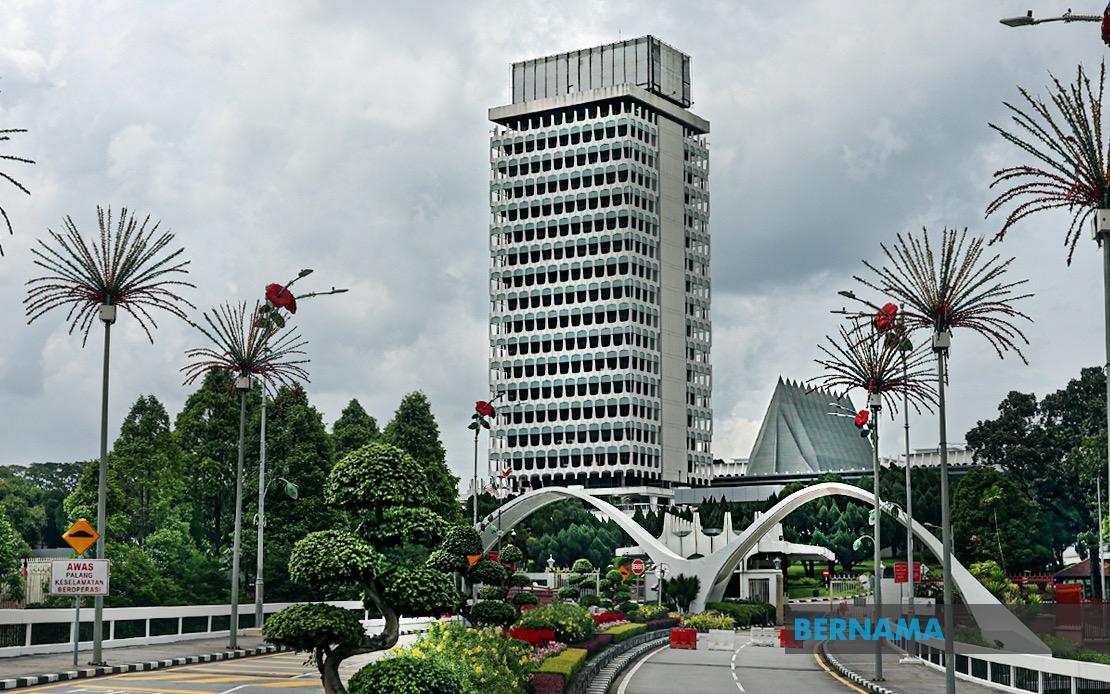
The Malaysian Parliament's sitting this week will tackle several pressing national issues, with particular emphasis on infrastructure development and public health concerns affecting the youth population. Among the focal points of debate are the government's plans to develop the East Coast Expressway Phase 3 through a public-private partnership arrangement, alongside comprehensive enforcement strategies designed to combat the distribution of vaping products to school-age children and teenagers.
During Question Time proceedings, Wan Hassan Mohd Ramli from Dungun will probe the Works Ministry regarding the rationale underpinning the decision to pursue the LPT3 project via the PPP model. His questioning will seek clarification on how this funding structure might affect toll charges for commuters, a consideration that resonates strongly with Malaysian motorists already burdened by existing expressway fees across the peninsula. The inquiry will also address the projected implementation schedule, allowing parliamentarians and the public to understand the timeline for this major regional connectivity initiative that is intended to enhance economic linkages across Peninsular Malaysia's eastern corridor.
The proposed LPT3 represents a significant infrastructure undertaking designed to complete the comprehensive expressway network serving Terengganu, Pahang, and surrounding states. By pursuing this through a PPP framework rather than direct government funding, authorities seek to distribute financial risk and leverage private sector efficiency. However, this approach inevitably raises questions about long-term cost implications for end-users, particularly smaller enterprises and frequent travellers whose operational budgets depend on predictable toll expenses. The parliamentary query reflects growing scrutiny of infrastructure financing models in Southeast Asia, where toll privatisation has generated both economic benefits and public resistance.
Equally significant is the Parliament's attention to the escalating vaping problem among Malaysian youth. Datuk Mas Ermieyati Samsudin will seek details from the Home Ministry concerning heightened enforcement activities targeting organised syndicates engaged in systematically distributing harmful vape products to young people within educational institutions. This line of questioning underscores official recognition that vaping constitutes a coordinated commercial enterprise rather than merely individual conduct, with criminal networks actively profiting from youth addiction. The syndicate dimension is particularly alarming, suggesting sophisticated distribution networks operating across states and requiring coordinated law enforcement responses.
The vaping question reflects broader Southeast Asian concerns about nicotine product marketing to minors. Unlike conventional cigarettes, which face established regulatory frameworks across the region, vaping products have proliferated through less monitored channels, particularly online platforms and neighbourhood retailers operating in grey legal zones. Malaysian authorities have acknowledged that existing enforcement mechanisms designed for traditional tobacco products prove inadequate against the speed and adaptability of vape distribution networks. Parliament's focus signals intention to strengthen preventive and punitive measures before the problem becomes further entrenched among school populations.
Third among parliamentary priorities is immigration and border management efficiency. P. Prabakaran will question the Home Ministry on concrete measures being implemented to alleviate persistent congestion at Malaysia's entry points, with particular reference to accelerating immigration processing. This inquiry reflects mounting frustration with border delays that affect both Malaysian citizens and international visitors, with implications for tourism revenue, business continuity, and overall national competitiveness. The question suggests recognition that infrastructure investments and policy reforms are necessary to modernise border procedures, particularly as regional travel recovery continues accelerating post-pandemic.
Border congestion represents an often-underestimated drag on economic activity throughout Southeast Asia. Delays at Malaysian entry points extend beyond mere inconvenience, creating cascading effects through supply chains, tourism itineraries, and cross-border business operations. The parliamentary inquiry indicates government acknowledgment that current manual or partially digitalised processes cannot accommodate contemporary traffic volumes efficiently. Enhanced immigration clearance procedures, whether through biometric systems, pre-clearance programmes, or staffing augmentation, become increasingly critical as ASEAN integration deepens and intra-regional movement expands.
The parliamentary agenda additionally encompasses healthcare digitalisation effectiveness. Salamiah Mohd Nor will ask the Health Minister to evaluate how digital initiatives including the MySejahtera application and electronic health record systems contribute to reducing congestion within government hospital facilities. This question addresses a systemic challenge affecting Malaysia's public healthcare system—managing patient flow and reducing waiting times without proportional budget increases. Digital health infrastructure represents a potential solution pathway, though practical implementation challenges remain substantial, particularly in ensuring equitable access across urban and rural populations.
The MySejahtera platform, initially deployed for pandemic contact tracing and vaccination management, has expanded into broader healthcare functions. Similarly, electronic health records promise streamlined patient information access and reduced administrative duplication. Parliamentary scrutiny of their effectiveness acknowledges both promise and practical limitations. Questions persist regarding data security, interoperability between different healthcare providers, and whether digital tools genuinely reduce congestion or merely shift bottlenecks within the system. The inquiry suggests Parliament recognises these tools require ongoing evaluation and potential refinement to deliver meaningful public health benefits.
Parallel to these question sessions, the Dewan Rakyat will advance debate concerning the Human Rights Commission of Malaysia's 2024 annual report and financial statements. This component of the parliamentary sitting enables broader discussion of SUHAKAM's operational effectiveness, resource allocation, and institutional capacity to address human rights concerns within Malaysia's governance framework. The commission's work increasingly intersects with several debated parliamentary topics, including enforcement effectiveness against criminal syndicates and equitable access to public services.
The current parliamentary session, now entering its final week, represents the Second Meeting of the Fifth Session within the 15th Parliament's term. The sitting commenced earlier in July and is scheduled to conclude on July 16, providing limited remaining time for substantive debate on these multiple significant topics. This compressed timeline reflects the Parliament's crowded legislative calendar and competing demands for floor time. The concentration of important policy inquiries within a single session underscores the substantial domestic agenda confronting Malaysia's government.
These parliamentary proceedings acquire heightened significance given Southeast Asia's broader development trajectory. Infrastructure investment, youth health protection, border efficiency, and healthcare system modernisation represent fundamental development challenges affecting the entire region. Malaysia's parliamentary deliberations on these matters offer analytical insights into how middle-income Southeast Asian democracies approach balancing economic development priorities, public health imperatives, and systemic modernisation within constrained fiscal environments. The outcomes of these discussions may influence policy approaches across neighbouring jurisdictions similarly navigating comparable challenges.

