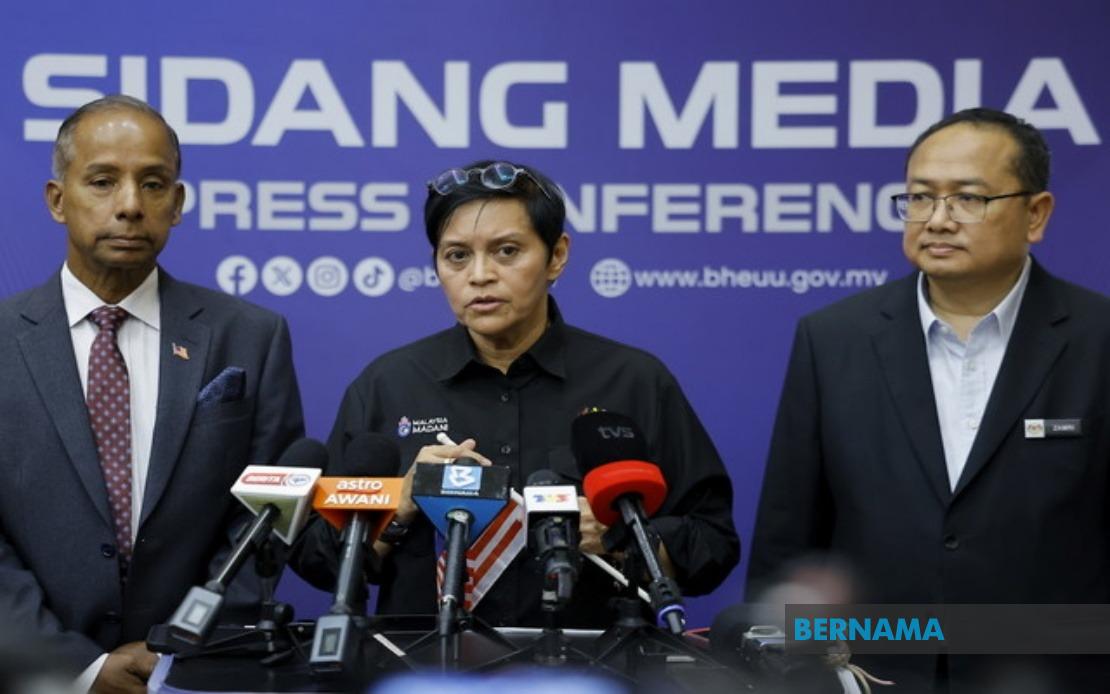
Malaysia's long-awaited Freedom of Information Bill 2026 enters a crucial review phase as a Parliamentary Select Committee convenes to examine its scope and provisions. Datuk Seri Azalina Othman Said, the Minister in the Prime Minister's Department (Law and Institutional Reform), will chair the committee's inaugural meeting, where lawmakers from across the political spectrum will work toward finalising the legislative framework before its parliamentary debut.
The Select Committee's mandate represents a significant step in transparency governance for Southeast Asia's fourth-largest economy. Rather than fast-tracking the Bill directly to Parliament, the government has opted for a more deliberative approach that incorporates diverse stakeholder perspectives. This procedural choice reflects growing recognition that information access legislation requires careful calibration to serve both democratic accountability and legitimate state interests.
Azalina indicated that the committee's first session will focus on establishing its terms of reference, setting the parameters for the substantive review work ahead. The committee is expected to consolidate its recommendations and present findings before the next parliamentary sitting, suggesting a compressed but intensive evaluation timeline. This schedule reflects the government's apparent determination to move the Bill through the legislative process while maintaining space for meaningful consultation.
The bipartisan composition of the Select Committee underscores an attempt to build broad political consensus around information access principles. In a parliament where government and opposition hold differing views on transparency and accountability, securing cross-party engagement signals that lawmakers recognise the Bill's constitutional significance. Such collaboration, if sustained, could yield legislation with greater durability and public legitimacy than narrowly partisan legislation would achieve.
Stakeholder input has already begun shaping the committee's agenda. Civil society organisations and professional bodies have submitted observations emphasising that the Bill's current formulation may impose excessive restrictions on public access. These groups contend that the legislative draft requires substantive expansion beyond its present scope to deliver genuine transparency. Azalina acknowledged these concerns, noting that the committee will evaluate whether the Bill's coverage adequately serves its intended purpose of establishing clear procedures for information requests.
The Bill as currently drafted establishes a procedural mechanism for regulated access to government-held information, extending eligibility to all Malaysian citizens aged 18 and above who submit written applications. This foundation represents a foundational shift in Malaysian administrative law, codifying what has previously been governed largely by convention and administrative discretion. However, the scope of this right remains contested, particularly regarding the range of documents accessible under the new regime.
Existing secrecy provisions form a critical tension within the Bill's structure. The legislation explicitly preserves the application of the Official Secrets Act 1972 and other statutory secrecy measures, meaning information classified under these frameworks remains exempt from disclosure obligations. For transparency advocates, this carve-out represents the Bill's fundamental limitation—effectively quarantining from public access the very information that governance accountability demands be revealed. The committee will grapple with determining whether these exemptions strike an appropriate balance or whether the definition of protected information should be narrowed.
Malaysia's approach reflects a global pattern in information access legislation. Many democracies distinguish between procedural access rights—establishing how people can request government information—and substantive rights regarding what information must be disclosed. The Freedom of Information Bill 2026 tilts toward procedure, establishing clear application pathways whilst leaving exemptions largely defined by existing law. This design offers administrative clarity but potentially limits practical transparency gains for ordinary citizens seeking government accountability.
For Malaysia's regional position, the Bill carries implications extending beyond domestic governance. As Southeast Asia navigates digital transformation and civil society demands for institutional accountability, Malaysia's legislative framework will be observed by neighbouring countries considering similar reforms. A robust, well-designed Bill could establish a regional benchmark for balancing transparency with security; conversely, an excessively restrictive framework might be viewed as insufficient for modern governance expectations.
The committee's evaluation occurs within Malaysia's broader institutional reform agenda. The government has signalled commitment to strengthening democratic institutions, anti-corruption measures, and administrative efficiency. The Freedom of Information Bill fits within this narrative, yet its practical impact depends entirely on implementation rigour and the range of information actually accessible under its provisions. The Select Committee's recommendations will therefore shape not merely statutory language but the lived experience of government transparency for Malaysian citizens and organisations.
Business and civil society communities await the committee's progress with particular interest. Corporations seeking government contracts or regulatory clarity may benefit from greater information access, as would investigative journalists, activist organisations, and ordinary citizens pursuing accountability. The stakes extend beyond abstract principle to tangible governance outcomes affecting how power operates and how citizens can monitor its exercise.
With parliamentary deliberation scheduled ahead, the committee faces substantial work in reconciling competing visions of appropriate transparency scope. Azalina's acknowledgment that some stakeholders advocate for a wider Bill suggests the committee may recommend amendments expanding the original government draft. Whether such expansions prove politically feasible remains uncertain, but the committee's bipartisan character at least creates forums for these tensions to be aired and negotiated before parliamentary votes occur.

