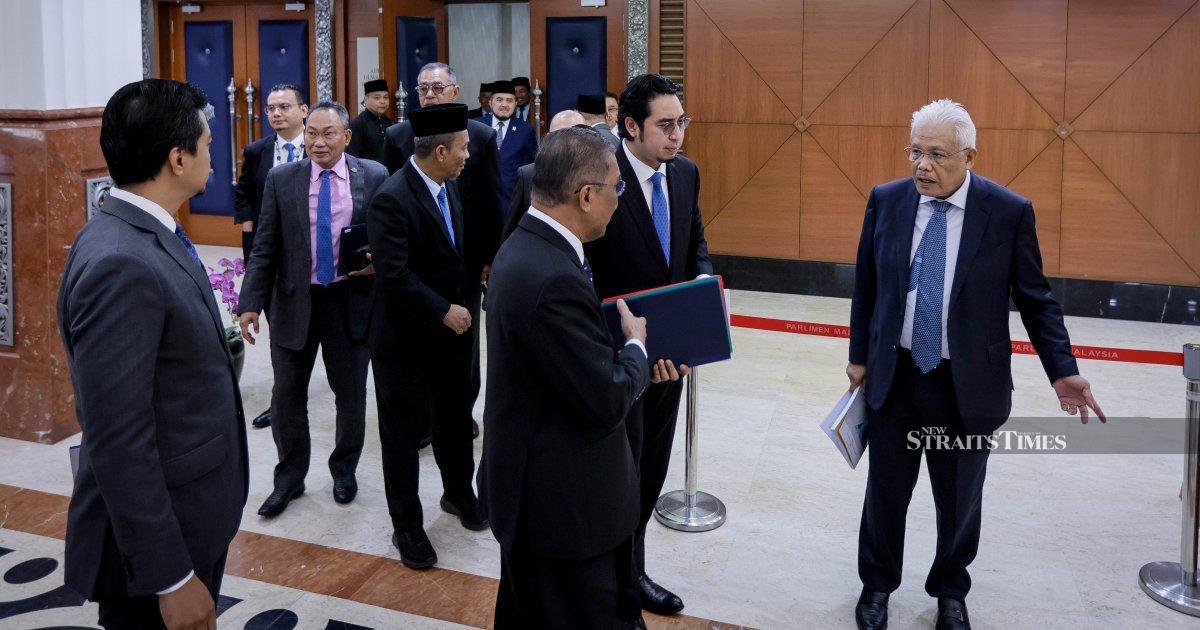
The recent opposition walkout from Parliament over the Royal Commission of Inquiry report on Tabung Haji has once again thrust Malaysia's legislative chamber into the spotlight, not for substantive debate but for the drama of departure. The incident underscores a deeper paradox embedded in Malaysian politics—the elasticity of legitimacy when it comes to parliamentary protest tactics. What one political coalition frames as principled dissent, another dismisses as performative grandstanding designed for social media consumption rather than genuine legislative engagement.
The Tabung Haji RCI, a long-awaited investigation into the pilgrimage fund's financial management, represents far more than an isolated institutional inquiry. The fund manages billions of ringgit in savings from Malaysian Muslims preparing for the hajj pilgrimage, making its governance a matter of genuine public concern that transcends ordinary political factionalisation. When the opposition chose to walk out during discussion of the report's findings, they effectively signalled that the content of the commission's work—or the government's handling of it—was sufficiently objectionable to warrant abandoning their parliamentary seats. Yet the tactical execution became the news story, overshadowing whatever substantive criticisms the opposition actually intended to lodge.
This pattern is neither new nor unique to Malaysia. Parliamentary walkouts have been employed across Commonwealth democracies for decades as expressions of profound disagreement or procedural objection. The tactic carries inherent communicative weight precisely because it represents a conspicuous breach of legislative norms. Members are expected to occupy their seats; their absence therefore signals something urgent. However, the very visibility that makes walkouts potentially powerful also makes them vulnerable to reframing. Did the opposition leave because they possessed substantive objections to the RCI findings that deserved parliamentary airing? Or did they depart primarily to generate headlines and demonstrate to their base that they were fighting back against the government?
The answer, inevitably, depends on one's political perspective. For opposition supporters, parliamentary walkouts represent one of the few remaining tools available to legislators who find themselves systematically outmanoeuvred in a legislative chamber where the government controls the calendar, the agenda, and the outcomes of most votes. From this vantage point, walkouts become a form of protest against procedural inequity and the government's apparent unwillingness to seriously engage with opposition concerns. They signal that the issues at stake are too serious for the standard back-and-forth of parliamentary debate, which the government majority can always resolve through voting numbers alone.
Conversely, government parliamentarians and their supporters view such walkouts as an abdication of legislative responsibility. They argue that members who refuse to participate in parliamentary proceedings forfeit the moral authority to criticise those proceedings. The walkout becomes, in this interpretation, an admission that the opposition lacks the substantive arguments to prevail in open debate and must therefore resort to dramatic gestures. This perspective holds that parliamentary legitimacy depends on all elected representatives remaining engaged in the legislative process, regardless of whether they anticipate defeat.
Both interpretations contain kernels of truth, which is precisely what makes this contradiction so durable and frustrating in Malaysian politics. Walkouts can simultaneously represent legitimate protest against structural inequities and constitute tactical performance designed for maximum media impact. The two framings are not mutually exclusive, yet the binary nature of political rhetoric forces observers to choose one or the other. This forces a false choice that obscures more nuanced questions about when parliamentary walkouts are strategically justified, whether they actually achieve their intended goals, and whether Malaysia's legislative chamber might benefit from clearer conventions governing their use.
The Tabung Haji situation also reflects broader anxieties about institutional integrity and governance in Malaysia. The fund's management has been a source of controversy and public concern, with Muslims who contributed their life savings entitled to clarity about how those funds have been managed and whether the RCI's investigations have uncovered problems requiring urgent remedial action. When opposition lawmakers walk out rather than engage substantively with the report's content, they risk appearing indifferent to accountability questions that matter enormously to ordinary Malaysians. Conversely, if the government has indeed failed to adequately address the RCI's findings or is stonewalling opposition scrutiny, then walkouts might reflect justified frustration with institutional processes that have broken down.
The Malaysian Parliament would benefit from examining why walkouts have become a recurrent feature of legislative politics and whether clearer rules or conventions might better serve both protest objectives and institutional legitimacy. Other Westminster-derived legislatures have grappled with similar questions, sometimes establishing procedures that allow for more structured expressions of dissent while maintaining the basic principle that legislators remain in the chamber. These might include designated protocols for formal dissent, time-limited boycotts with specified conditions for re-engagement, or enhanced mechanisms for minority views to receive documentary record and public attention.
Ultimately, the Tabung Haji walkout reveals that Malaysian parliamentary politics remains trapped in cycles where tactical disputes about how protest occurs consistently overwhelm substantive discussions about what is actually being protested. Until the political culture evolves to accommodate principled dissent through mechanisms other than dramatic departures, opposition lawmakers will continue facing a dilemma: engage in legislative processes they perceive as fundamentally inequitable, or walk out and risk accusations of theatrical performance. The resolution of this tension depends not on individual acts of protest but on developing broader consensus about the procedural legitimacy of minority voices within a majoritarian legislative system—a challenge that extends well beyond any single issue, including Tabung Haji.

