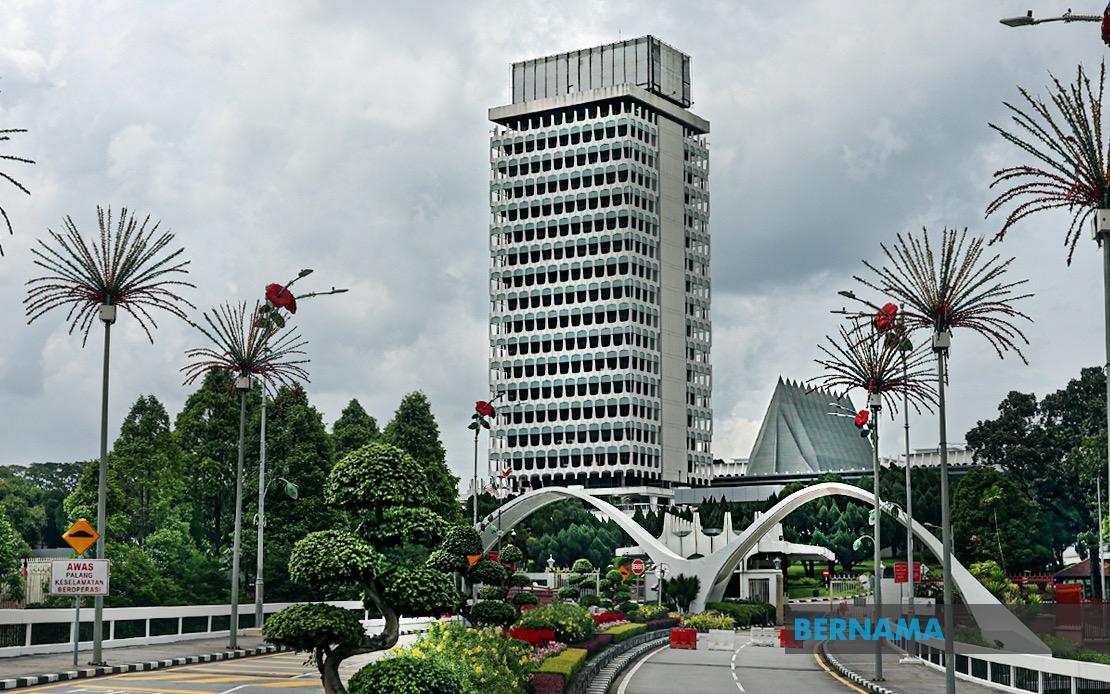
The Dewan Rakyat's third week of sitting, concluding mid-July, produced significant legislative outcomes alongside substantive parliamentary examination of governance, public health and national security matters. Two competition bills cleared their respective stages, while legislators engaged in wide-ranging debates touching on everything from rice industry regulation to press freedom standards and military procurement decisions. The week underscored Parliament's role in both advancing the government's economic modernisation agenda and scrutinising executive decision-making across multiple portfolio areas.
Parliament passed the Competition (Amendment) Bill 2026 and the Competition Commission (Amendment) Bill 2026, marking a deliberate policy shift to tackle anti-competitive behaviour in Malaysia's increasingly digital marketplace. These amendments represent the government's recognition that existing competition frameworks require refinement to address contemporary economic realities. The digital economy has created novel competitive challenges—from platform monopolies to algorithmic manipulation—that traditional competition law struggle to address effectively. By strengthening enforcement mechanisms, Malaysia aims to protect consumers and smaller businesses from exclusionary practices, whilst ensuring fair market conditions that encourage innovation and entrepreneurial activity. For Malaysian consumers and small traders already navigating challenges from dominant tech platforms and e-commerce giants, these reforms signal parliamentary acknowledgment that competition law must evolve alongside the economy.
Separately, the Control of Padi and Rice (Amendment) Bill 2026 entered its first reading phase, targeting systemic problems within one of Malaysia's most sensitive agricultural sectors. Food security has emerged as a critical concern across Southeast Asia, particularly given regional supply vulnerabilities and climate pressures. The bill's central mechanism—raising maximum penalties to RM1 million—reflects governmental determination to stamp out malpractice that undermines farmers' livelihoods and consumer trust. Padi and rice production involves complex supply chains vulnerable to fraud, adulteration and hoarding that can destabilise prices and availability. By imposing substantially heavier penalties, the legislation signals zero tolerance for conduct that distorts markets or compromises food quality. Malaysian households and the broader ASEAN region, which depends heavily on intra-regional rice trade, benefit from stronger domestic regulatory oversight that maintains supply chain integrity.
The parliamentary session devoted considerable attention to the Human Rights Commission of Malaysia's 2024 annual report, demonstrating legislators' engagement with human rights accountability frameworks. SUHAKAM's reports typically catalogue systemic concerns—detention practices, minority protections, access to justice—that require sustained policy attention. By tabling and debating the report formally, Parliament created space for MPs to advance specific recommendations and press ministries on implementation. This mechanism, whilst having inherent limitations, reflects the principle that independent human rights bodies deserve legislative consideration rather than administrative sidelining. For Malaysian civil society and regional human rights observers, such parliamentary engagement signals institutional pathways for accountability, however modest their practical impact.
Prime Minister Datuk Seri Anwar Ibrahim's ministerial question time address tackled two contentious policy areas: micro, small and medium enterprise financing and press freedom. On MSMEs, he underscored administrative streamlining of bank lending processes to reduce application bottlenecks. Malaysia's MSME sector—encompassing millions of sole traders, family businesses and small manufacturers—constitutes the economic foundation for rural and provincial communities. Accelerated, more predictable financing access directly translates to business expansion, employment creation and household income growth. The government's emphasis on institutional efficiency rather than subsidy expansion reflects pragmatic recognition that sustainable MSME support requires functional credit systems, not indefinite state assistance.
Yet the session's most revealing exchange concerned Malaysia's declining World Press Freedom Index ranking, where Anwar articulated the government's interpretive framework regarding permissible speech limitations. The government characterises enforcement actions against media outlets as narrowly targeted at content breaching the 3R boundaries—religion, race, and royalty—plus material threatening national security, rather than as blanket press suppression. This framing remains contestable: journalists and media freedom advocates globally argue that expansive national security definitions inevitably chill legitimate reporting. However, Anwar's subsequent announcement that complaints against journalists from recognised media organisations must proceed through the Malaysian Media Council rather than triggering automatic enforcement investigation represents a procedural constraint on state action. Such gatekeeping mechanisms, though imperfect, formally separate media complaints from state enforcement pathways, reducing ad hoc governmental pressure. For Malaysian journalists and regional press freedom advocates, this represents incremental institutional protection, however modest.
Two Special Select Committees presented reports examining organ donation frameworks and the escalating violence and abuse crisis. The six-year trend in abuse and violence cases—spanning domestic violence, child exploitation, and elder maltreatment—reflects deeper social pathologies requiring sustained policy intervention across education, healthcare, criminal justice and social protection systems. Parliamentary committees provide structured forums for cross-ministry examination of these sprawling problems, though their recommendations often languish without dedicated implementation mechanisms or budgetary allocation. The organ donation report similarly highlights how legislative scrutiny can expose gaps between policy intent and implementation reality, potentially spurring administrative reform.
Defence procurement matters—specifically the replacement of Naval Strike Missile systems aboard the Littoral Combat Ships—received parliamentary attention, reflecting legitimate legislative oversight of military modernisation expenditures. Malaysia's maritime security depends on credible naval capabilities across an expansive exclusive economic zone facing diverse threats from piracy to territorial incursions. Missile system selection involves technical specifications, cost considerations, interoperability with allied forces, and long-term sustainment implications. Parliamentary debate, however limited in technical depth, ensures military spending remains subject to legislative scrutiny rather than purely executive determination, a principle fundamental to civilian democratic control of defence forces.
Vaping and synthetic drug seizures emerged as another parliamentary focus, illustrating how legislative bodies must constantly adapt regulatory frameworks to emerging substance threats. The proliferation of vape products containing synthetic cannabinoids and other prohibited substances represents a novel enforcement challenge for Malaysian authorities. Rapid commercialisation of novel psychoactive substances consistently outpaces regulatory capacity, requiring Parliament to periodically tighten legislative definitions and penalties. This reactive legislative cycle—chasing market innovations in psychoactive substances—reflects fundamental tensions between consumer freedoms, public health protection, and enforcement capability that no parliamentary sitting can permanently resolve.
Healthcare digitalisation initiatives garnered parliamentary attention, underscoring the sector's critical modernisation needs. Malaysia's public healthcare system, serving predominantly lower-income and rural populations, operates with aging information systems constraining efficiency, data coordination and patient outcomes. Digital transformation—electronic health records, integrated appointment systems, data analytics for disease surveillance—promises substantial operational improvements. However, successful digitalisation requires sustained investment, cybersecurity safeguards, and staff training that extend well beyond legislation, making parliamentary support for budgetary allocation and institutional coordination essential.
Finance Ministry officials revealed that 1Malaysia Development Berhad liabilities, encompassing settled and outstanding obligations, total RM51.4 billion. This figure encapsulates the substantial fiscal burden persisting from the scandal that has dominated Malaysian politics for a decade. Though prosecution and convictions have advanced, the financial aftermath continues constraining government budgets available for healthcare expansion, educational investment, or infrastructure modernisation. This persistent debt illustrates how governance failures generate long-term fiscal consequences affecting public welfare across multiple domains.
The Speaker's reminder regarding parliamentary health screening, prompted by a lawmaker's heart institute admission, underscores the demanding nature of legislative service. MPs undertake substantial constituent casework, committee responsibilities and parliamentary sittings whilst often maintaining prior professional commitments. Preventive health screening helps ensure sustained legislative participation and institutional continuity, though such exhortations cannot address systemic pressures that compromise parliamentary wellbeing.
With one remaining week before the session concluded on July 16, Parliament's deliberations across competition policy, agricultural regulation, human rights oversight and defence spending demonstrated the institution's multifaceted engagement with contemporary governance challenges. Whether such parliamentary attention translates into meaningful policy implementation or administrative reform remains a persistent question, but the breadth of issues examined reflects legitimate democratic scrutiny of executive action across economic, social and security domains.

