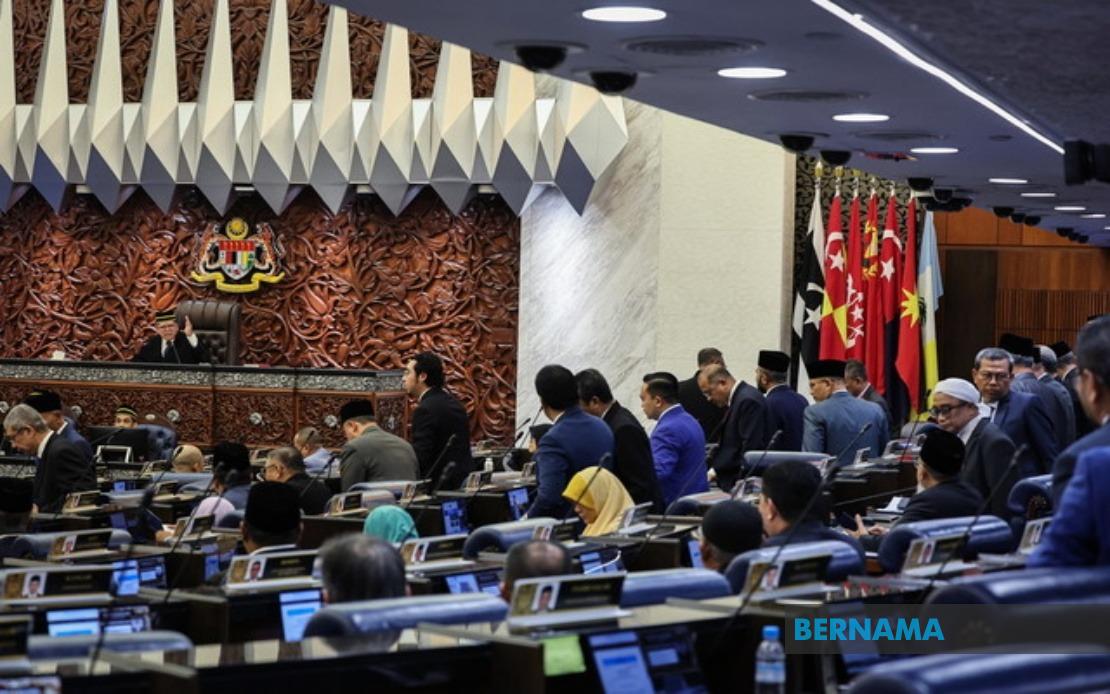
Opposition members from Perikatan Nasional staged a walkout from Parliament today when the Dewan Rakyat convened for a special sitting to debate the Royal Commission of Inquiry findings into Lembaga Tabung Haji, raising fresh questions about whether such tactics genuinely serve the millions of Malaysians with savings locked in the troubled pilgrimage fund.
Opposition Leader Datuk Seri Hamzah Zainudin led lawmakers from his coalition out of the chamber after PN Chief Whip Datuk Seri Takiyuddin Hassan moved to adjourn the proceedings. The proposal cited the absence of Prime Minister Datuk Seri Anwar Ibrahim and Deputy Prime Minister Datuk Seri Fadillah Yusof, both undergoing medical treatment. Their departure meant PN representatives forfeited their opportunity to participate in what parliament officially recognised as a significant forum for examining the RCI report released publicly on July 29.
From an academic perspective, the walkout presents a genuine strategic dilemma for opposition politics in Malaysia's Westminster-style system. Prof Datuk Dr Sivamurugan Pandian of Universiti Sains Malaysia's School of Social Sciences argues that while the action carries undeniable symbolic weight, it may ultimately damage the opposition's ability to champion the cause it claims to defend. The move conflates two separate parliamentary concerns—the Prime Minister's attendance and the substance of the Tabung Haji crisis—in ways that risk confusing public understanding of where each side stands on protecting depositors.
The fundamental tension lies in how opposition parties balance protest messaging with legislative effectiveness. A walkout generates immediate news coverage and signals discontent with government conduct, yet it simultaneously abandons the parliamentary record-keeping that forms the backbone of institutional accountability. When opposition members leave the chamber, their prepared arguments, supporting data, and proposed alternatives remain unspoken and officially undocumented. This matters profoundly in a system where parliamentary Hansard serves as the official chronicle of public debate and where future inquiries or court proceedings may reference what was or was not said during critical discussions.
For Tabung Haji depositors—millions of Malaysians who entrusted their hajj savings to the fund—the distinction between symbolic and substantive opposition carries real consequences. The RCI report, after months of investigation, contains specific findings about how the fund's resources were managed, invested, and potentially misused. A thorough parliamentary examination requires opposition voices raising detailed questions, presenting alternative interpretations of evidence, and proposing solutions. Leaving the chamber means those voices remain silent on the official record, making it harder for depositors, their lawyers, and future oversight bodies to reference opposition positions on specific failures and remedies.
Notably, not all opposition lawmakers adhered to the walkout decision, revealing internal disagreement about its wisdom. This fracturing within the opposition bloc itself suggests uncertainty about whether the tactic serves party interests or constituent interests. Some PN members apparently judged that remaining in the chamber to debate—despite the Prime Minister's absence—better served their political and representational obligations than walking out. This divergence indicates that even within opposition ranks, the calculus of protest versus participation remains contested.
Prof Sivamurugan emphasises that the Prime Minister's non-attendance, while politically significant, should not have necessitated abandoning the debate entirely. Opposition parties possessed alternative avenues: they could have remained seated, extensively criticised the government's decision to proceed without its chief executive, raised pointed questions about why the PM deemed his presence unnecessary for such a crucial matter, and then proceeded to scrutinise the RCI findings themselves. This approach would have simultaneously registered their protest while maintaining their advocacy platform. Such a strategy converts the PM's absence from a justification for leaving into evidence of governmental indifference toward accountability.
The symbolic versus substantive debate cuts deeper when considering Malaysian democracy's broader health. Parliament functions as a check on executive power partly because it creates an enduring record of debate. Hansard entries become references for journalists, civil society organisations, and informed citizens seeking to understand how elected representatives assessed government performance. When opposition members walkout rather than debate, they forfeit this mechanism of accountability. The government controls the narrative entirely, facing no recorded counterargument, no published critique of specific RCI findings, and no official documentation of alternative proposals. This imbalance strengthens rather than weakens executive control over the interpretation of events.
Moreover, the walkout strategy assumes that publicity generated through protest outweighs the value of substantive parliamentary engagement. While media coverage of an opposition walkout certainly reaches audiences, it typically conveys only the bare fact of the protest—that opposition MPs left—without explaining their specific objections to the RCI findings or their alternative vision for rescuing the Tabung Haji. By contrast, a thorough parliamentary debate broadcast or reported in detail communicates opposition positions, evidence-based critiques, and concrete proposals directly to the public. The latter approach educates citizens about complex policy issues; the former merely signals discontent.
For Malaysian and Southeast Asian observers, this episode illuminates recurring tensions in parliamentary democracies where opposition parties navigate between demonstrating strength through disruption and demonstrating competence through constructive engagement. The temptation to stage dramatic walkouts stems from real grievances—in this case, legitimate concerns about the Prime Minister's symbolic commitment to resolving the Tabung Haji crisis. Yet that temptation can backfire when the walkout itself becomes the story, overshadowing the substantive issues it purports to address. Depositors concerned about their savings need opposition parties to master the technical details of fund mismanagement, not merely to register presence or absence in Parliament.
Looking forward, the question facing opposition parties concerns how they rebuild public confidence in their capacity to govern. Voters must believe that opposition members, if entrusted with power, would deploy parliamentary mechanisms actively and skilfully to protect ordinary Malaysians. Walkouts sometimes convey strength; more often they convey that opposition leaders prefer symbolic gestures to the grinding work of policy analysis and legislative detail. For an electorate watching how different political actors respond to institutional failures like Tabung Haji's collapse, the opposition's choice to exit rather than engage sends a troubling message about priorities. Depositors seeking champions for their interests might reasonably ask whether parties willing to abandon Parliament when frustrated would also abandon other difficult tasks requiring sustained commitment.
The episode ultimately reveals that Malaysian democracy's health depends less on dramatic parliamentary theatre than on the willingness of all actors—government and opposition alike—to engage seriously with complex problems through institutional channels. The Prime Minister's absence from the Tabung Haji debate matters; the opposition's response matters more, because it demonstrates whether that response genuinely prioritises depositor protection or primarily serves factional political advantage.

