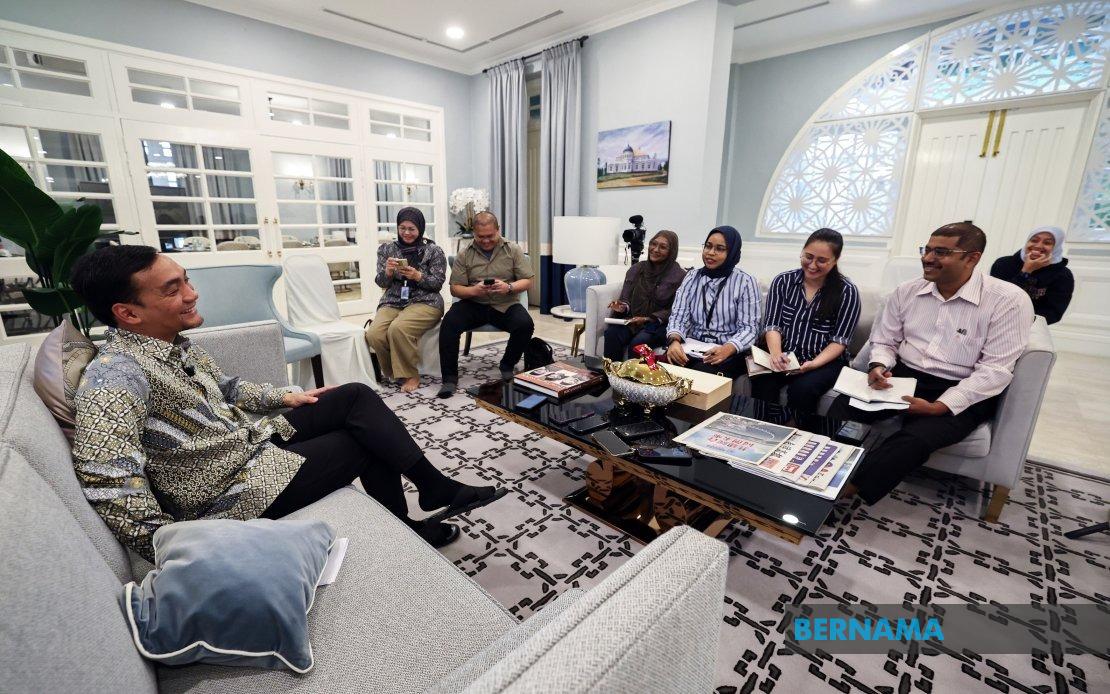
Missing out on a candidacy ticket for the Johor state election need not signal the end of a political career, according to Johor Barisan Nasional chairman Datuk Onn Hafiz Ghazi. Speaking from the Menteri Besar's official residence in Saujana, the incumbent Machap assemblyman sent an encouraging message to party members who have not secured nominations for the upcoming July 11 ballot, urging them to keep faith with the coalition's broader mission of serving Johoreans.
Onn Hafiz framed the candidate selection process as a necessary filtering exercise that, while disappointingly restrictive for those eliminated, should not dampen enthusiasm for party work or undermine long-term political aspirations. He acknowledged the reality that electoral seats are inherently scarce yet suggested that non-selected members may find alternative pathways to public service through parliamentary representation at the federal level or through organizational roles within the party machinery. This perspective attempts to soften the blow of exclusion by presenting it not as terminal rejection but as a temporary detour in a continuing political journey.
The Menteri Besar revealed that candidate selection remained approximately 80 percent complete at the time of his media address, with final confirmation pending only when candidates physically receive their appointment letters. This detail carries procedural significance: the apparent fluidity of the selection process, he emphasized, means that changes can still occur and that no decision is irrevocable until the formal watikah is handed over. He underscored this point by referencing past instances where issued appointment letters were subsequently withdrawn, suggesting a degree of uncertainty that persists even as the nomination deadline approaches.
Regarding the criteria guiding Barisan Nasional's selection strategy, Onn Hafiz outlined a framework centred on local credibility and community acceptance rather than demographic considerations. Candidates must possess genuine roots in their constituencies and enjoy recognition among local voters—qualities that, he suggested, transcend age boundaries or professional credentials. The emphasis on what he termed a "winnable, acceptable and likeable" candidate reflects broader party philosophy: electability depends fundamentally on a candidate's capacity to serve constituents effectively, whether that individual brings youthful energy or accumulated experience.
Age, Onn Hafiz stated plainly, remains immaterial to the selection calculus. A young candidate lacking genuine connection to voters or demonstrable capability offers little strategic advantage, whereas an older candidate with deep community ties and proven service orientation carries far greater weight. This principle, if applied consistently, could reshape perceptions of merit within the party and challenge age-based assumptions that sometimes dominate Malaysian political discourse.
The final approval authority for candidate selection does not reside solely with Onn Hafiz but requires endorsement from Barisan Nasional chairman and UMNO president Datuk Seri Dr Ahmad Zahid Hamidi, along with senior party leadership. This multi-layered approval structure provides context for understanding the selection outcome: individual ambitions compete within a broader organizational hierarchy where multiple stakeholders exercise veto power and influence.
Young Johoreans and first-time voters constitute a demographic force that Onn Hafiz regards as pivotal to the election outcome. Those below 40 years of age represent between 20 and 40 percent of Johor's population—a substantial voting bloc whose preferences could fundamentally alter the political landscape. The Menteri Besar indicated that the state government has actively courted younger voters, suggesting awareness among elected representatives that electoral viability increasingly hinges on winning support among this cohort. For Malaysian analysts, this generational shift carries national implications: whether younger voters across the country shift decisively toward or away from Barisan Nasional will substantially influence federal political balance in coming years.
Onn Hafiz issued a pointed appeal to all Johoreans, particularly those employed across the causeway in Singapore, to exercise their franchise on polling day. The reference to Singaporean workers acknowledges the reality that Johor's diaspora communities, while economically productive, sometimes face logistical barriers to voting. Higher turnout, he suggested, strengthens democratic legitimacy and ensures that elected representatives genuinely reflect constituent preferences. This framing elevates voter participation beyond mere procedural necessity to a democratic principle worth extra effort.
The incumbent Menteri Besar characterised his administration's record as one of conscientious effort on behalf of Johoreans and positioned the forthcoming election as a straightforward choice about continuity. Should voters grant the state government a fresh mandate, he pledged continued commitment to advancing collective welfare. The invocation of Islamic faith through "insya-Allah" (if God wills) grounds his appeal within a religious and cultural register familiar to Johor's predominantly Muslim electorate, subtly reinforcing the notion that effective governance flows from both political competence and spiritual conviction.
The electoral timeline established for Johor—with nomination day set for June 27, early voting on July 7, and main polling on July 11—compresses the campaign window considerably. This abbreviated schedule limits the time available for parties to mobilise supporters and for voters to absorb campaign messaging. For political observers across Southeast Asia monitoring Malaysia's electoral health, the Johor election serves as a significant barometer: outcomes here could presage broader shifts in voter sentiment that eventually affect Kuala Lumpur and other key states.
Onn Hafiz's message ultimately reflects a pragmatic recognition within established political machinery that not all party members can receive nomination tickets yet all must remain engaged. By emphasising commitment over candidacy and portraying selection as a fluid process rather than a final judgment, he attempts to transform disappointment into motivation. Whether non-selected members actually internalize this message and maintain energy for party work during a period of personal political frustration remains an open question for Johor's political operatives in the coming weeks.