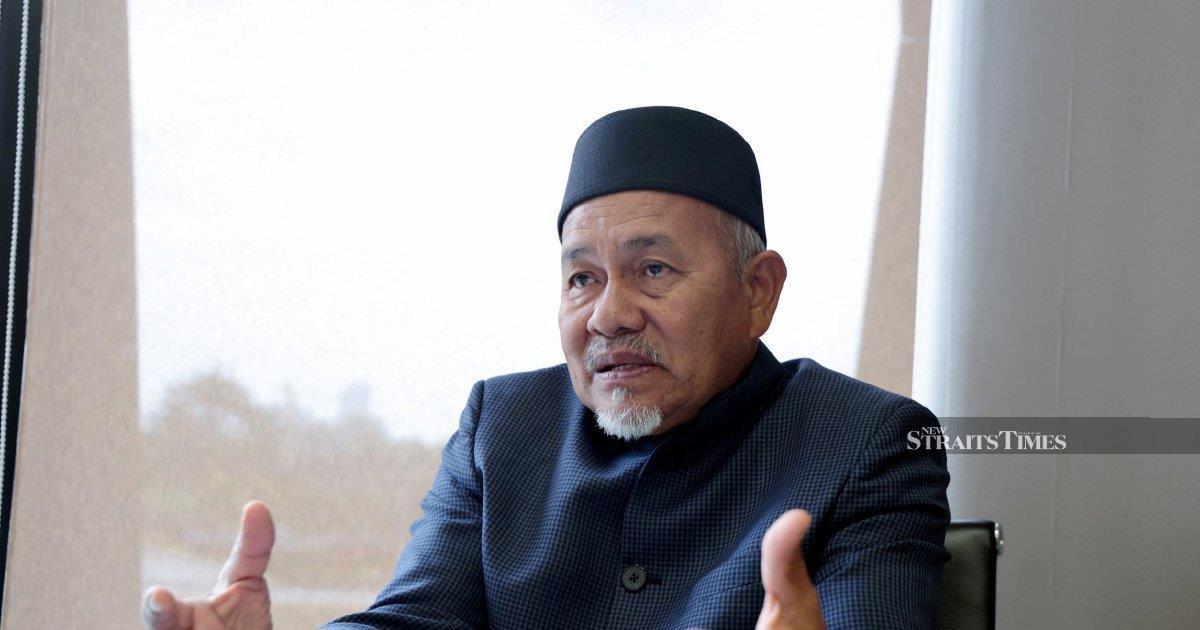
The Islamic party PAS has signalled readiness to engage in high-level negotiations regarding an expanded alliance between the Perikatan Nasional and Barisan Nasional coalitions, moving beyond their existing state-level arrangements. This development represents a significant shift in Malaysia's political landscape, where traditional rivals have gradually moved toward closer cooperation over the past several years. The potential expansion of this partnership framework could reshape the country's political dynamics at both state and national governance levels.
PAS leadership has indicated that discussions at the federal level would explore mechanisms for deepening the relationship between the two major coalition blocs. Such conversations would address how the collaborative model currently functioning in certain states might be adapted and implemented across different political jurisdictions. The party's openness to dialogue reflects broader strategic calculations within Malaysia's complex coalition politics, where numerical strength in parliament increasingly determines legislative outcomes and policy direction.
The Negri Sembilan electoral arrangement serves as a potential template for broader cooperation. That state's political configuration has demonstrated how Perikatan Nasional and Barisan Nasional components can coordinate their activities to present unified candidates and consolidated governance platforms. By suggesting that this model could extend to Melaka, PAS is proposing a mechanism whereby traditional political competitors might function as practical allies in pursuit of electoral and legislative objectives. Melaka's political landscape, currently shaped by various coalition configurations, presents both opportunities and complexities for such expansion.
For Malaysian readers, understanding these political machinations matters because coalition stability directly affects policy implementation, government spending priorities, and legislative agendas. When major political blocks coordinate more closely, cabinet formation becomes more predictable, which can provide greater certainty for business planning and policy continuity. Conversely, volatile coalition arrangements can create legislative gridlock and unpredictability that undermines long-term strategic planning by both private and public sectors.
The potential federal-level extension of this cooperation framework would be particularly consequential. At the national government level, coalition mathematics determines which policies advance and which languish. An expanded PN-BN arrangement at Parliament could provide the government greater legislative flexibility to pursue its economic, social, and foreign policy agendas without constant concern regarding backbench revolts or defections. This stability, if achieved, could facilitate implementation of medium and long-term development initiatives that require sustained legislative support.
However, such expansion also carries political risks and complications. Deepening cooperation between traditionally distinct coalition structures requires managing ideological differences, ministerial allocation, and policy disputes that tend to simmer beneath surface-level cooperation. PAS's participation in any such arrangement brings its particular religious and social policy perspectives, which may not align seamlessly with all Barisan Nasional component parties' positions. The willingness to negotiate suggests confidence that such differences can be managed, but historical precedent shows that coalition tensions often emerge unexpectedly.
For Southeast Asian regional observers, Malaysia's evolving coalition politics matter because the nation functions as a significant regional economic hub and diplomatic actor. Political uncertainty or instability can affect investor confidence, currency stability, and bilateral relationships with neighbouring states. When Malaysia's political arrangements stabilise through improved coalition coordination, regional partners gain greater predictability regarding Malaysia's foreign policy commitments and economic engagement strategies.
The willingness of PAS to participate in formal discussions about expanding cooperation suggests that the party perceives greater benefits from collaborative arrangements than from pursuing confrontational opposition strategies. This calculation reflects changing realities in Malaysian politics, where no single party or coalition can govern with overwhelming majorities, necessitating creative coalition management and negotiated settlements among political rivals. The shift toward pragmatism over ideology, at least in tactical political terms, characterises contemporary Malaysian governance.
Melaka specifically presents an interesting case study for such expansion because the state has experienced multiple political transitions in recent years. The state's political culture has become increasingly fluid, with voters and political actors demonstrating flexibility in coalition preferences. Replicating the Negri Sembilan model in Melaka would test whether successful cooperation in one context can transfer to different political environments with distinct demographic compositions, historical traditions, and local political dynamics.
The federal-level component of these proposed discussions carries particular weight. Malaysian politics has undergone significant transformation since 2018, with traditional bipolar configurations giving way to multipolar arrangements where multiple coalition blocs compete for legislative majorities. If PAS, representing substantial Islamic constituency interests, and Barisan Nasional, representing traditionally dominant establishment interests, can coordinate more systematically, this could reshape parliamentary dynamics and the balance of power in ways not seen in recent Malaysian political history.
These negotiations also reflect calculations about the 2025 state elections that are anticipated across multiple Malaysian states. Political parties naturally consider how current arrangements might position them favourably in upcoming contests. By signalling openness to expanded cooperation now, PAS may be positioning itself to negotiate advantageous pre-election arrangements with Barisan Nasional components, securing seat allocations and candidate nominations that maximise its electoral prospects across different state contexts.
For ordinary Malaysians, the practical implications of expanded PN-BN cooperation would manifest in legislative outcomes on economic policy, infrastructure development, education initiatives, and social programmes. Coalition stability generally allows governments to focus more effectively on policy implementation rather than managing internal political crises. Whether enhanced cooperation between these coalitions ultimately benefits Malaysians depends on the quality of governance and policy choices that stability enables, rather than on the mere fact of stability itself.

