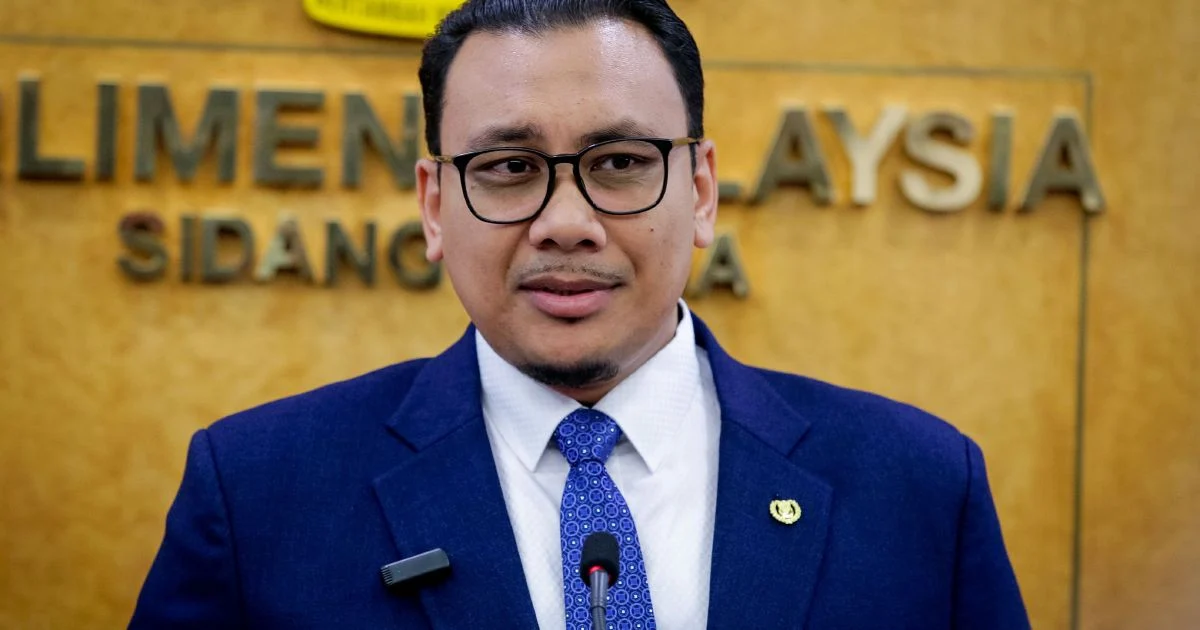
The chief of PAS Youth, Afnan Hamimi Taib Azamudden, has moved to pursue legal remedies after a Facebook post attributed to a Bersatu leader contained allegations that insulted his father and relatives. Through his legal team, the young politician has instructed lawyers to commence proceedings in response to the social media content, marking an escalation in what appears to be a personal dispute between members of Malaysia's coalition government.
The incident underscores the increasingly contentious nature of political discourse on social media platforms, where personal attacks on politicians' families have become commonplace. In Malaysia's current political landscape, where coalition partners PAS and Bersatu have been working within the Perikatan Nasional framework, such internal disputes can carry broader implications for government stability. The decision to pursue formal legal action rather than respond through conventional political channels signals a significant hardening of positions.
Facebook and other social media platforms have become battlegrounds for Malaysian political figures seeking to amplify their messages and attack opponents. The alleged insulting post represents a departure from traditional political discourse, where such attacks would typically be confined to parliamentary debates or press conferences. The shift towards using personal social media accounts to launch offensive remarks against politicians' family members raises questions about the boundaries of acceptable political expression in Malaysia's digital age.
PAS Youth has emerged as a significant political force within the party, representing younger members and advocating for positions that occasionally diverge from the broader coalition consensus. Afnan Hamimi Taib Azamudden's decision to pursue legal recourse demonstrates the seriousness with which PAS views the alleged assault on his family's reputation. The move reflects a broader trend among Malaysian politicians of weaponising defamation laws to counter criticism, whether justified or otherwise.
The involvement of Bersatu in this incident is particularly noteworthy given the party's recent trajectory in Malaysian politics. Bersatu, led by Muhyiddin Yassin, joined the Perikatan Nasional coalition following the collapse of the Pakatan Harapan government. The party's members have been involved in several controversies during their tenure in government, though this appears to be the first major public dispute between Bersatu and PAS Youth at this level of escalation.
Legal action over social media posts has become an increasingly common recourse for Malaysian public figures seeking to address online harassment and defamation. The courts have shown varying degrees of receptiveness to such cases, with some resulting in significant damages awards while others are dismissed. The precedent set by pursuing this case could influence how other Malaysian politicians respond to social media attacks on their families in future incidents.
The timing of this dispute raises questions about the current state of relations within the coalition government. PAS and Bersatu have been core components of Perikatan Nasional's political configuration, but tensions beneath the surface may have been simmering. Such internal conflicts, when they become public, can undermine the government's coherence and send concerning signals to voters about the stability of the administration.
From a broader Southeast Asian perspective, Malaysia's experience with social media-driven political conflict mirrors challenges faced by other democracies in the region. Indonesia, the Philippines, and Thailand have all grappled with similar issues regarding online harassment of politicians and their families. The Malaysian case demonstrates how digital platforms have fundamentally altered the nature of political competition, creating new vulnerabilities for public figures and their loved ones.
The legal proceedings, if pursued, will likely hinge on questions of defamation, invasion of privacy, and the scope of permissible political speech. Malaysian courts must balance the public interest in robust political discourse with the legitimate right to protection from false and insulting statements. This case may set important precedents for how Malaysian jurisprudence addresses social media-based political attacks targeting families rather than the politicians themselves.
Observers of Malaysian politics will be watching closely to determine whether this legal action represents an isolated incident or signals broader fractures within the coalition government. The way both PAS and Bersatu handle the dispute publicly, and whether other coalition members intervene to mediate, will provide insights into the health of Perikatan Nasional's internal relationships. The resolution of this matter could also influence how Malaysian politicians approach social media engagement moving forward, potentially encouraging greater restraint or further escalating the already contentious online political environment.