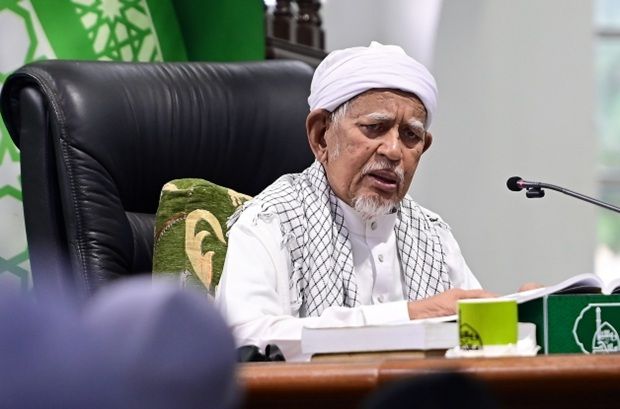
PAS president Abdul Hadi Awang's jubilant proclamation that his party played a decisive role in Barisan Nasional's recent Johor state election victory has reopened fundamental questions about the direction of Malaysian coalition politics, with reverberations extending far beyond the southern peninsula into territories where political calculations operate under markedly different conditions.
While assessments of PAS's actual contribution to Barisan's electoral fortunes remain contested, the broader implications demand attention from political observers tracking Malaysia's evolving federal landscape. The Johor results have sparked particular anxiety in Negri Sembilan and among political establishments in Sabah and Sarawak, where concerns about ideological realignment within the peninsula's dominant coalitions carry substantial weight in their own electoral calculations and coalition positioning.
The timing and tenor of Hadi Awang's declarations have proven especially troubling for Negri Sembilan leadership given the State's unique political sensitivities. Within the Negri Sembilan political sphere, questions persist regarding whether PAS fully comprehends the implications of recent institutional challenges facing Tuanku Muhriz, the reigning monarch whose authority and constitutional legitimacy have become contested terrain within Malaysia's political discourse. Such challenges to the institution of monarchy carry profound significance in a federation built on constitutional recognition of royal authority, particularly in a state where the ruler's personal political inclinations and values carry direct bearing on governance trajectories.
The strategic alliance between Barisan Nasional and PAS in contesting 26 of Negri Sembilan's 36 state assembly seats—executed in partnership with smaller coalition partners Wawasan and Gerakan—constitutes what many regional observers interpret as a deliberate challenge to Prime Minister Anwar Ibrahim and cabinet members who have publicly committed to working constructively with Barisan components. This collaborative framework suggests a recalibration of peninsular political alignments that potentially undermines the cross-party consensus that emerged following the 2022 general elections.
The implications for East Malaysia prove even more consequential. Sabah and Sarawak collectively command 56 parliamentary seats, a bloc sufficiently substantial to determine national government formation and legislative outcomes. These two states have historically distinguished themselves through political preferences that diverge significantly from peninsular preoccupations, with leadership consistently prioritizing infrastructure development, equitable federal budget allocation, and pragmatic governance over ideological positioning or religious mobilization campaigns.
Borneo's political evolution has occurred within societies characterizing religious and ethnic diversity not as a challenge to be managed but as a foundational principle structuring daily governance and intercommunal relations. This fundamentally different political ecology has produced state-level political parties and leaders notably cautious about embracing approaches perceived as excessively ideological or centered on religious identity mobilization as primary organizing principles. When PAS emphasizes its enhanced status within Barisan while simultaneously collaborating with Wawasan—led by former deputy prime minister Hamzah Zainuddin and representing remnants of the defunct Bersatu party—East Malaysian observers register alarm regarding potential shifts in the national political center of gravity.
PAS claims regarding its indispensability to UMNO, MCA, and MIC electoral performance ring differently in territories where political success depends fundamentally on sustaining inter-ethnic and inter-religious accommodation. While such narratives may strengthen PAS's standing among peninsular supporters, they simultaneously complicate relationships with political partners whose electoral foundations rest on entirely different social conditions and constitutional understandings. The federation's architects in 1963 explicitly structured Malaysian democracy to accommodate regional variation, federal principles that East Malaysian leaderships continue emphasizing as foundational to national stability and cohesion.
Negri Sembilan's Tuanku Muhriz represents another complicating factor in this political recalibration. The State's ruler has consistently positioned himself against corruption while maintaining the colloquial self-description "Boss Ku"—a personalized brand emphasizing approachability alongside principled governance. His constitutional role and institutional authority carry implications extending beyond state boundaries, particularly when questions arise regarding the compatibility between his governance philosophy and the ideological orientations of strengthened political partners at the federal level.
Sabah and Sarawak leadership evaluates peninsular political developments through the lens of implications for national cohesion and Malaysia's federal foundations. The two states have repeatedly demonstrated prioritization of constitutional principles concerning state autonomy, religious harmony, multicultural governance frameworks, and federal-state relations over ideological contestation. Political narratives appearing capable of destabilizing Malaysia's carefully maintained balance among its diverse regions and communities trigger legitimate apprehension among East Malaysian leaders whose populations depend fundamentally on continued intercommunal harmony and constitutionally-guaranteed protections.
This does not suggest PAS lacks legitimate democratic role within Malaysia's political system. As a registered political party, PAS possesses full constitutional right to contest elections, present policy alternatives, and mobilize electoral support through democratic means. Coalition politics itself represents an essential feature of Malaysia's parliamentary democracy, and competitive engagement among parties constitutes the system's fundamental operating principle.
However, democratic legitimacy in a federal context demands sensitivity toward the federation's composite character. Electoral success in single regions does not automatically generate acceptance across the entire country's varied political communities. Malaysia's federal structure inherently requires coalitions recognizing and accommodating substantially different historical experiences, cultural traditions, and political expectations among participating territories and constituencies.
Malaysian politics has historically demonstrated capacity to construct broad-based coalitions despite considerable differences among participating parties, with this flexibility enabling governments of diverse composition to maintain national stability while accommodating regional diversity. The challenge confronting current political leadership involves sustaining this tradition while integrating assertive new power dynamics within established coalition frameworks—a task requiring explicit attention to concerns emanating from political leaders in Negri Sembilan and East Malaysia whose constituencies harbor legitimate anxieties regarding the federation's constitutional balance.

