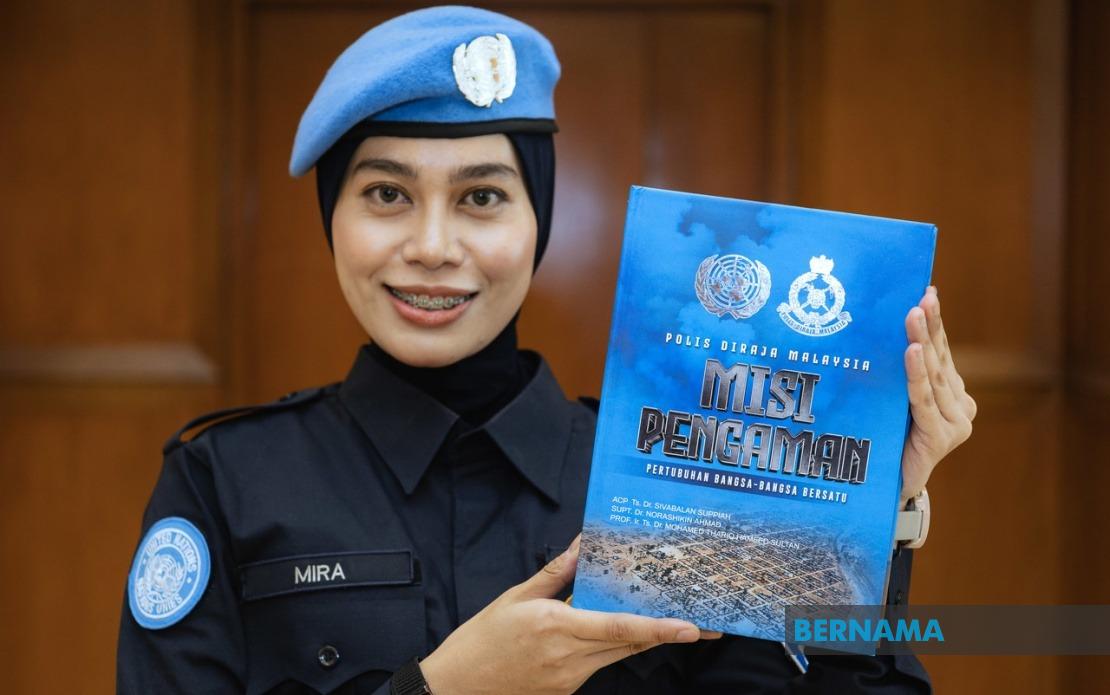
Malaysia's Royal Malaysia Police have commemorated their participation in global peacekeeping efforts through the publication of a comprehensive book documenting the force's involvement across 13 United Nations missions. Inspector-General of Police Tan Sri Mohd Khaled Ismail unveiled the volume at a ceremony in Kuala Lumpur on July 27, positioning the work as a critical study in institutional crisis management and strategic decision-making that extends beyond conventional policing boundaries.
The 500-page publication represents more than a historical record of overseas deployments. According to Mohd Khaled, the book traces the professional and personal dimensions of Malaysia's police personnel operating in conflict zones, capturing accounts of resilience and sacrifice that define the humanitarian mission underpinning peacekeeping operations. This narrative approach grounds Malaysia's international security contributions in the lived experiences of officers who served under United Nations authority, offering readers insight into the operational realities of maintaining peace in volatile environments.
A central theme within the book concerns the transformation of Malaysia's policing framework. The PDRM transitioned from an institution primarily focused on managing domestic security threats into an internationally acknowledged force capable of operating effectively across diverse cultural contexts and conflict landscapes. This evolution reflects broader strategic shifts in how Malaysia positions itself within regional and global security architecture, particularly as the nation seeks to enhance its standing among UN member states and contribute meaningfully to international peacekeeping efforts.
Mohd Khaled emphasized that the documented experiences across all 13 missions validate Malaysia's national policing model, known as Acuan Kepolisian Watan. The flexibility and effectiveness demonstrated in these international deployments suggest that principles developed within Malaysia's domestic policing context prove universally applicable. This cross-pollination of knowledge between Malaysian and international best practices strengthens both the PDRM's institutional capacity and its ability to mentor security forces elsewhere, particularly within Southeast Asia where regional stability remains a priority.
The book's publication involved collaboration between multiple stakeholders, reflecting how Malaysia's approach to knowledge development increasingly depends on partnerships between government security institutions, academic research centres, and civil society foundations. UPM Press partnered with the National Book Development Foundation and Yayasan Generasi Malaysia to produce the volume, demonstrating institutional commitment to documenting and preserving Malaysia's contributions to peacekeeping. Such collaborative publishing models strengthen the nation's intellectual infrastructure while ensuring that critical institutional memory reaches both specialist and general audiences.
Framing peacekeeping through humanitarian rather than purely security-focused perspectives aligns the PDRM's international work with Malaysia MADANI, the government's development philosophy emphasizing dignity, hope, and inclusive prosperity. Mohd Khaled's remarks positioned Malaysia's police involvement in UN operations as expressions of values-based leadership rather than mere security transactions. This framing elevates peacekeeping from a technical military or police function to a moral enterprise rooted in protecting vulnerable populations and supporting community recovery in post-conflict settings.
Operating effectively in environments characterised by resource scarcity, rapid environmental change, and profound uncertainty demands leadership qualities that extend beyond traditional command structures. The book's focus on decision-making processes tested under these extreme conditions provides valuable case studies for Malaysian and regional security practitioners grappling with similar challenges at home. As countries throughout Southeast Asia face transnational security threats, organized crime, and humanitarian crises, lessons from police operations in UN peacekeeping zones offer practical strategic insights.
During the launch ceremony, the ASEAN Records organization recognized the PDRM for deploying the largest national police contingent to any host nation across the complete series of United Nations peacekeeping missions. This distinction underscores Malaysia's sustained commitment to international peace operations and reflects the country's capacity to maintain significant security contributions over extended periods. For Malaysian readers, this recognition validates investment in professional police development and reinforces the country's soft power position within regional and global diplomacy.
The book's emergence reflects growing recognition that institutional histories deserve formal documentation and public accessibility. Rather than allowing peacekeeping experiences to remain primarily within specialist circles, the PDRM chose to publish comprehensive accounts that invite broader reflection on how Malaysia contributes to international stability. This transparency about operational experiences, strategic challenges, and lessons learned strengthens public understanding of security sector contributions while potentially influencing how younger generations perceive careers within Malaysia's police service.
For Malaysian policymakers and security professionals, the book's publication signals institutional maturity and confidence in the PDRM's international standing. Publishing detailed accounts of peacekeeping missions demonstrates that Malaysia views its security contributions not as classified operations requiring secrecy but as achievements worthy of scholarly examination and public knowledge. This openness contrasts with security cultures emphasizing operational secrecy and positions Malaysia's approach as aligned with modern transparency expectations around military and police accountability.

