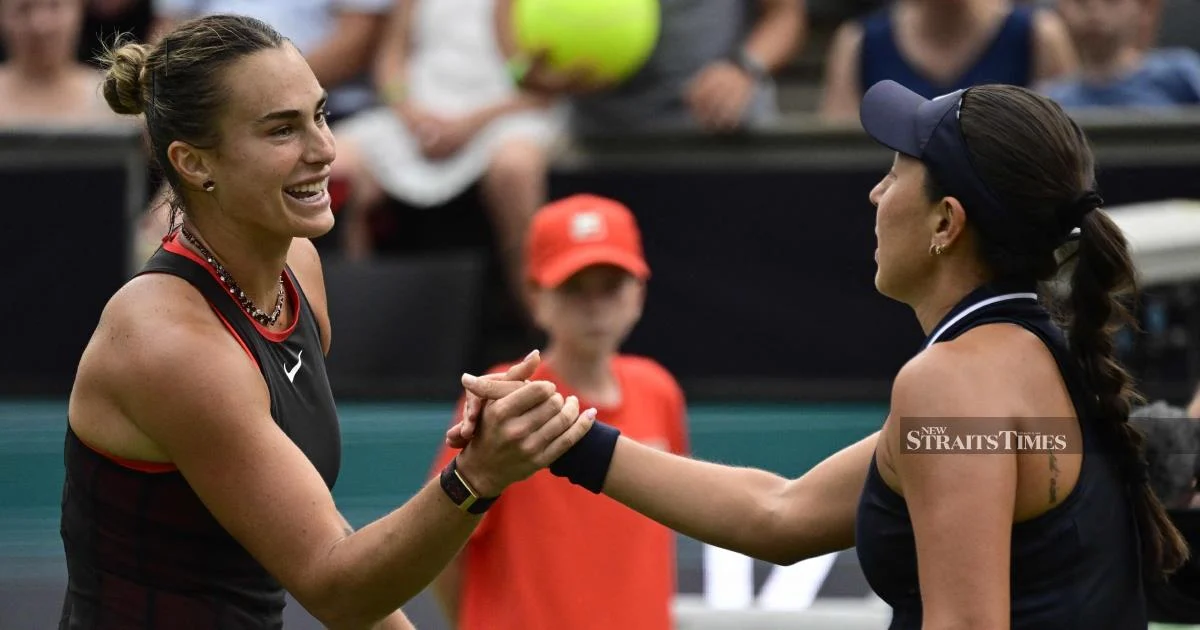
American tennis star Jessica Pegula has advanced to the championship match of the Berlin WTA grass-court tournament, dispatching defending world number one Aryna Sabalenka with a 6-2, 6-7 (4-7), 6-0 victory in the semi-finals. The result marks Pegula's second appearance in the Berlin final, underscoring her growing consistency at the elite level of women's tennis.
Pegula's performance against Sabalenka showcased the tactical sophistication required to challenge the tournament's top-seeded player. After securing the opening set with relative comfort at 6-2, Pegula faced a more resilient opponent in the second frame, where Sabalenka mounted a spirited resistance. The set went to a tie-breaker, where Sabalenka narrowly claimed victory 7-4, temporarily levelling the match and suggesting the possibility of a decisive third set to determine the finalists.
However, momentum decisively shifted in Pegula's favour during the decisive third set. Her ability to maintain composure following the tie-breaker loss proved crucial, as she delivered a near-flawless performance that completely dismantled Sabalenka's resistance. The shutout 6-0 victory in the final frame represented a clinical demonstration of superior tennis, with Pegula controlling the court and dictating rallies from the baseline. This scoreline underscores the psychological and physical toll that grass-court tennis can inflict, particularly when one player gains ascendancy.
The significance of this victory extends beyond the immediate outcome. Sabalenka's ranking as the world's premier player makes this an impressive scalp for Pegula, who has been steadily accumulating notable victories against top-ranked opponents. For Southeast Asian tennis enthusiasts, this match represents the calibre of competition at women's tennis' highest echelons, where marginal improvements in execution and tactical awareness determine outcomes between players of similar technical ability.
Grass-court tennis presents unique demands distinct from the clay and hard courts that dominate the professional calendar. The quicker court surface accelerates point duration, rewards aggressive play, and punishes defensive positioning. Pegula's success on Berlin's grass courts reflects both her technical adaptability and her confidence playing on surfaces where explosive movement and serving prowess become paramount. Her previous experience reaching this final prior to this tournament will have provided valuable knowledge regarding court conditions and tactical approaches.
Sabalenka's exit from the tournament removes the world number one from contention for this significant WTA title. While early-round or semi-final losses are natural occurrences in professional tennis, they nonetheless represent missed opportunities for the season's accumulated ranking points and the prestige associated with tournament victories. For Sabalenka, this defeat provides motivation to refine her grass-court approach before the sport's most prestigious tournament—Wimbledon—takes place later in the summer calendar.
Pegula's trajectory in 2024 demonstrates the unpredictable nature of women's professional tennis, where consistency across surface types separates championship contenders from occasional competitors. Her ability to produce dominant performances against the world's elite, particularly when stakes escalate and the opposition becomes increasingly formidable, positions her as a serious contender for major titles. The American's path to the Berlin final illustrates how semi-final victories against top-ranked opponents can significantly impact season narratives and ranking adjustments.
The Berlin WTA tournament carries considerable importance within the professional calendar. Contested annually on grass courts, it attracts elite competitors seeking title opportunities and confidence ahead of Wimbledon. For players like Pegula, the tournament functions as both a destination event and a preparatory opportunity, allowing competitors to acclimatise to grass surfaces and competitive intensity before sport's most historic championship. Pegula's advancement to this stage represents tangible progress toward both tournament success and Wimbledon preparation.
Pegula's opponent in the final remains to be determined, having not yet been decided at the time of her semi-final victory. Nonetheless, Pegula's confidence and current form position her favourably for the championship match. Her ability to produce commanding performances while maintaining tactical flexibility against opponents of varying playing styles provides a template for success. The final will present an opportunity for Pegula to capture a prestigious WTA title and secure ranking points that consolidate her status among tennis' elite.
Looking forward, Pegula's continued success on grass surfaces during this pre-Wimbledon period establishes momentum heading toward the All England Club. For Malaysian and broader Southeast Asian tennis audiences, Pegula's performances exemplify the competitive standards necessary to compete for major titles in contemporary women's professional tennis, offering perspective on the extensive preparation and tactical acumen demanded at sport's pinnacle.

