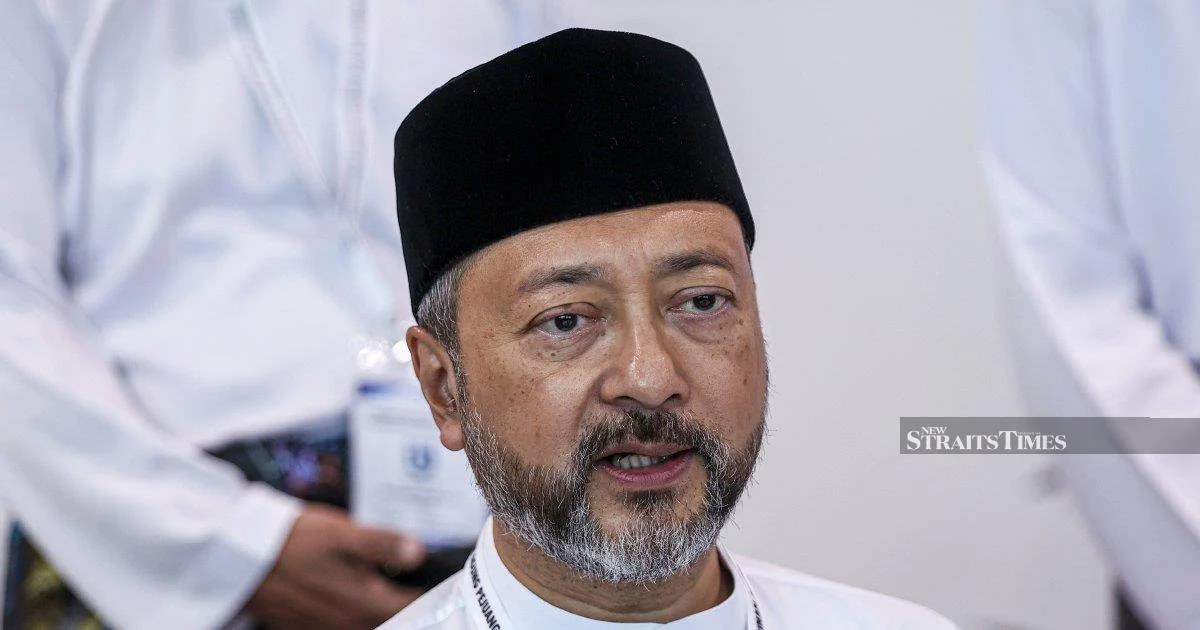
Parti Pejuang Tanah Air's formal entry into Perikatan Nasional represents more than a simple merger between two political entities. According to party president Datuk Seri Mukhriz Mahathir, the development signals an intentional strategy to gather Malaysia's scattered political movements under a unified banner capable of responding to mounting pressures confronting the nation.
The expansion of Perikatan Nasional through Pejuang's inclusion reflects a calculated repositioning within Malaysia's complex coalition politics. Since its establishment in 2020, Perikatan Nasional has positioned itself as an alternative to the long-dominant Barisan Nasional framework. The addition of Pejuang, founded by former Prime Minister Mahathir Mohamad and led by his son Mukhriz, brings fresh political capital and a distinct constituency into the coalition's machinery.
Mukhriz's characterisation of this merger as emblematic of a "broader unity effort" carries significant weight in understanding current political trajectories. Rather than depicting Pejuang's decision as a pragmatic response to electoral mathematics alone, he frames it as part of a comprehensive endeavour to strengthen political representation. This narrative positioning is crucial because it suggests the coalition is thinking beyond immediate electoral considerations and towards structural political realignment.
The timing of Pejuang's integration warrants examination within Malaysia's evolving political context. The nation has experienced considerable electoral volatility in recent years, with voters increasingly fragmented across multiple political vehicles. The 2022 general election produced a hung parliament requiring intricate coalition-building, and subsequent by-elections have underscored the continuing fluidity of voter preferences. Against this backdrop, consolidating smaller parties into larger coalitions becomes a logical strategic move for political formations seeking stability and electoral viability.
Pejuang's membership in Perikatan Nasional also affects the coalition's geographical footprint and demographic appeal. The party has demonstrated notable influence in certain constituencies, particularly in the Klang Valley region. Its integration potentially strengthens Perikatan Nasional's urban middle-class appeal, an electoral segment that has proven increasingly significant in recent contests. Additionally, the inclusion of a party associated with the Mahathir political legacy—despite generational distance—carries symbolic importance for voters nostalgic for that era.
From a Southeast Asian perspective, Malaysia's coalition dynamics merit attention. The region's larger democracies frequently grapple with comparable challenges of political fragmentation and coalition management. The mechanisms through which Malaysia's political actors negotiate unity could offer lessons—both positive and cautionary—for neighbouring democracies managing similar fragmentation.
The broader political economy underlying this merger deserves consideration. Smaller parties in Malaysia increasingly face structural disadvantages, from resource constraints in campaign financing to diminished media coverage and reduced parliamentary representation. The incentive structure thus favours consolidation, as Pejuang's leadership would recognise. By integrating into Perikatan Nasional, the party gains access to a larger organisational apparatus and improved prospects for fielding candidates in winnable seats during future elections.
Mukhriz's statement positions the merger as responsive to "growing national challenges," though the specifics of these challenges remain somewhat undefined in his remarks. Malaysian voters and observers naturally interpret this phrasing through their own concerns—economic pressures, inflation, employment prospects, education quality, and social cohesion. The ability of Perikatan Nasional, now expanded to include Pejuang, to articulate concrete policy responses to these identified challenges will significantly influence the coalition's electoral fortunes and political credibility.
The Mahathir family's political trajectory adds another dimension to this development. From his decades-long tenure as Prime Minister through his attempted political comeback and subsequent ventures with Pejuang, Mahathir has remained a consequential figure in Malaysian politics. His son's leadership role in Pejuang means that Perikatan Nasional now encompasses one of Malaysia's most recognisable political surnames. This carries both advantages—name recognition and established supporter networks—and potential liabilities should the Mahathir legacy prove divisive among certain electoral constituencies.
Looking forward, the success of this merger depends substantially on whether Perikatan Nasional can translate structural enlargement into genuine political unity. Merging party machines and consolidating voter bases presents organisational challenges distinct from technical integration. The coalition must demonstrate that Pejuang members enjoy meaningful voice in decision-making processes and that the party's incorporation serves purposes beyond simple seat-sharing arithmetic.
The Malaysian political landscape will closely monitor whether this unity effort extends beyond Pejuang. Mukhriz's reference to "broader" consolidation implies receptiveness toward additional political actors potentially seeking shelter within Perikatan Nasional's framework. The viability of such expansion, and the coalition's capacity to absorb and integrate diverse political interests, will substantially determine whether this represents a genuine realignment or merely a temporary tactical manoeuvre.

