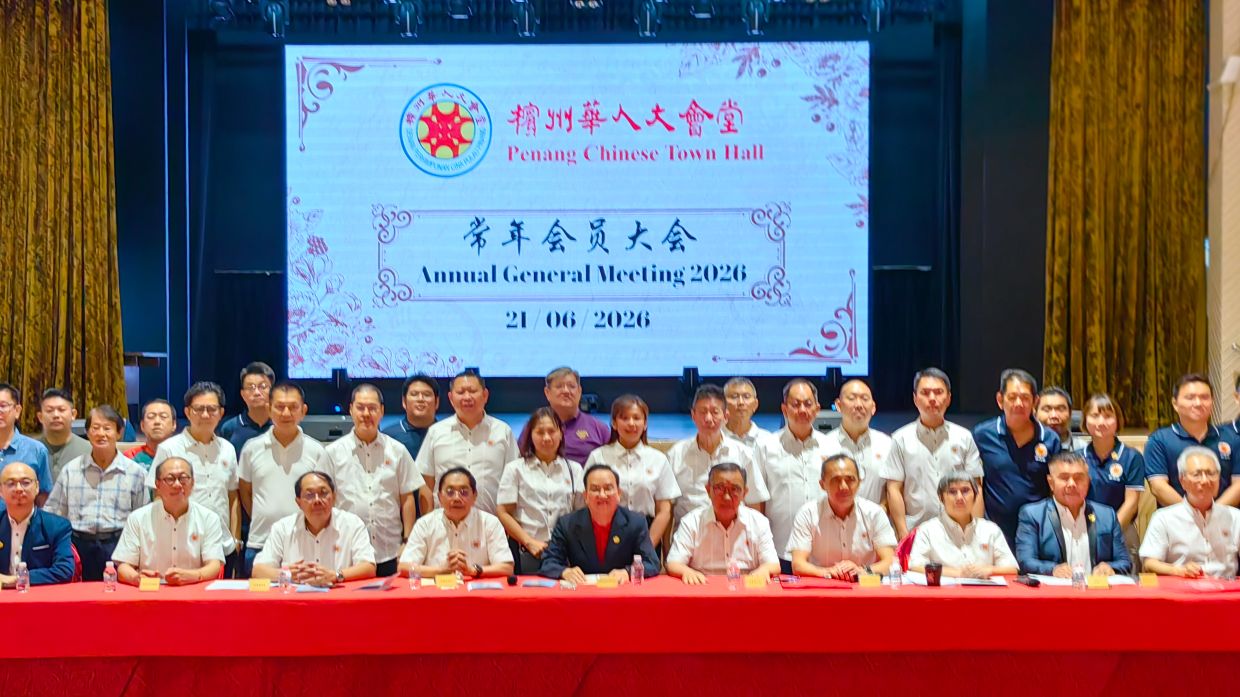
Penang Chinese Town Hall maintained financial stability in 2025, posting total revenue of RM12.61mil against expenditure of RM12.55mil for a modest surplus of RM59,191. The financial performance, disclosed at the organisation's annual general meeting on June 21, reflects steady operational management despite an economic environment marked by uncertainty and shifting consumer patterns across Malaysia.
Donations constituted the dominant revenue stream for the culturally significant institution, contributing RM11.24mil or approximately 89% of total income during the year. This heavy reliance on philanthropic support underscores the community's continued commitment to preserving and advancing Chinese heritage in Penang, a state with deep historical ties to Chinese migration and commerce. Supplementary income sources included rental and maintenance fees of RM439,671, auditorium rental income of RM361,245, and anniversary-related receipts totalling RM222,498, indicating diversified but modest alternative revenue channels.
On the expenditure side, donations distributed to community causes and charitable initiatives consumed the largest share of resources at RM11.12mil, accounting for approximately 88.6% of total spending. This represented a substantial decrease from RM12.35mil distributed in the prior year, suggesting a more conservative allocation approach or possibly fewer exceptional philanthropic commitments during 2025. In contrast, personnel costs escalated during the period, with salaries and allowances climbing to RM502,625 from RM452,761 in 2024, reflecting either workforce expansion or compensation adjustments to retain talent in a competitive labour market.
About 200 members attended the annual general meeting, where chairman Tan Sri Prof Tan Khoon Hai addressed broader civic and political matters relevant to Malaysia's governance landscape. With Johor and Negri Sembilan scheduled to conduct state elections during 2025, the PCTH leadership used the platform to encourage informed political participation and rational voter assessment. Tan emphasised that elections transcend local infrastructure concerns and development projects, serving instead as defining moments that shape the nation's trajectory and determine its future direction across multiple dimensions of governance and social progress.
The chairman articulated that voters should scrutinise the performance records and policy commitments of contending political parties before supporting candidates who demonstrate capacity to foster national unity, stimulate sustained economic expansion, and preserve social cohesion. This framing positions PCTH not merely as a cultural or charitable entity but as an institutional voice advocating for responsible citizenship and democratic engagement within the broader Malaysian context, particularly among the Chinese community that has traditionally constituted a significant portion of the nation's electorate and economic contributors.
Tan unveiled the newly refurbished Ping Zhang Hall, which has undergone comprehensive renovation and contemporary upgrades to meet evolving event and gathering requirements. The revitalised venue features expanded spatial dimensions, enhanced comfort standards, and integrated professional-grade sound, lighting, and LED projection systems. These infrastructure improvements position Ping Zhang Hall as a competitive venue option for diverse occasions, ranging from corporate dinner functions and trade association celebrations to anniversary commemorations, charitable fundraising events, and community assemblies, thereby expanding PCTH's income-generating potential and community service capacity.
Looking ahead, Tan announced a significant technological initiative positioning Penang at the forefront of regional innovation cooperation. PCTH will co-organise the 2026 China-Asean Artificial Intelligence Cooperation Forum in Penang during November in partnership with business and technology organisations from China and Asean member states. This strategic undertaking aligns with Penang's established reputation as the Silicon Valley of the East and its pre-eminence as Malaysia's concentrated hub for electrical and electronics manufacturing, an industry foundation that naturally extends toward artificial intelligence development and applications.
The proposed forum will function as a high-level convening platform bringing together AI researchers, technological experts, corporate executives, and industry leaders from across the region to examine emerging artificial intelligence technologies, their practical industrial deployment, and prospects for cross-border collaborative projects. By hosting such a gathering, Penang reinforces its positioning within Southeast Asian technological networks while PCTH itself elevates its profile beyond cultural custodianship toward facilitating economic and technological advancement. Tan specifically invited members possessing relevant technological expertise to participate actively, framing their involvement as essential to strengthening Penang's institutional role in advancing regional AI cooperation and establishing the state as a centre of excellence for technology-driven development throughout Southeast Asia.
This multifaceted agenda—combining prudent financial management, infrastructure modernisation, civic engagement promotion, and positioning within emerging technological sectors—reflects PCTH's evolution from a traditional community organisation toward an entity addressing contemporary economic and political imperatives. The emphasis on AI cooperation particularly resonates with Malaysian policymakers' broader ambitions to position the nation within global and regional technology ecosystems, moving beyond resource extraction and manufacturing toward knowledge-intensive industries. For the Chinese community in Penang and Malaysia more broadly, PCTH's initiatives signal that cultural preservation and community service need not conflict with technological modernisation and regional economic participation, but rather can coexist and mutually reinforce institutional relevance across generations.

