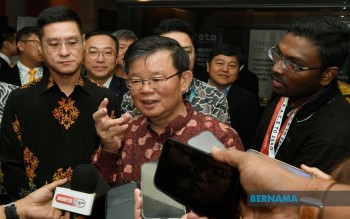
Twenty-five companies have signalled their intention to tap into Penang's newly established Climate Mitigation Fund, with five applications currently under evaluation. The fund, a collaborative venture between the state government and Alliance Bank under the Penang Green Industry Programme, carries an initial budget of RM20 million—comprising RM5 million from state coffers and RM15 million from the banking partner—with potential expansion to RM100 million. Chief Minister Chow Kon Yeow announced the encouraging response to the financing initiative during his keynote address at the R.A.C.E To Zero: Penang Edition conference in George Town, underscoring the business community's readiness to pivot towards climate-conscious operations.
The emergence of this fund reflects a fundamental shift in how manufacturing competitiveness is being assessed globally. For decades, Malaysian factories have competed primarily on the traditional metrics of talent availability, physical infrastructure, logistics capabilities and cost efficiency. However, multinational corporations increasingly scrutinise their supply chain partners through an environmental lens, requiring evidence of low carbon operations and verified renewable energy sourcing. Penang's electrical and electronics sector, which generated RM436.9 billion in exports last year and accounts for approximately 68 per cent of Malaysia's total E&E shipments, faces particular pressure to demonstrate environmental credentials to retain major contracts and attract new investment.
Under the financing scheme, eligible small and medium enterprises and mid-tier companies can access preferential loans reaching RM500,000, bundled with grants, sustainability assessments conducted by qualified professionals, and advisory services tailored to individual manufacturing requirements. The combination of concessional financing and technical support addresses a genuine market gap: many businesses recognise the imperative to decarbonise but lack the expertise and upfront capital to navigate the transition. By coupling financial incentives with professional guidance, the programme reduces perceived risk and accelerates deployment of efficiency measures across factory operations.
Chow's comments underscore a critical reality for Malaysian manufacturers: global buyers increasingly ask suppliers about electricity sources and carbon footprints before placing orders. This interrogation of supply chain emissions—often termed Scope 2 emissions in corporate sustainability frameworks—has become commonplace among Fortune 500 companies operating under binding net-zero commitments. For Penang's export-dependent economy, the ability to demonstrate renewable energy integration has evolved from a peripheral environmental concern into a mainstream business necessity affecting market access and contract renewal prospects.
To address this imperative, Penang launched the Energy Framework in November 2024, establishing a clear roadmap for the state's decarbonisation journey. The framework targets a 25 per cent reduction in energy intensity across all sectors by 2030, alongside a commitment to increase renewable energy's share in the state's total consumption to at least 10 per cent within the same timeframe. These objectives, while ambitious, reflect the state government's recognition that business-as-usual energy practices will jeopardise Penang's competitive standing in increasingly environmentally conscious global markets.
Rooftop solar installation emerges as the centrepiece of Penang's renewable energy strategy, a pragmatic choice given the state's land constraints. New building guidelines now mandate that commercial and industrial structures must dedicate at least 75 per cent of available roof area to solar panels or demonstrate equivalent renewable energy sourcing aligned with their respective Tenaga Nasional Berhad tariff categories. This regulatory approach leverages existing infrastructure without requiring substantial land acquisition, while distributing solar capacity across numerous private facilities rather than concentrating it in utility-scale projects that demand large contiguous plots.
Beyond rooftop installations, the state is exploring complementary renewable pathways. The Penang Water Supply Corporation is conducting feasibility studies on floating solar arrays deployed across its reservoir systems, a technology that simultaneously generates electricity and reduces water evaporation losses—a dual benefit particularly valuable in a water-stressed state. Silicon Island, Penang's premium industrial development initiative, has been designed with renewable energy integration as a core component, including a dedicated Green Tech Park powered substantially by on-site solar generation. These varied approaches create a diversified renewable portfolio appropriate to Penang's geography and urban density.
Energy efficiency standards represent the complementary pillar of Penang's energy transition architecture. The state is introducing mandatory benchmarking frameworks that enable businesses to measure, monitor and progressively reduce energy consumption across production cycles and facility operations. Government properties and local authority buildings are undergoing systematic assessments to identify renewable energy and efficiency improvement opportunities. The state has established a target requiring that at least five per cent of total energy consumption in newly constructed government and municipal facilities derive from renewable sources, with existing public buildings encouraged to pursue equivalent objectives.
Penang's energy policies align strategically with the National Energy Efficiency Action Plan 2.0, the federal government's comprehensive blueprint targeting an 11.6 per cent reduction in national energy demand by 2035. This vertical integration of climate ambition—from federal strategy cascading through state programmes to individual corporate implementations—increases the likelihood of sustained progress. When federal and state governments coordinate policy signals, businesses can invest with confidence that regulatory frameworks will remain stable, while competing states maintain comparable standards, preventing a race-to-the-bottom dynamic where environmental standards erode under competitive pressure.
For Malaysian manufacturers, the Penang Climate Mitigation Fund represents an accessible entry point into sustainability transitions that might otherwise appear financially prohibitive or operationally daunting. The combination of financing, grants, and technical advisory services reduces the barriers that typically delay corporate environmental action. As global supply chain managers intensify their carbon auditing processes and multinational corporations implement increasingly stringent emissions requirements, Penang's proactive stance in facilitating industrial decarbonisation creates competitive advantage over regions slower to mobilise such support. The strong early response—25 applications within the fund's initial months—suggests that Malaysia's manufacturing sector recognises the existential importance of environmental credentials to future market viability.

