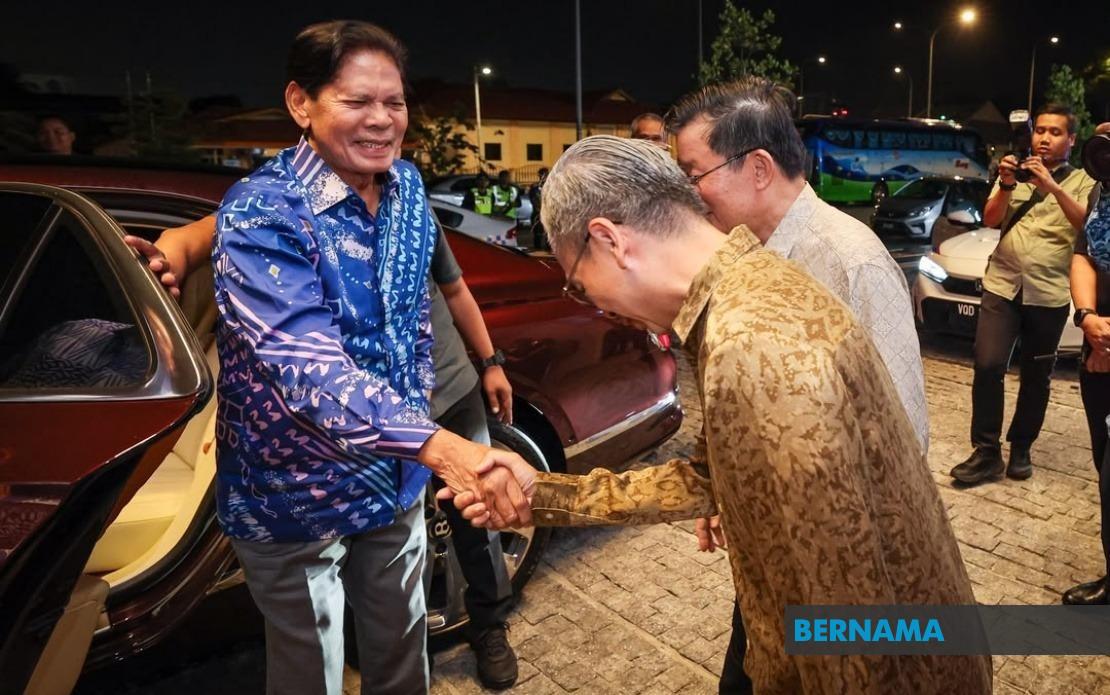
Penang Governor Tun Ramli Ngah Talib orchestrated an evening reception in Butterworth on June 19 to recognise media professionals from across Malaysia and the wider ASEAN region, marking the prelude to National Journalists' Day celebrations scheduled for the following day. The state government dinner, attracting nearly 350 guests in a convivial setting, demonstrated official acknowledgment of the pivotal function that news organisations and their practitioners perform in supporting the nation's broader development trajectory.
The gathering assembled a cross-section of the Malaysian media establishment alongside regional counterparts. Penang Chief Minister Chow Kon Yeow and Communications Minister Datuk Fahmi Fadzil were among the state and federal representatives present, signalling high-level political endorsement of the journalism profession. Senior government officials including Penang State Secretary Datuk Seri Zulkifli Long and Communications Ministry Secretary-General Datuk Abdul Halim Hamzah underscored the formal nature of the occasion. The presence of Timor-Leste Secretary of State for Social Communication Expedito Loro Dias Ximenes reflected the regional diplomatic dimensions now embedded within Malaysia's media recognition frameworks.
Leadership from Malaysia's principal news organisations filled the ballroom, representing the institutional backbone of domestic journalism. Bernama Chairman Datuk Seri Wong Chun Wai, alongside Chief Executive Officer Datin Paduka Nur-ul Afida Kamaludin, joined editors and senior executives from Media Prima Bhd, Sin Chew Daily, Star Media Group, Daily Express Sabah, and Astro Awani. This convergence of newsroom decision-makers created a rare opportunity for dialogue among competitors who collectively shape Malaysia's information ecosystem and public discourse.
International delegates from neighbouring countries elevated the occasion beyond a domestic celebration into a regional forum. Representatives included the President of Timor-Leste's national news agency TATOLI—Noemio Mateus Soares Falcao—and senior figures from Indonesia's journalism networks. The Indonesian delegation comprised Asro Kamal Rokan, head of the Indonesia chapter of Ikatan Setiakawan Malaysia-Indonesia, and ANTARA Bureau Chief Rangga Pandu Asmara Jingga. Their attendance reflected growing recognition among Southeast Asian governments and media institutions that journalists operate within interconnected information landscapes transcending national boundaries.
HAWANA 2026, now in its current iteration, has evolved into a platform with demonstrable international reach and appeal. The festival's capacity to attract delegations from multiple ASEAN nations suggests that Malaysia's celebration of journalism has achieved regional legitimacy and strategic importance. For Malaysian media practitioners, this international dimension offers competitive advantage in positioning domestic journalism as part of a sophisticated regional conversation about press freedom, standards, and professionalism—matters increasingly vital as Southeast Asian governments navigate tensions between press autonomy and state interests.
The centrepiece event, scheduled for the following day, was to be inaugurated by Prime Minister Datuk Seri Anwar Ibrahim at the PICCA Convention Centre @ Butterworth Arena. This top-level political benediction indicated sustained government investment in framing media as a development partner rather than a watchdog counterbalance. The chosen theme—'Media Integrity Strengthens Credibility'—positioned credibility as an asset requiring institutional maintenance, implicitly acknowledging contemporary challenges to public trust in news organisations across the region and globally.
Parallel programming designed to capture broader public engagement included the three-day RIUH Pi HAWANA Carnival, commencing the evening of the official dinner and anticipated to draw approximately 30,000 visitors to the Butterworth arena. This carnival component demonstrates deliberate strategy to popularise journalism among non-specialist audiences, moving beyond industry self-celebration toward civic engagement with the media profession itself. The carnival assembled over 24 local creative product brands and 20 food and beverage vendors, transforming the venue into a cultural marketplace rather than a purely professional gathering.
The carnival programming featured 16 stage performances by Malaysian artistes spanning indie rock acts Exists and Bunkface through to contemporary performers including Sakura Band and Chelsea Ng, with complimentary admission. This cultural programming strategy—combining journalism forums with entertainment and commerce—mirrors emerging international practices in making professional conferences accessible to general populations. For Malaysia, such fusion reflects recognition that sustaining journalism's social relevance requires cultivating public appreciation beyond readers and viewers toward active civic stakeholders.
The accumulation of approximately 1,000 media practitioners in Penang, significantly including delegations from multiple ASEAN countries, positioned this gathering as the region's most substantial convening of the journalism profession. Such scale creates informal networks and formal deliberations on cross-border reporting standards, professional challenges, and responses to misinformation. For Malaysian journalists, the international presence enables peer learning from counterparts navigating similar pressures in neighbouring democracies and hybrid political systems.
The Communications Ministry's lead role in organising HAWANA 2026, with Bernama as implementing agency, positions the celebration within official state structures. This arrangement reflects Malaysia's approach of integrating media recognition within government communications frameworks. While some democratic societies maintain greater separation between state acknowledgment of journalism and media independence, Malaysia's model aligns journalism celebration with strategic communications objectives, particularly relevant given contemporary Southeast Asian governments' emphasis on countering what they characterise as foreign disinformation and destabilising narratives.
HAWANA 2026's articulation of 'Media Integrity Strengthens Credibility' responds to documented erosion of public confidence in news institutions across Asia-Pacific democracies. Declining trust metrics have prompted industry self-reflection and government attention toward journalism standards. By framing credibility as an outcome of integrity practices, the celebration implicitly acknowledges that professional conduct and transparency represent media's most resilient counter to both commercial sensationalism and state pressure. For Malaysian readers increasingly diverse in their information consumption patterns, institutional commitment to these principles carries practical significance.
The economic and cultural infrastructure surrounding HAWANA 2026—encompassing official dinners, carnival programming, and multi-day conferences—indicates journalism's evolving status within Malaysian state priorities. Rather than treating press recognition as ceremonial afterthought, the scale and sophistication of HAWANA 2026 suggests deliberate cultivation of media as institution deserving systematic support and public regard. Whether this translates into substantive protections for editorial independence or regulatory forbearance remains subject to ongoing observation of government conduct toward challenging reporting and critical commentary.

