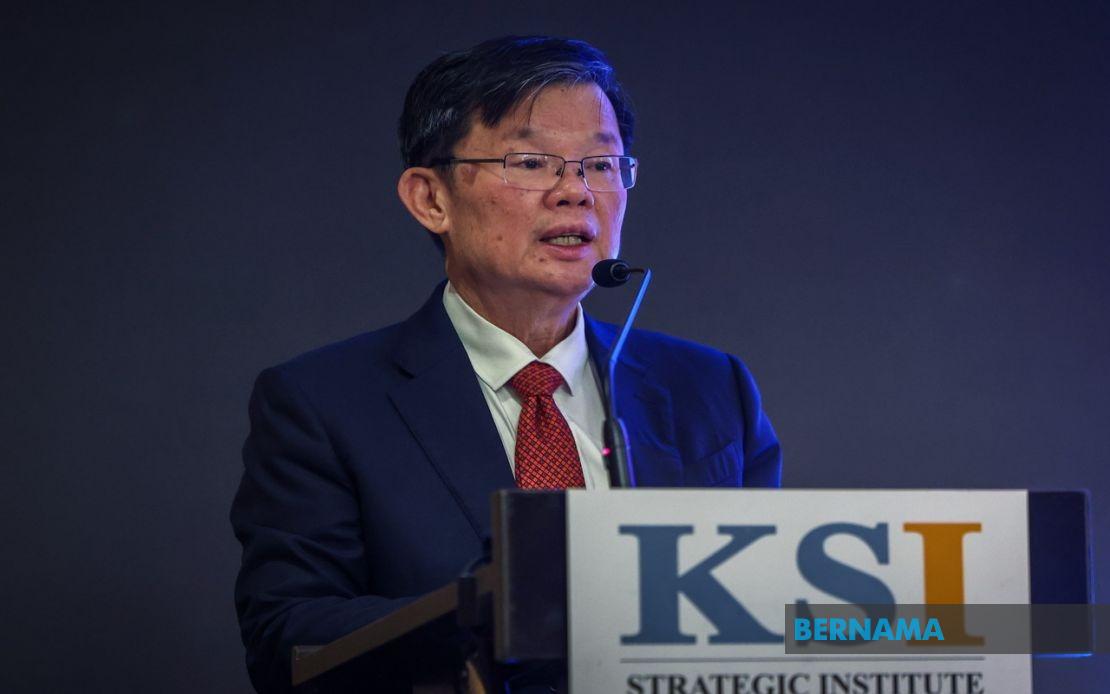
Penang's Pakatan Harapan coalition intends to nominate a greater number of women candidates for the upcoming state election, yet surmounting the obstacle of locating a sufficient pool of qualified and motivated contenders continues to present difficulties, according to coalition chairman Chow Kon Yeow. Speaking at the World Women Economic and Business Summit 2026 in George Town on June 15, the Penang Chief Minister acknowledged that while the aspiration remains steadfast, practical constraints fundamentally shape the coalition's capacity to realise that goal.
The 30 per cent women's participation benchmark in politics and decision-making represents a longstanding commitment for Penang PH, yet the coalition persistently encounters resistance when attempting to convert this target into concrete candidate lists. Chow explained that the fundamental prerequisite—a deep talent pipeline of eligible women prepared to enter the electoral arena—does not yet exist in sufficient abundance. This reflects a systemic problem extending well beyond Penang, highlighting how political representation gaps cannot be closed through mere directive or goodwill alone without addressing the conditions that discourage women's participation.
Nationally, Malaysia's aspirational 30 per cent women's representation target, established in 2009, remains unachieved more than fifteen years later. Current figures reveal that women constitute merely 13.5 per cent of Members of Parliament and 12 per cent of state assemblypersons across the country, underscoring how far Malaysian politics lags behind gender parity goals. This persistent disparity, despite decades of policy rhetoric, suggests that isolated efforts by individual state coalitions, while commendable, cannot fully compensate for structural imbalances embedded within Malaysia's broader political culture and institutional practices.
Chow's candid assessment identifies a critical distinction between rhetorical commitment and practical feasibility. Although women have demonstrated considerable advancement within professional spheres—notably education, commerce, engineering, and government service—politics remains a notably inhospitable terrain. The specific pressures and obstacles associated with parliamentary contest work to dissuade capable women from pursuing electoral candidacy. This observation suggests that the problem is not primarily a shortage of qualified women but rather the deterrent effect of political participation itself, which carries asymmetrical burdens and risks for female candidates compared to their male counterparts.
To advance toward the 30 per cent objective, Chow recommended that political organisations institutionalise the target within their formal candidate nomination procedures rather than treating it as an optional aspiration. Such procedural embedding would create binding obligations throughout the selection process, preventing the target from being displaced by other concerns when practical obstacles emerge. Malaysia's established parties have not systematically adopted such mechanisms, explaining partly why progress has stalled despite repeated public commitments.
Beyond candidate recruitment, Chow emphasised that political parties must guarantee equitable female representation within executive and decision-making committees. Women's integration into party leadership structures proves essential for cultivating an institutional environment where female candidacy becomes normalised rather than exceptional. Currently, many parties maintain token women in visible roles while excluding them from substantive strategic deliberation, limiting their influence over party direction and resource allocation.
Access to mentoring and financial resources emerged as another essential component in Chow's framework for increasing women's political participation. Emerging female political aspirants frequently lack established networks that facilitate campaign financing, media exposure, and grassroots organisation—advantages that incumbent male politicians take for granted. Formalised mentoring systems pairing novice women candidates with experienced political figures could accelerate their professional development and confidence levels. Similarly, dedicated campaign financing mechanisms targeting women candidates would eliminate one category of structural disadvantage.
The Penang Chief Minister's remarks carry particular significance given that Penang PH has positioned itself as relatively progressive on gender matters within Malaysia's political landscape. If even this coalition encounters substantial obstacles in recruiting women candidates, the challenge facing more conservative political organisations appears even more formidable. This reality suggests that achieving national gender parity in political representation will require not merely isolated party initiatives but rather comprehensive cultural and institutional transformation across Malaysia's political system.
For Malaysian readers and Southeast Asian observers, these developments illustrate broader patterns in the region. Despite economic progress and educational advancement, women's political representation across Southeast Asia remains disproportionately low relative to their population size and demonstrated competence in other domains. Penang's experience suggests that technical solutions—target-setting, policy frameworks—prove insufficient without addressing deeper cultural attitudes toward women's political legitimacy and the structural barriers embedded within party systems.
Moving forward, the effectiveness of Penang PH's efforts will depend less on rhetorical commitment than on whether the coalition translates its aspirations into institutional changes that actively cultivate female political talent. This might include mentorship programmes, dedicated campaign support, and explicit candidate recruitment initiatives targeting women in professional and community leadership positions. Without such concrete mechanisms, the gap between stated objectives and actual female representation will likely persist, rendering the 30 per cent target perpetually aspirational rather than achievable.