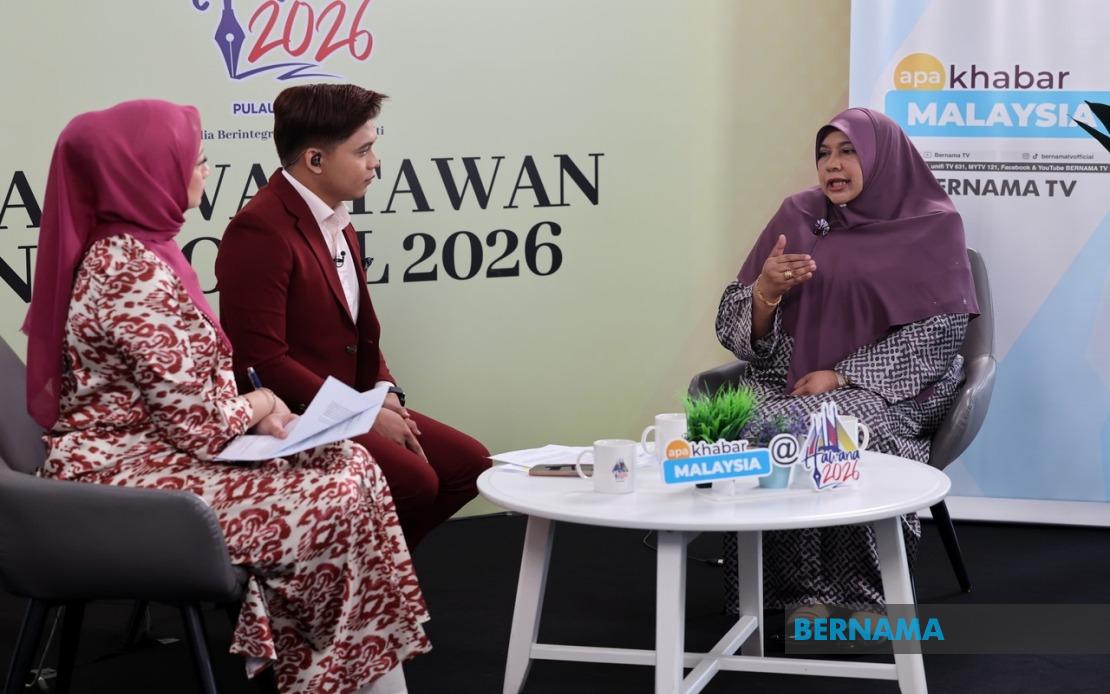
Penang will serve as the focal point for Malaysian and international media practitioners tomorrow as the National Journalists' Day summit (HAWANA) 2026 reaches its climax, congregating roughly 1,000 communications professionals to underscore journalism's indispensable function in disseminating reliable and trustworthy information. Prime Minister Datuk Seri Anwar Ibrahim is scheduled to officiate the ceremony at 3 pm, marking a significant endorsement of the country's media sector and its professional standards.
Under the banner "Media Integrity Strengthens Credibility," the gathering represents a pivotal occasion for the nation's journalism community to reaffirm its commitment to ethical reporting and accuracy. The summit's organisational framework reflects substantial governmental and institutional backing, with Penang Chief Minister Chow Kon Yeow, Communications Minister Datuk Fahmi Fadzil, and Communications Ministry secretary-general Datuk Abdul Halim Hamzah expected in attendance. This ministerial representation underscores the administration's recognition of media's societal importance and the government's investment in professional journalism standards within the Southeast Asian region.
The event's administrative direction falls under Datin Paduka Nur-ul Afida Kamaludin, who chairs both Bernama and the HAWANA 2026 Working Committee. Her perspective reveals the summit's multifaceted objectives extending beyond ceremonial recognition. Rather than functioning solely as a honours platform, Nur-ul Afida characterises HAWANA as a professional networking nexus where journalists strengthen collegial bonds and foster industry-wide connections. This positioning reflects contemporary understanding that journalism's resilience depends not merely on individual competence but on robust professional ecosystems where practitioners collaborate and exchange expertise.
Partnerships have substantially shaped the event's execution and scope. MyCreative Venture, operating under the Communications Ministry's purview, has partnered to deliver the RIUH Pi HAWANA Carnival component, exemplifying how government agencies and creative sectors can align around media celebration. The carnival segment, extending across three days at the PICCA Convention Centre parking lot, transcends traditional conference parameters by incorporating cultural performances from established Malaysian acts including Exists, Bunkface, Masdo, Sakura Band, Budak Nakal Hujung Simpang, and Chelsea Ng. This integration of entertainment, alongside interactive workshops and commercial participation from over 24 creative brands and 20 food vendors, demonstrates deliberate efforts to position journalism and media professions within broader cultural and social contexts accessible to general publics.
The ceremonial programme incorporates several meaningful components addressing both professional recognition and social responsibility. Prime Minister Anwar Ibrahim will distribute Tabung Kasih@HAWANA contributions directed toward journalists facing financial hardship, reflecting institutional commitment to practitioners' welfare. Simultaneously, the premier will announce HAWANA Award and Special Award recipients honouring individuals whose contributions have fundamentally shaped journalism practice and elevated public discourse. These dual elements—welfare assistance and excellence recognition—signal comprehensive approaches to sustaining journalism as a profession viable for its practitioners while celebrating exemplary work.
HAWANA's annual observance on May 29 connects contemporary journalism celebrations to historical foundations. The date commemorates the 1939 inaugural publication of Utusan Melayu newspaper, establishing Malaysia's modern press landscape. This historical grounding provides institutional memory crucial for understanding journalism's evolution within Malaysia's nation-building project. For regional observers, this historical anchor demonstrates how Southeast Asian nations have progressively developed media professionalism frameworks, with Malaysia's structured celebration of journalistic contributions reflecting broader maturation in media cultures across the region.
The summit's broadcast infrastructure extends its reach and impact significantly beyond physical attendance. Bernama TV will provide live coverage, with subsequent transmission by Radio Television Malaysia and TV AlHijrah ensuring nationwide accessibility. Integration of social media platforms amplifies distribution to digital-native audiences, particularly younger demographics. This multi-channel approach acknowledges contemporary media consumption patterns and ensures that messaging regarding media integrity resonates across generational and technological divides. For Malaysian media observers, the broadcast strategy itself demonstrates the sector's embrace of platform diversity and audience segmentation.
Preceding the culminating summit, HAWANA 2026 incorporated several preliminary programmes establishing thematic momentum. The May 7 Media Forum, June 4 Strategic Partner Meeting, and June 14 Fun Walk component progressively engaged both media professionals and general publics in dialogues surrounding journalism's contemporary challenges and opportunities. This graduated approach suggests recognition that sustaining public confidence in media requires sustained engagement rather than singular high-profile events. The encouraging participation across these preliminary activities indicates receptiveness within both professional and community circles to discussions regarding media standards and integrity.
For Malaysia and the Southeast Asian region broadly, HAWANA 2026's emphasis on media integrity arrives amid complex information environments characterised by misinformation proliferation, platform fragmentation, and declining trust in traditional institutions. The summit's thematic choice reflects deliberate positioning of journalism as a counterforce to these challenges. By assembling media practitioners around explicit integrity commitments and celebrating professional excellence, HAWANA reinforces journalism's societal legitimacy at moments when public scepticism toward media spans numerous democracies. The inclusion of government leadership, particularly prime ministerial participation, signals official recognition that independent journalism and credible information provision constitute national assets requiring institutional support.
The event's scope and ambition also reflect Malaysia's media sector's positioning within competitive regional landscapes. Singapore, Thailand, Indonesia, and the Philippines maintain similarly structured journalist organisations and annual celebrations, creating implicit competition regarding professional standards and international standing. HAWANA 2026's scale and ministerial engagement position Malaysian journalism as a sector receiving governmental and professional investment, enhancing the country's soft power dimensions and media industry attractiveness for international partnerships and talent recruitment.
Beyond ceremonial functions, the summit's networking architecture addresses practical professional challenges. Journalism increasingly requires collaborative approaches spanning local and transnational investigations, digital security practices, and business model innovation. By facilitating direct engagement among practitioners, editors, and institutional leaders, HAWANA creates spaces where such collaboration can emerge organically. For Malaysian journalists specifically, such networking opportunities prove invaluable given the sector's scale and the challenges individual outlets face in addressing complex transnational issues affecting Southeast Asian communities.
The inclusion of welfare support through Tabung Kasih@HAWANA represents recognition that journalism's sustainability depends on practitioners' economic viability. Within Southeast Asian contexts where media business models remain under strain due to advertising migration and reader habit shifts, institutional support for journalists facing hardship becomes increasingly critical. This welfare dimension acknowledges journalism's human dimensions and positions the profession not merely as information provision but as livelihood requiring social protections, a perspective gaining salience across the region.
Looking forward, HAWANA 2026's culmination tomorrow marks not closure but waypoint within ongoing efforts to sustain media professionalism and public confidence in journalism. The summit's gathering of approximately 1,000 practitioners represents Malaysia's media sector in microcosm—diverse in outlets, experience levels, and geographic distribution yet united in professional commitments. For regional observers monitoring media development across Southeast Asia, the event offers insights into how nations approach journalism's institutional support and professional development in periods characterised by technological disruption and political contestation regarding information authenticity.

