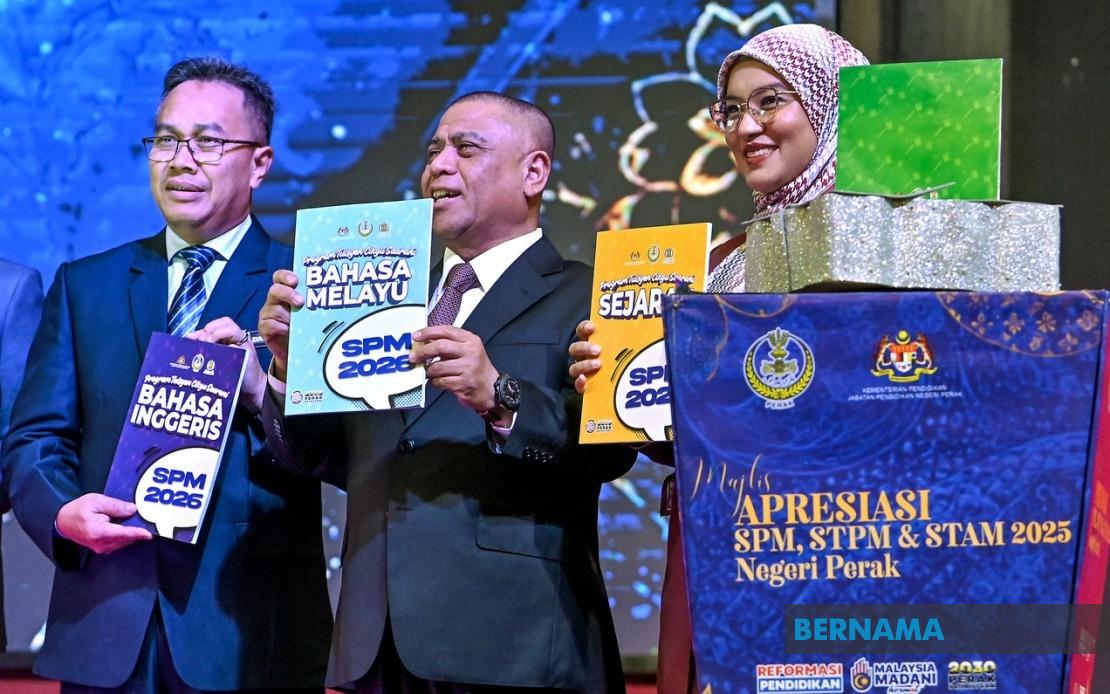
Perak has demonstrated a significant educational milestone by recording its strongest Sijil Pelajaran Malaysia (SPM) examination results over the past 13 years, with a State Average Grade (GPN) of 4.49 in 2025. The achievement marks the culmination of a sustained three-year upward trajectory in academic performance across the state, signalling that long-term institutional efforts to elevate educational standards are bearing measurable fruit. Menteri Besar Datuk Seri Saarani Mohamad announced the results at the 2025 Appreciation Ceremony for Perak SPM, Sijil Tinggi Persekolahan Malaysia (STPM) and Sijil Tinggi Agama Malaysia (STAM) students held in Ipoh, emphasising that the improvements reflect collaborative commitment from educators, administrators, and policymakers across the state's schooling system.
Among the most encouraging dimensions of Perak's result is the dramatic narrowing of the traditionally persistent gap between educational outcomes in urban and rural districts. The achievement disparity between these two cohorts now stands at merely 0.04 grade points, a finding that carries profound implications for equity in Malaysian education. This convergence suggests that rural students in Perak are increasingly accessing comparable quality instruction, learning resources, and examination preparation as their urban counterparts, effectively dismantling one of the structural barriers that has historically constrained social mobility in less populated areas. For a state encompassing both developed municipal centres and significant rural communities, this parity represents a meaningful policy success and offers an instructive model for other Malaysian regions grappling with similar educational disparities.
The state's performance in post-secondary examinations further underscores the robustness of its educational ecosystem. Perak's Cumulative Grade Point Average (CGPA) in STPM reached 2.91, surpassing the national benchmark of 2.88 by a statistically meaningful margin. Among the 1,336 candidates nationwide who achieved the maximum CGPA of 4.00, 116 came from Perak, representing approximately 8.7 percent of this elite cohort despite the state accounting for a smaller proportion of Malaysia's total student population. This concentration of top performers suggests that Perak's educational institutions are successfully identifying and nurturing high-achieving students, creating pathways for advanced academic achievement.
Performance in religious examinations also demonstrated institutional strength. Perak recorded a GPN of 3.03 in STAM, with 36 candidates earning the prestigious Mumtaz grade, the highest classification available. The robust showing in Islamic education qualifications reflects the state's capacity to maintain rigorous standards across diverse subject areas, from secular to religious curricula, indicating a comprehensive rather than narrowly focused educational improvement agenda.
The Menteri Besar's remarks at the ceremony transcended conventional celebration of examination metrics, offering philosophical reflection on the nature of educational success itself. Saarani articulated the perspective that academic examination results represent merely one dimension of a student's broader development and achievement. This framing acknowledges that standardised test outcomes, while important indicators of knowledge acquisition and systematic learning, do not capture the full spectrum of capabilities, resilience, creativity, and character formation that constitute genuine educational accomplishment. By positioning test performance within a wider context of personal growth and community contribution, the state's leadership signals alignment with contemporary educational philosophy that emphasises holistic student development.
The Menteri Besar further emphasised that student achievement fundamentally represents a collective endeavour rather than an individual accomplishment. He noted that when a student receives formal recognition for examination success, the achievement genuinely belongs to a broader ecosystem including parents, teachers, school administrators, and the wider educational community who provided guidance, support, and resources. This perspective carries particular resonance in the Malaysian context, where family involvement in education remains a critical success factor, and where teachers frequently go beyond standard contractual obligations to support student advancement. By publicly acknowledging these often-invisible contributors, state leadership validates the sacrifice and commitment embedded in the educational enterprise.
The ceremony recognised 266 recipients comprising high-performing students, distinguished teachers, exemplary schools, and effective District Education Offices (PPD) across Perak. This multi-category recognition approach reflects understanding that examination results emerge from distributed responsibility across institutional and individual levels. Teacher recognition is particularly significant, as educator quality remains the single most influential school-based factor in determining student outcomes. By formally honouring teachers who achieve exceptional results with their students, state authorities reinforce the professional status of teaching and the centrality of educator excellence to systemic improvement.
For Malaysian educational administrators and policymakers, Perak's sustained three-year upward trend offers empirical evidence that concentrated, coordinated effort can move state-level performance metrics in positive directions. The state has avoided the common pitfall of temporary improvement spikes followed by regression, instead demonstrating consistency that suggests embedded structural changes rather than temporary fluctuations. This consistency is particularly noteworthy given the complexity of influencing large-scale educational systems, where demographic shifts, economic changes, and policy transitions constantly create countervailing pressures.
The closing of the urban-rural achievement gap assumes particular importance as Malaysia navigates issues of regional inequality and inclusive development. Educational disparity has historically functioned as a mechanism perpetuating economic and social advantage, with rural students facing systemic disadvantages in university access, graduate employment opportunities, and income trajectories. Perak's progress in narrowing this gap suggests that deliberate policy interventions—potentially including targeted resource allocation, teacher deployment strategies, and curriculum adaptation to rural contexts—can produce tangible outcomes. Understanding the specific mechanisms through which Perak achieved this result could provide valuable insights for policy transfer to other states facing similar challenges.
The broader economic implications of Perak's educational performance warrant consideration as the state pursues industrial diversification and skills-based economic development. A population cohort with stronger average educational qualifications enhances the state's attractiveness to knowledge-intensive industries, potentially facilitating economic transition away from traditional sectors. The presence of 116 students achieving maximum CGPA in STPM creates a pipeline of candidates well-positioned for advanced tertiary education, research pathways, and professional specialisation.
Looking forward, the primary challenge for Perak will be sustaining momentum without allowing complacency to undermine the institutional practices and resource commitments that enabled improvement. Educational systems display a tendency to regress when attention and resources shift elsewhere, and the state's educational leadership will need to maintain the same strategic focus and resource commitment that produced the initial gains. Additionally, converting strong examination results into broader measures of graduate success—employment, civic contribution, and lifetime earning potential—will determine whether current achievements translate into meaningful improvements in human capital and living standards for Perak residents.

