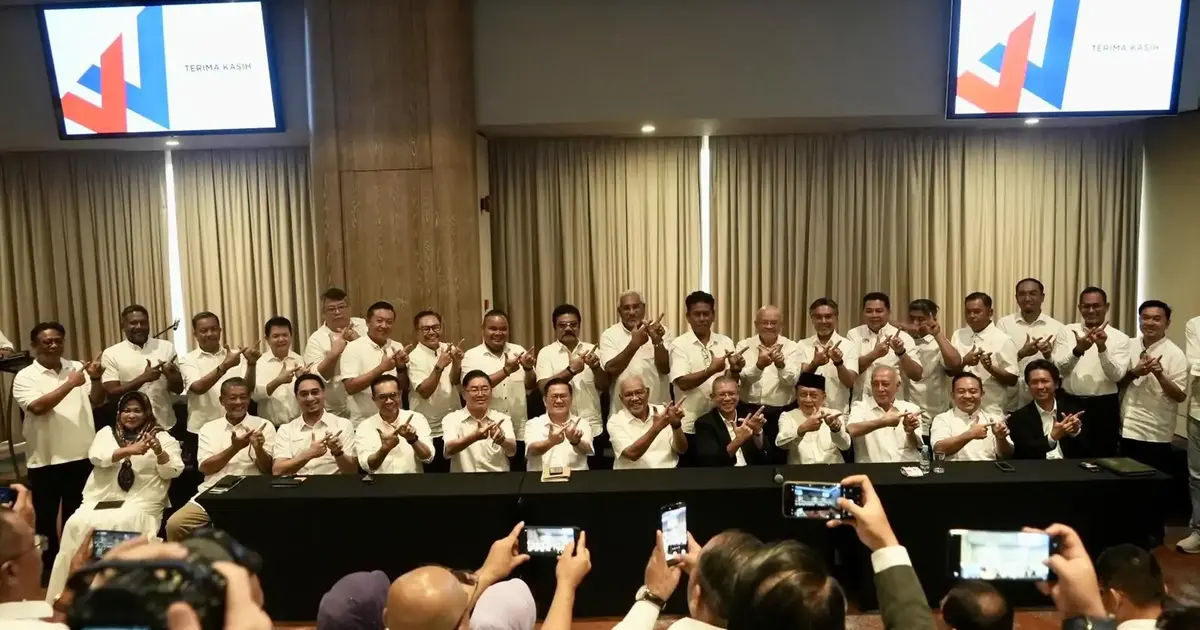
Perak Menteri Besar Sanusi Mohamad has reaffirmed that Wawasan's entry into the PN coalition was legitimately decided through a majority vote by the Supreme Council, settling ongoing disputes about the party's membership status. Speaking as the election director for PN, Sanusi underscored that while dissenting voices from certain quarters, particularly Bersatu, had been formally acknowledged, the coalition's supreme governing body had rendered its decision through democratic procedures and those findings remain binding on all affiliated parties.
The admission of Wawasan, a relatively newer political entity, into PN has triggered considerable discussion within Malaysia's complex coalition politics. The decision carries implications for the stability and composition of the PN bloc, which emerged as a significant political force following the 2022 general election. As PN positions itself for the next electoral cycle, questions about which parties constitute the coalition and how such decisions are made become increasingly important for understanding its internal dynamics and cohesion.
Bersatu's objections to Wawasan's inclusion represent a notable tension within PN's leadership structure. The party, which holds considerable influence within the coalition having provided the impetus for its formation, had expressed reservations about expanding membership to include new organizations. Sanusi's confirmation that these concerns were noted but did not override the majority decision suggests that PN operates with formal procedural mechanisms, even when constituent parties disagree on substantive matters. This approach differs markedly from how some opposition coalitions have handled similar disputes, often resulting in prolonged internal friction.
The Supreme Council's role as PN's ultimate decision-making authority underscores the coalition's organizational hierarchy. By invoking this body's majority vote, Sanusi is essentially positioning the decision as administratively final and representative of broader coalition consensus. This framing matters considerably in Malaysian political discourse, where legitimacy often derives from demonstrated procedural compliance and acknowledgment of democratic voting processes, even within party structures. The distinction between acknowledging objections and being bound by them becomes crucial to understanding how PN manages its internal politics.
Wawasan's background and political positioning are relevant to understanding why its admission might generate debate within PN. The party brings its own base, electoral considerations, and strategic interests to the coalition, potentially affecting seat distributions, campaign strategies, and policy alignments during federal and state elections. For coalition partners already concerned about maintaining their own political space and influence, the addition of new members can appear as either a strategic strengthening or a dilution of existing members' bargaining power.
The timing of this admission and the ensuing clarification from Sanusi reflect broader calculations within Malaysian politics. Coalition memberships often shift based on electoral prospects, regional power dynamics, and the personal relationships between party leaders. PN, comprising PAS, Bersatu, Perikatan, and now Wawasan, represents a particular political configuration that differs substantially from the broader Malay-Muslim political landscape dominated by UMNO and its allies. Each member party's commitment to this coalition depends partly on whether membership serves their electoral and strategic interests.
Sanusi's statement as election director carries additional weight, suggesting his role encompasses not just campaign management but also navigating internal coalition disputes. His public confirmation of the majority vote decision serves to reinforce procedural legitimacy and discourage further challenges to Wawasan's membership status. This approach contrasts with situations where internal disputes fester without clear resolution, potentially destabilizing coalition unity at critical political moments.
For Malaysian voters and observers, understanding these internal coalition mechanics matters because they affect political positioning and coalition stability ahead of elections. When coalitions experience internal friction over membership questions, it can signal broader disagreements about strategic direction or resource allocation. Conversely, successful management of such disputes through formal procedures demonstrates that coalition partners, despite differences, maintain functional governance structures and commitment to collective decision-making processes.
The implications of this decision extend beyond PN itself. How Pakatan Harapan and other political blocs perceive PN's organizational coherence and decision-making capability could influence inter-coalition dynamics and electoral strategies. A coalition that effectively resolves internal disputes demonstrates stability that voters and potential coalition partners may view as attractive. Conversely, visible internal tension, even when managed through proper procedures, can undermine public confidence in coalition leadership.
Looking forward, the precedent established by Wawasan's admission through Supreme Council majority vote may influence how PN handles similar questions about future membership or disputes between constituent parties. The invocation of majority voting procedures suggests PN is developing institutional mechanisms to manage coalition governance, potentially reducing the personalization of political disputes. However, whether such procedures prove sufficient to maintain long-term coalition cohesion remains an open question, particularly if electoral prospects shift or core members perceive their interests as threatened.
The broader context of Malaysian coalition politics shows that formal admission decisions, while important administratively, often mask deeper questions about power, influence, and electoral viability. Sanusi's emphasis on procedural legitimacy therefore represents an attempt to move beyond substantive disagreements toward institutional stability. Whether this approach satisfies all PN members and sustains coalition unity through the next electoral cycle will ultimately determine whether this decision appears, in retrospect, as a turning point in PN's political trajectory or merely one step in its ongoing evolution.

