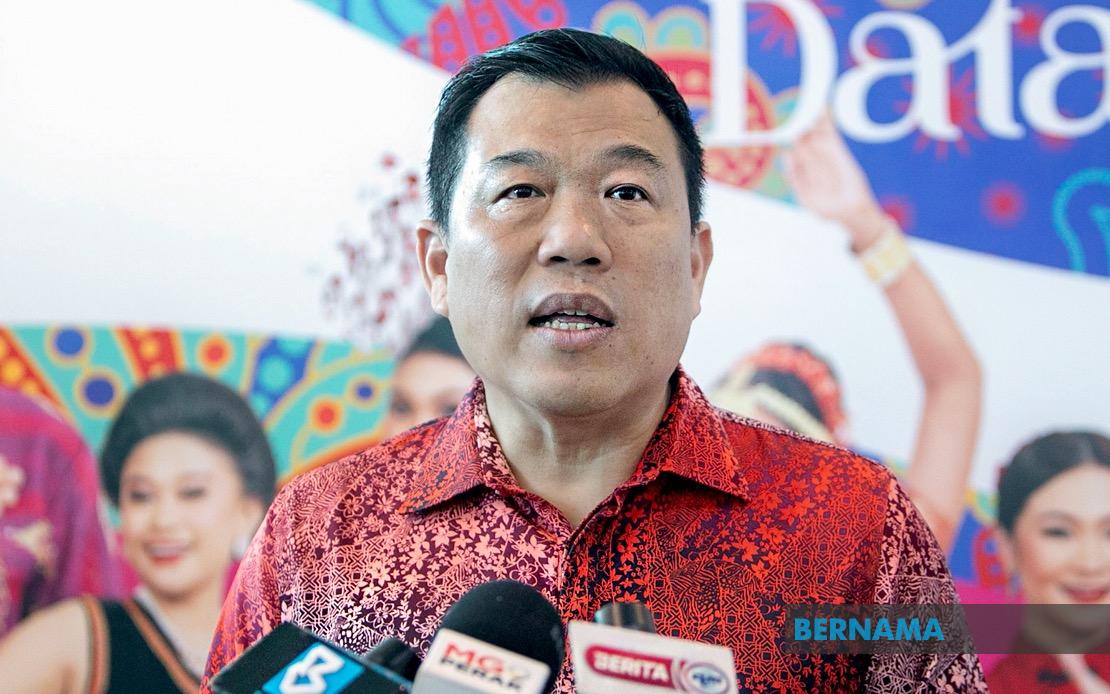
Perak is riding a wave of domestic tourism momentum even as its international visitor base contracts, a trend that underscores shifting patterns in Malaysia's travel landscape and the vulnerability of state tourism to global supply-chain disruptions. Overnight domestic arrivals in the state grew modestly to 10.4 million in 2024 from 10.2 million the previous year, according to Loh Sze Yee, chairman of Perak's Tourism, Industry, Investment and Corridor Development Committee. The uptick reflects sustained local appetite for travel within the state, offsetting a concurrent 1.5 percent decline in foreign visitor numbers that has become a persistent headache for tourism planners across the peninsula.
The deterioration in international arrivals stems from concrete infrastructural and macroeconomic constraints rather than weakness in Perak's appeal as a destination. The suspension of direct flights between Singapore and Ipoh represents a critical bottleneck that has made reaching the state less convenient for one of Southeast Asia's most important source markets. Coupled with broader aviation sector challenges triggered by elevated global fuel costs, the loss of this connectivity has rippled through Perak's hospitality industry. These twin pressures illustrate how state-level tourism depends not merely on local marketing prowess but on regional transport ecosystems and global commodity cycles beyond anyone's direct control.
Within the broader Malaysian tourism hierarchy, Perak occupies a middling position that reflects both its assets and its challenges. Chief Statistician Datuk Seri Dr Mohd Uzir Mahidin's data shows Selangor commanding the domestic tourism crown with 36.4 million visitors last year, trailed by Kuala Lumpur at 35.1 million. Perak, with 23.6 million domestic arrivals, ranks third among states but trails the capital regions substantially. This gap underscores the gravitational pull of Malaysia's economic heartland and the comparative disadvantage faced by peripheral regions in competing for visitor share, even those with considerable natural and cultural attractions.
Recognising this positioning challenge, Perak has strategically positioned itself as a gateway to the east coast rather than as a standalone destination. Ipoh's selection as host city for Pantai Timur Fest 2026, announced by Tourism Malaysia director-general Mohd Amirul Rizal Abdul Rahim during the festival's launch, reflects a calculated move to leverage geographic centrality for amplifying interest in Kelantan, Terengganu, and Pahang. By clustering promotion of three east coast states around a northern hub, tourism authorities are attempting to create cross-regional itineraries that drive visitor flows beyond individual state boundaries and activate slower-moving tourism markets.
The Pantai Timur Fest 2026 structure reveals how Malaysia's tourism industry has evolved toward bundled experiences and integrated marketing. Rather than each state competing in isolation, the festival assembles thirty exhibition booths representing tourism operators across three east coast jurisdictions. This consolidation strategy pools resources and diversifies offerings, enabling visitors to explore multiple destinations within a single engagement point. The inclusion of travel agencies, hotel operators, theme parks, heritage tourism businesses, and online travel platforms creates a comprehensive marketplace that addresses the full spectrum of visitor needs and booking preferences.
The festival programme itself balances commercial transactions with cultural immersion, acknowledging that contemporary tourism increasingly demands authenticity alongside convenience. Cultural performances, traditional craft demonstrations, and heritage food experiences are woven alongside special travel package discounts and interactive activities. This blend attempts to differentiate east coast tourism from generic leisure offerings, positioning the region as a repository of distinctive Malaysian heritage accessible to travellers from northern, central, and southern peninsular regions. By situating these experiences within a professional trade exhibition framework, organisers signal that cultural tourism represents a serious economic opportunity rather than a peripheral attraction.
The timing of Pantai Timur Fest 2026 aligns with Visit Malaysia 2026, a national campaign designed to coincide with Malaysia's significant anniversary year. This synchronisation creates mutual reinforcement between state-level promotion and federal tourism strategy, potentially amplifying marketing reach through coordinated messaging. For Perak specifically, the campaign offers an opportunity to reposition from a transit point to a destination worthy of dedicated itinerary planning, particularly among domestic travellers with growing leisure budgets and the capacity to extend weekend trips into longer journeys.
Domestic tourism's resilience amid international headwinds carries significant implications for regional economies. Malaysian households with disposable income represent a more stable visitor base than international tourists, whose travel patterns respond to currency fluctuations, aviation costs, and geopolitical sentiment. Perak's 0.2 million visitor increase, while modest, suggests that domestic market expansion can partially compensate for international volatility. This reality encourages state governments to deepen engagement with regional travel agencies, credit card companies, and digital platforms that facilitate domestic bookings, reducing dependence on international visitor flows that remain vulnerable to external shocks.
Restoring international arrivals, however, requires addressing supply-side constraints beyond marketing reach. The Singapore-Ipoh flight suspension represents a strategic infrastructure gap that no promotional campaign can overcome. Conversations between Perak authorities, airline operators, and Singapore-based tourism boards will likely determine whether direct connectivity returns and whether the 1.5 percent decline reverses. Airlines assess routes through demand forecasting and cost-benefit analysis; convincing carriers to reinstate service requires demonstrable passenger demand and potentially commercial incentives or partnership arrangements with local tourism stakeholders.
Longer-term viability for Perak's tourism sector depends on diversifying its source markets beyond the east coast positioning. While Pantai Timur Fest 2026 targets regional Malaysian audiences, international competitiveness requires enhancing appeal to Asian markets, particularly China, India, and other ASEAN neighbours where middle-class expansion is driving outbound travel growth. Infrastructure investments in accommodation, dining, and activity offerings must align with international visitor expectations, while digital marketing must reach foreign source markets through channels and languages suited to non-English-speaking demographics.
The contrast between Perak's domestic growth and international contraction reflects Malaysia's tourism sector at an inflection point. Domestic travellers increasingly recognise value in regional destinations and extended breaks within their home country, driven by improving road networks, rising incomes, and familiarity with local experiences. Simultaneously, international visitor recruitment has become more challenging and volatile, dependent on factors from aviation policy to geopolitical stability. For Perak, the path forward likely involves accepting that domestic tourism will form an increasing proportion of visitor revenue while pursuing targeted strategies to restore and expand international arrivals through infrastructure restoration and strategic positioning within regional tourism ecosystems.

