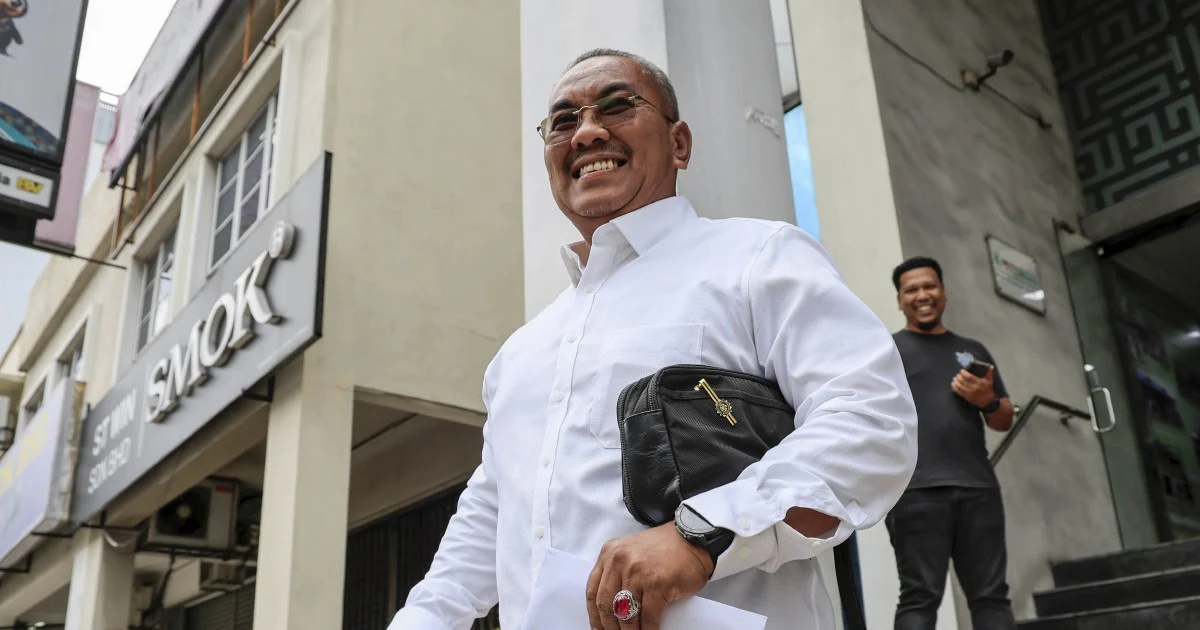
Perikatan Nasional's election machinery has cleared a significant hurdle ahead of the Johor state election, with coalition election director Datuk Seri Sanusi Md Nor announcing the completion of internal seat negotiations. The resolution of seat distribution among the three-party alliance represents a critical milestone, as contentious allocation processes have derailed similar coalitions in the past and threatened to undermine campaign unity.
The announcement that 34 overlapping seats have been resolved signals a level of coordination across PN's component parties that contrasts sharply with previous coalition disputes. When multiple parties stake claims to the same constituencies, the resulting tensions can fracture campaign momentum and expose internal divisions to voters. The successful conclusion of these negotiations without public acrimony suggests a degree of party discipline and shared commitment to the coalition's electoral strategy in Johor.
For Malaysian observers, PN's seamless seat allocation process carries particular significance given the coalition's relative newness compared to established political blocs. Formed more recently than its competitors, PN has had to prove it can manage the complex logistics of multi-party campaigns without the institutional rigidity or power disparities that sometimes characterise longer-standing alliances. The Johor election provides a testing ground for whether the coalition has matured sufficiently to handle predictable internal friction points.
Johor's electoral importance cannot be overstated in the Malaysian political context. The southern state has long been a political battleground where coalitions rise and fall, and control of its state apparatus carries weight beyond the state borders. A credible PN showing in Johor would strengthen the coalition's claims as a viable national alternative, while any internal implosion during the campaign could permanently damage its credibility as a coalition capable of governing. The resolution of seat disputes removes one obvious source of vulnerability during the campaign period.
The mechanics of seat allocation in multi-party coalitions typically involve balancing several competing pressures. Party leaders must satisfy their own candidates' ambitions whilst respecting coalition partners' territorial claims and historical strongholds. The presence of 34 overlapping seats suggests that these negotiations were neither trivial nor easy to resolve, yet the absence of public disputes indicates that PN's internal mechanisms worked as intended. Such negotiation success often depends on strong leadership and clear protocols for dispute resolution.
Sanusi Md Nor's role as election director gives him authority to mediate between parties and implement agreed allocations. His public confirmation that negotiations are complete sends reassuring signals to both party activists and voters that PN will enter the campaign as a disciplined unit. Campaign discipline matters significantly because disgruntled candidates who feel sidelined or unfairly treated can undermine broader party messaging through public complaints or, worse, defection to competing coalitions.
For Southeast Asian observers tracking coalition politics across the region, PN's seat allocation success offers lessons in managing multi-ethnic, multi-party campaigns. Malaysia's unique political geography, where Peninsular, Sabah, and Sarawak operate under distinct party systems, requires coalitions to maintain coherence across different regional interests and demographic realities. Johor's position as a strategically important state with its own distinct political character makes it a particularly demanding venue for testing coalition functionality.
The resolution of seat disputes also affects campaign resource allocation. Once seat assignments are confirmed, parties can concentrate money, volunteers, and candidate support on assigned constituencies without the distraction of internal negotiations. This efficiency translates into more professional campaigning and stronger ground operations during the crucial final weeks before voting day. Conversely, unresolved seat disputes create uncertainty that hampers campaign preparation and demoralises party workers.
Looking ahead, PN's ability to maintain this unity throughout the campaign period will determine whether the coalition emerges stronger or weaker from the Johor contest. Electoral campaigns inevitably produce new tensions as candidates compete for media attention and voters respond differentially to individual personalities and local issues. The foundation of a clean seat allocation process, however, provides psychological reassurance to party members that leadership is competent and decisions are binding.
The Johor election will also test whether PN can translate internal harmony into electoral gains. Malaysian voters increasingly evaluate coalitions based on their capacity to govern effectively and manage internal differences maturely. A coalition that negotiates openly and concludes its internal business professionally before taking its case to voters sends a powerful message about its fitness for higher office. Conversely, coalitions that descend into public acrimony over seat distribution lose voter confidence regardless of their policy platforms.
As the campaign enters its active phase, both PN and its rivals will be monitoring whether the coalition maintains the discipline it has demonstrated in these preliminary negotiations. The resolution of 34 overlapping seats removes a significant potential distraction, allowing PN to concentrate on building its electoral narrative and mobilising supporters. The test ahead will be whether this internal coordination translates into the sustained cohesion necessary to compete effectively in a complex, multi-party electoral environment that rewards both unity and genuine popular resonance.

