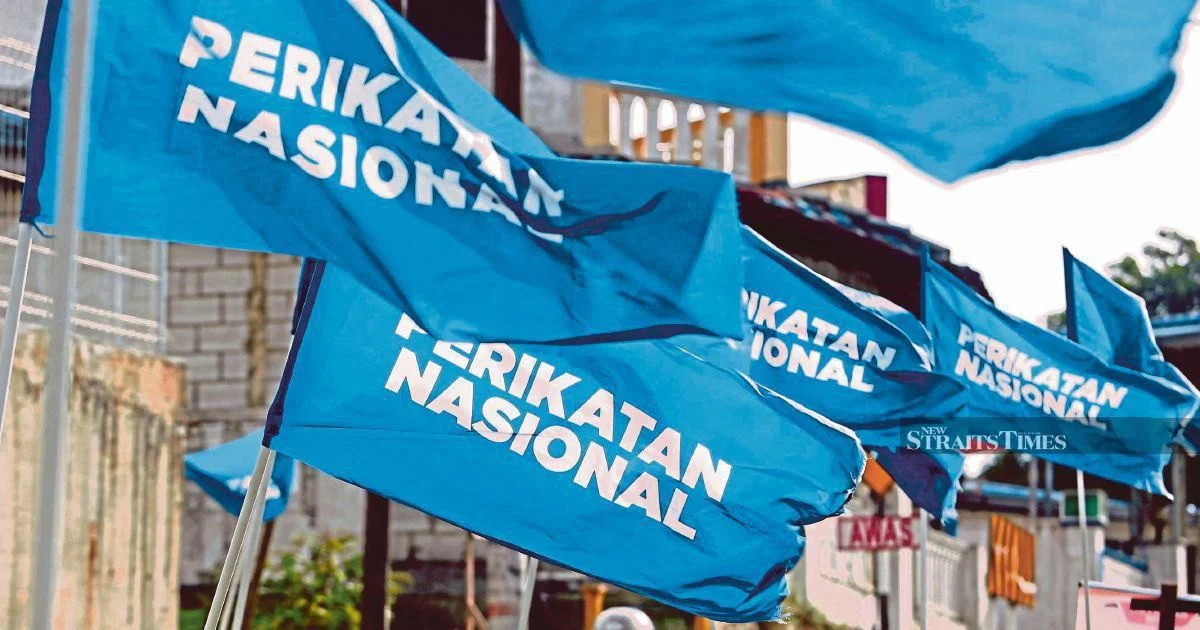
The fragile alliance within Perikatan Nasional has fractured further as Pas leaders publicly challenge Bersatu's unilateral decision to deploy the coalition's official logo during campaigning in Johor and Negri Sembilan. Speaking in Kota Baru, Pas officials argued that only the coalition's central chairman possesses the constitutional authority to sanction use of the shared emblem, suggesting that Bersatu proceeded without obtaining the requisite approval from senior party leadership.
This latest disagreement reflects a deepening fault line within a political partnership that has appeared increasingly strained since the coalition's formation. The symbolic importance of a party logo extends far beyond mere branding in Malaysian electoral politics—it represents access to the coalition's combined voter base and signals unified backing at the national level. By questioning Bersatu's entitlement to the imagery, Pas has essentially challenged the legitimacy of its coalition partner's electoral strategy and implied that the party is operating outside agreed protocols.
The governance structure of Perikatan Nasional, while theoretically clear on paper, appears to lack enforcement mechanisms when individual members act unilaterally. The coalition was originally conceived as a united front capable of mobilising voters across multiple electoral contests, but the accumulation of disputes—whether over candidate selection, campaign tactics, or symbolic representation—suggests that internal cohesion has eroded substantially. The question of who precisely holds decision-making power within the alliance remains contested, even as the coalition approaches critical electoral tests.
For Pas, the stakes involve more than procedural correctness. The Islamic party commands substantial electoral machinery in several states, particularly in the northeast, and maintains considerable influence within Perikatan Nasional's overall structure. Any unilateral move by Bersatu to utilise coalition resources without consultation effectively marginalises Pas's role in decision-making and potentially undermines its ability to extract benefits from the alliance. The party's public objection signals that it will not tolerate being sidelined in strategic campaign planning.
Bersatu's apparent willingness to proceed independently reflects broader frustrations within the party regarding its position within Perikatan Nasional. As a coalition junior partner without Pas's established grassroots network or Umno's historical machinery, Bersatu may view aggressive use of shared symbols as a means of compensating for structural disadvantages. However, this approach generates precisely the kind of friction that destabilizes the entire alliance, particularly when electoral contests loom and stakes are highest.
The Johor and Negri Sembilan elections mentioned in the dispute represent significant opportunities for the coalition to demonstrate electoral viability outside its traditional strongholds. These contests function as bellwethers for the partnership's overall health and electoral attractiveness to centrist and undecided voters. Any appearance of internal disunity during these campaigns directly undermines messaging consistency and voter confidence in the coalition's ability to govern effectively. Malaysian voters increasingly penalise coalitions perceived as fractious or lacking unified direction.
The tension also carries implications for how Malaysian political coalitions manage shared resources and coordinate electoral campaigns. Unlike formal electoral pacts with clear contractual frameworks, Perikatan Nasional appears to operate on principles that lack explicit written guidelines governing logo usage, candidate placement, and campaign finance. This ambiguity, while perhaps offering flexibility initially, now generates precisely the disputes that threaten coalition viability. Comparable alliances elsewhere in Southeast Asia have developed more formalised dispute-resolution mechanisms to prevent such disagreements from escalating.
Pas's demand that only the coalition chairman can authorise logo usage establishes a principle favouring centralised decision-making and collective approval. Should Perikatan Nasional adopt this standard as binding policy, it would substantially constrain individual member autonomy and require greater internal coordination. Conversely, if Bersatu successfully argues for more flexible interpretation allowing member parties latitude in campaign strategy, it effectively weakens collective governance and invites further freelancing by other coalition members.
The trajectory of this dispute will reveal much about Perikatan Nasional's organisational maturity and conflict-resolution capacity. Malaysian political coalitions have historically struggled with precisely these management challenges, leading to splits and reformations that diminish electoral effectiveness. The coalition's leaders face a choice between establishing clearer governance structures that clarify decision-making authority or accepting the friction and inefficiency inherent in ambiguous frameworks where power remains contested.
For Malaysian observers and political analysts, this public disagreement underscores broader questions about whether Perikatan Nasional possesses sufficient internal cohesion to present a credible alternative to established coalitions. Voters evaluating which alliance to support consider not merely policy platforms but also perceptions regarding managerial competence and unity. When coalition partners openly question each other's authority and legitimacy, that perception inevitably suffers, with measurable consequences during electoral contests.